Showing posts with label Spain. Show all posts

Monday, January 30, 2017

Monday, June 30, 1930: French Troops Evacuate the Rhineland

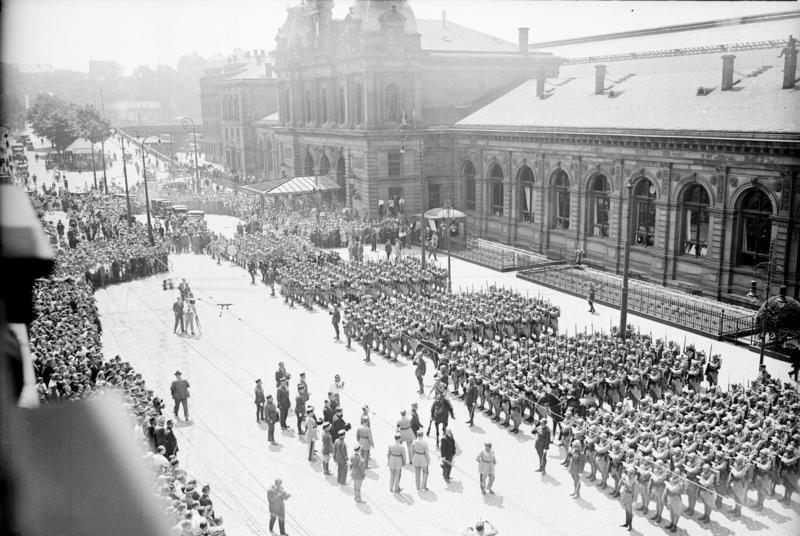
Mainz, Germany:  “Amid tremendous outbursts of enthusiasm of the populace, the last hobnailed boot of foreign troops vanished Monday from German soil.”  So leads the Universal Press article describing the scene in Mainz, throughout the Rhineland, and over much of Germany, as the last French forces occupying German soil after the World War depart.  At 11:15 a.m., the French flag is hauled down from the old Mainz castle, and the last several hundred French soldiers march to the train station to depart.  Some Germans cheer.  But at the train station, a crowd hisses and boos the departing troops.

The German government issues a statement tonight which reads in part: “There are still heavy clouds overhanging the political and economic life of our people.  The present day, however, gives reason for hope in the future.”  President Paul von Hindenburg refers to the occupation as “arbitrary foreign rule” in his comments.


Church bells are rung for an hour all over Germany, and public offices are closed.  At nightfall, bonfires are lit on the banks of the Rhine, and people celebrate into the night.


Paris:  The French press, on the other hand, worries that in the midst of their celebrations (and boos), Germans have not appreciated the fact that France is withdrawing its troops earlier than originally agreed.  Some even predict that Germany’s fascists – the nazis of Adolf Hitler – will grow in influence without a French presence.  


Matamoros, Mexico:  Twenty people are killed and eight more wounded when a mob of communists battles police in this central Mexican city.  The communists had sought permission for a march of protest against the Mexican government’s arrest of communists in other parts of the country.  When they were refused, they marched anyway.  Press reports say the communists opened fire on police.

Bilboa, Spain:  Communists are also implicated in two bomb blasts that destroy houses under construction here.  No one is injured.  Police, who seize two alleged perpetrators after a gun battle, say the bombs were an attempt to incite a general strike.

Wednesday, January 18, 2017

Wednesday, June 18, 1930: European Backlash to Smoot-Hawley

London:  Protest and complaint come fast and fierce to the U.S. Smoot-Hawley tariff act.  Critics say it will jeopardize Britain’s war debt repayments to the U.S., and demand that Great Britain raise tariffs to protect her industries in turn.

Paris:  Newspapers and politicians of all stripes denounce the U.S. tariff act.  The Minister of Commerce calls it a “false remedy” for the worldwide economic depression.  French economists are calling for a European “tariff union” to offset the U.S. measure. 

Madrid:  The government orders a committee to study the effects of the U.S. tariff.  Critics are calling for Spain to break its current trade agreement with the U.S. in retaliation.


Berlin:  Finance Minister Paul Moldenhauer is reportedly resigning in the face of widespread disfavor for his financial reform measures, such as new taxes on employees and bachelors.  The cabinet of Chancellor Heinrich Bruening meets in special session tonight to discuss the matter.

Sunday, November 27, 2016

Thursday, May 8, 1930

Spain:  The nation is abuzz with rumors that a group of military officers plans a coup to return a dictatorship, but nothing materializes other than clashes between students and police in Saragossa.

Washington:  More evidence of the growing economic depression: the government reports that U.S. foreign trade fell by $500 million compared to the same quarter prior year. 

Friday, November 18, 2016

Monday, May 5, 1930

Tokyo:  Shinya Uchida, former Vice Minister of the Navy and a bitter opponent of the London Naval Treaty, sends a letter to the War Minister, Gen. Issei Ugaki, trying to get him involved in opposing it too. 


Madrid:  More violence by university students, this time leaving two dead, which prompts Prime Minister Damaso Berenguer to issue a statement saying his government will tolerate no more demonstrations.  Both of the dead are workers, killed by gunfire.  40 are injured, many by thrown rocks.  

Thursday, November 17, 2016

Sunday, May 4, 1930

Madrid:  Students shouting “Viva el rey!” enter a theater where Republicans have gathered and start hitting the meeting’s leaders over the head with sticks, sparking a riot.  From there, the fighting spreads outside, and eventually to the street in front of a hotel where the meeting’s speaker is staying.  Several are injured and arrested.

Rome:  Benito Mussolini reviews 25,000 fascist youth who have been participating in a camp.  Mussolini praises their morale and discipline.

Austria:  Chancellor Johann Schober, who had just promised the League of Nations he would disarm the country’s militarized political factions as a condition for receiving financing to improve Austria’s infrastructure, returns home to find a 10,000-man march being held by the nationalist Heimwehr paramilitary in Vienna, and 16,000 uniformed socialists gathering in St. Polten.  Police with machine guns keep the peace.

Washington:  More than 1,000 economists sign a letter to President Herbert Hoover, asking him to veto the Smoot-Hawley tariff bill pending in Congress.  The bill would raise tariffs on more than 20,000 import products to record levels, in hopes of protecting domestic producers during the economic depression.  The economists say it will have the opposite effect, provoking reprisal tariffs from other countries and worsening the depression.


Manchuria:  Warlord Zhang Xueliang, de facto ruler of Manchuria, is reportedly acquiring a small “air force” of bombers and scout planes after suffering under Russia’s air superiority during the Soviet incursion into Manchuria (see Nov. 17, 1929).  

Wednesday, November 16, 2016

Saturday, May 3, 1930

Madrid:  Students calling for a republic clash with police again, and call for a 24-hour strike.

Monday, November 14, 2016

Thursday, May 1, 1930: May Day Passes with Relative Calm

May Day passes relatively calmly in most of the world.  Customarily a major event for labor and communists, the day passes with less unrest than many authorities and police had feared.  Berlin is the exception: riots and shooting mar the occasion, with one killed and 200 arrested.  In Paris, police arrest more than 3,200 demonstrators or potential troublemakers, raiding meetings of communist and labor groups to stop problems before they start, and there isn’t even much work stoppage.  Factories are running at 80%, and utilities are normal.

In New York, 1/3 of the city’s police force – 5,000 men – are on duty.  More than 100,000 people participate in two demonstrations – one pro-American, the other pro-Soviet, but both are relatively peaceful.  50 are arrested for disorderly conduct, mostly keeping kids out of school to participate in the demonstrations.  10,000 war veterans also demonstrate against communism.

Moscow, of course, sees its usual parades and demonstrations.  People carry signs and banners ridiculing religion, British imperialism in India, and the League of Nations.  Loudspeakers are set up over the Shrine of the Iberian Virgin at the entrance to Red Square, and blare revolutionary speeches all day.

Madrid:  A crowd of 10,000 cheers a speech by Miguel Unamuno, one of Spain’s leading philosophers, who ardently advocates a republic.  At one point the crowd begins shouting, “Death to the king!”  Police charge with swords drawn, injuring 50.  Nevertheless, Premier Gen. Damaso Berenguer says he doesn’t take the “shouting of students” too seriously, and says the monarchy will remain, but elections will be held.

Warsaw:  Communists and the unemployed clash with police using guns and rocks, injuring six.  Two are arrested. 

Tokyo:  In a press interview, Shoza Yabuki, Vice Minister of the Navy, appeals to “everyone who believes in party government” to support Japan’s approval of the London Naval Treaty. 

London:  The worldwide economic depression deepens: Margaret Bondfield, Minister of Labor, tells the House of Commons that unemployment has increased more than 500,000 in a year.

Sunday, April 27, 2014

Sunday, 27 April 1930

Rome:  Italy launches four new cruisers and a submarine in a festive event celebrating the country’s naval power.  Additionally, 90,000 members of fascist youth organizations are received into the Black Shirts, Mussolini’s fascist paramilitary, in ceremonies around the country.  They receive rifles to commemorate the occasion.

Madrid:  Melquiades Alvarez, former monarchist, criticizes King Alfonso in a speech, saying the king “forever” ignored his duties under the constitution of 1876 by allowing the dictatorship of Manuel Primo de Rivera.  Alvarez says a republic is now what Spain needs.

Berlin:  More bad economic news: the government announces that tax revenues were 70 million marks below budget for the fiscal year ended March 31. 

London:  Still more bad economic news: unemployment in Great Britain is higher than at any time in the last four years.

China: The nationalist government announces that martial law will be in effect for Shanghai May 1, in anticipation of communist unrest on May Day.  The government arrests 150 suspected communist agitators, detains 100 more, and displays weapons it says were planned for use in May Day uprisings.

Monday, April 21, 2014

Sunday, 20 April 1930

Leipzig, Germany: 

A gathering of 30,000 young communists observing “Red Youth Day” turns violent when fighting breaks out as police attempt to cordon off side streets leading away from the plaza where the gathering is being held.  Three are killed, two of them police. 


Madrid: 

More than 25,000 supporters of the monarchy jam the new bull ring here to show their support for King Alfonso XIII.  Streets around the arena are draped with banners reading, “Long Live the King,” and “Long Live Spain.”  Speakers say the king has been unfairly attacked by supporters of a constitutional republic, and that the majority of Spaniards want the monarchy to continue.  The king was not present, spending Holy Week in Seville. 

Soviet Union:

Kharkov, Ukraine:  29 people are sentenced to prison terms totaling 173 years for allegedly trying to restore a “capitalistic” system in Ukraine.  Among those being sent to prison are the former President of the Ukrainian Academy of Sciences, the former Ukrainian Prime Minister and Foreign Minister.
Moscow:  The 200 or so remaining Orthodox churches here are jammed on Easter Sunday, despite efforts by the Atheist League to detract from it.  In an attempt to draw people away from church, all theaters in the city are opened at midnight and shows are run continuously through the day, and military bands play at public squares and other gathering places.  However, as part of its “slowdown” on the atheization of the country, the government does forbid citizens from molesting worshipers in churches, or on their way to and from them. 

China:

In the civil war, skirmishes are reported between nationalist government forces and northern rebels along railroads around the city of Kweiteh. 

Friday, April 4, 2014

Friday, 4 April 1930: Zhang Xueliang Supports Chiang's Chinese Government

Shanghai:  The Nanking State Council, a body of Chiang Kai-shek’s nationalist government, approves a mandate for “the arrest and subjugation” of the leaders of the northern revolt (see Apr. 1) – tantamount to a declaration of war.  In a surprise move, however, warlord Zhang Xueliang, de facto ruler of Manchuria, is reported to have thrown his support behind the nationalist government.  He orders a squadron of gunboats to Shantung province and his troops to the Great Wall in support of Chiang’s government.  

Madrid:  More impact from the worldwide economic depression: Spain’s Finance Minister says the country will incur a deficit of the equivalent of US$23 million for 1930.


Washington:  Still more impact from the depression: President Herbert Hoover signs a $375 million road spending bill, intended to stimulate the economy.


Sunday, March 16, 2014

Sunday, 16 March 1930

Tokyo:  

Press reports state that the “two-thirds” ratio of capital ships proposed for Japan at the London Naval Conference is causing a rift between military and civilian government leaders in Japan.  Naval officers are displeased with the “second-class citizen” status the ratio would give Japan.

Vienna:  

The government announces that the Austrian national anthem has been changed (for the fourth time since the World War).  The new anthem will be Deutschland, Deutschland-Uber Alles (Germany, Germany Above All) which is also Germany’s national anthem.  This was also Austria’s national anthem before the war (though with different words).  The socialist mayor of Vienna, Karl Seitz, dislikes the anthem so much he refuses to stand or remove his hat when it is played.

England:  

In response to a call from Cosmo Gordon Lang, Archbishop of Canterbury, Anglicans throughout the country hold special prayer services on behalf of persecuted Christians in Russia.  Indeed, Christians as well as Jews around the world are supposed to be holding similar prayer services .  Rev. A.F.W. Ingram, Bishop of London, says, “to think that all those bishops have been butchered [in Russia], all those priests murdered!”

New York:  

Police are busy guarding special prayer meetings in area churches, called on behalf of persecuted Christians in Russia, as well as guarding 12,000 people attending a communist anti-religion rally at Bronx Coliseum.  At the communist rally, the crowd boos religion, calls for an end to class war, and pillories everyone from New York Police Chief Grover Whalen to Italian Dictator Benito Mussolini to the Pope.  The meeting is guarded by 450 police with riot gear, machine guns and paddy wagons, but it is peaceful.


Paris:  

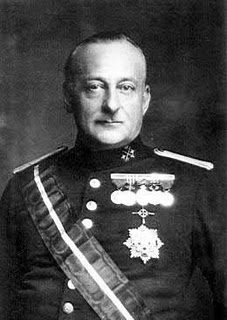
Miguel Primo de Rivera, who until six weeks ago was dictator of Spain, dies unexpectedly in his hotel room here.  Cause of death is said to be an embolism, a complication of his diabetes.

Thursday, March 13, 2014

Thursday, 13 March 1930

Germany:

Berlin:  President Paul von Hindenburg signs the Young Plan bills passed yesterday by the Reichstag.  Among other things, they commit Germany to World War debt payments until 1988.  After the morning signing ceremony, Hindenburg issues the following proclamation.  “With a heavy but firm heart and after thorough and conscientious examination, I affixed my name to the Young Plan.  After hearing the advocates and opponents of the plan, I have reached the conclusion that, despite the heavy burden which the plan puts on the German people for long years, despite the strong criticism of some of its terms, compared to the Dawes Plan, the Young Plan means progress on the long road of liberation and reconstruction of Germany.  I could not refuse to sign, since such a refusal would bring immeasurable harm to German economics and finances and would cause a great crisis to our fatherland.  I am wholly convinced that the acceptance of the Young Plan does not free us from all sorrows in the future, but I believe it is the road that will bring us our long-desired freedom.  I have received many letters asking me to keep my name – the name of a former field marshal – from being darkened in history through these documents.  My answer is: during my entire life I have served in the school of duty, and I have learned to do my duty for the fatherland without consideration for my person.  Therefore any thoughts my person had was abandoned in this decision, and I gave up the idea of relieving myself of the responsibility by a plebiscite or resignation.”

Dresden:  Communists conduct a “hunger march,” which quickly leads to clashes with police.  Armored cars are used to disperse the demonstrators, and 125 people are arrested. 


Elsewhere:

Madrid:  One thousand unemployed people march peacefully, with banners announcing simply: “We want work.”

Saturday, March 1, 2014

Saturday, 1 March 1930

Madrid:  

Fears of everything from a coup to a new dictatorship by either the king or new Prime Minister Damaso Berenguer sweep the nation.  The government has prohibited political gatherings, and threatened martial law if civil disorders continue.  King Alfonso is said to be hosting supporters from around the country to bolster his position, and staying in contact with military generals, who are reportedly assuring him that they support him.  Meanwhile police patrol the streets to prevent demonstrations, press freedoms are curtailed, and those arrested in the previous days’ disorder are said to be charged with treason.  Yet rumors also fly that several military officers are resigning and holding conference at Barcelona – possible prelude to a coup. 

Germany: 

Leipzig:  Police raid a communist meeting hall and find 16 machine guns and 125 rifles that were stolen from a nearby military barracks on Thursday.  Police in a nearby village find another 6 machine guns and 30 rifles at another communist gathering place. 

Berlin:  Meanwhile, fighting breaks out between nationalists and communists during a funeral for a nationalist student who was allegedly killed by the communists.  As the funeral procession is passing, the communists reportedly jeer, and trouble ensues.  Police eventually break up the melee and the funeral continues.

Poland:  

Newspaper correspondents report a steady stream of peasants crossing the border from Russia to flee loss of land, food shortages and villages burned at the hands of soviet authorities.  Many are shot by Russian border guards as they try to escape.  One detachment of border guards, however, reportedly joins the refugees and escapes into Poland, sick of going hungry and being ordered to shoot their own people.  Poland, however, appeals to the League of Nations for aid in helping the refugees, as unemployment and economic conditions in Poland are already so bad due to the depression that they fear things will get desperate. 

New York:  

Matthew Woll, President of the American Federation of Labor, says the recent communist disturbances around the country have been financed by the Communist International, to the tune of $1.25 million.  He says the communist strategy is to take advantage of rising unemployment to urge revolution.  Additionally, federal, state and local authorities across the nation report they’re also uncovering evidence of major communist demonstrations being planned for March 6.  

Friday, February 28, 2014

Friday, 28 February 1930

Russia:  

The campaign against religion continues.  Atheist, trade groups and city soviets report they have closed 81 churches throughout Russia in the past week.  The president of the Atheist League gives a speech, broadcast nationwide, in which he urges even more intense religious persecution.  “We must be cleverer than the Pope.  We mustn’t use the institution of stake burning and the guillotine, like the Roman church.  We must propagandize.”  Soviet officials continue to characterize the closings, and the arrests of religious leaders, as prosecution of political dissent, rather than religious persecution.

Berlin:  

Meanwhile in the Reichstag, nationalist party members announce that they intend to question the government of Chancellor Hermann Meuller on its policy toward the religious persecution in Russia.  On the same day, a bill to approve the Young Plan is approved by a conference committee, giving rise to optimism that it will be approved by the full legislature. 

And finally, reports surface that secret meetings have been held in Hamburg, Danzig and Vienna between representatives of the Third International and communist leaders from the United States.  These reports also speak of a worldwide demonstration of communists and the unemployed set for March 6. 


Madrid:  

Unrest over King Alfonso’s rule continues.  Demonstrations rise at a local university, while the cabinet says it supports the monarchy unswervingly.  The Minister of the Interior says the government will take “whatever energetic measures are necessary” against disturbances.

Oakland, USA:  

500 unemployed riot in front of the state employment agency, the sixth such riot in two weeks.  Five demonstrators and two police are injured.  

Thursday, February 27, 2014

Thursday, 27 February 1930

Madrid:  

Demonstrations and riots against King Alfonso sweep parts of the country.  Thousands gather in the streets here and clash with police, who charge them with swords.  The disturbances follow a speech by former Prime Minister Jose Antonio Sanchez Guerra, the “grand old man” of Spanish politics, who, though a monarchist, declares that he is opposed to any further rule by King Alfonso.  “I will never again serve the present king,” he says.  New Prime Minister Damaso Berenguer announces that no further public political speeches will be permitted. 

London:  

Bishop Nickolai (or Nicholas), head of the Russian Orthodox Church in London, releases a letter which accuses the Soviet Union of torture and other atrocities against people of faith.  He claims a seminary leader in Voronezh was beaten with crucifixes and had molten lead poured down his throat.  An archbishop in Perm reportedly had his eyes gouged out and was dragged through the streets and killed, along with 40 other monks and priests.  “I would like this country to protest, and the whole civilized world to express its detestation of Russian persecution of Christianity.  Some of those prominently connected with the protest movement fear lest their religious protest should trespass on political issues.  To such, I say that no protest is likely to intensify trouble in Russia, and that the bolshevists can not do more in the way of atrocious persecution than they are now doing.”

Moscow:  

The chairman of the anti-religious committee of the communist party in Moscow issues an order for closings of churches, synagogues and mosques to speed up.  “Heretofore we have been extremely cautious about taking action on petitions for closing churches from workers and peasants.  But in view of the present agitation all over the world and in the soviets themselves, we can afford to be less timid.”    

Meanwhile, new reports of Jewish leaders arrested: the chief rabbi of Leningrad and another rabbi are reported held on charges of maintaining illegal connections abroad.  And synagogues in Vilna are reportedly being closed by soviet authorities.  

Chicago:  

After breaking up a communist meeting yesterday, authorities announce they have uncovered plans for a worldwide demonstration by communists set for March 6. 

Saturday, February 15, 2014

Saturday, 15 February 1930

Russia: Persecution of religion, individual rights, and other freedoms continues.  The Moscow Soviet announces that 73 churches have been closed in that city alone over the past year.  It is common for the bells of these churches to be removed and melted down for industrial use, and the buildings converted to civic halls.  In Minsk, Belorus (Belorussian Soviet Socialist Republic), three Jewish rabbis are arrested for “conspiring” against the Soviet government.  All of this, soviet authorities say, is at the request of the working class.  Meanwhile, the government of the Soviet Union reports it has seized $50 million worth of property from private traders and others for payment of taxes owed. 

Madrid:  King Alfonso dissolves that National Assembly, which was formed by ex-dictator Miguel Primo de Rivera, a move viewed by many as a possible precursor to the restoration of some form of constitutional government.  

Friday, February 14, 2014

Friday, 14 February 1930

Libya:  The Italian air strafing and bombing of fleeing Libyan resistance fighters, and their civilian family members, continues along the Libya-Algeria border. 

Spain:  2,000 strikers march to a large factory in Madrid, seeking to incite the women workers there to join them.  They clash with police.  Unemployment has soared in Spain after the resignation of dictator Miguel Primo de Rivera and the discontinuation of his large public works programs.  Food riots and other unrest are leaving many injured and arrested throughout the country.  A mob in Barcelona attacks the headquarters of the Patriotic Union, which supported de Rivera. 

Philadelphia:  250 alleged communists storm city hall to protest rising unemployment.  Police break up the attack and arrest 17.  Unemployment in the city is said to be at 200,000.

Thursday, February 13, 2014

Thursday, 13 February 1930: Soviet Press Fires Back at Churches

Libya:  

Italian air strafing and bombing of fleeing Libyan resistance fighters, and their civilian family members, continues along the Libya-Algeria border. 

Moscow:  

The Soviet press fires back at Russia’s religious critics around the world.  Pravda, the official communist newspaper, says of the Pope’s recent criticisms of Russia’s persecution of religion: “His appeal is really a call to the nations to sever relations with the Soviet Union, for the soviet never will allow foreigners to interfere in their religious policy.  So far, all evil yelping against the soviets lacked only the Holy Father’s sweet voice.  This representative of God on earth hitherto preferred to hold his peace; he thought the weakening Orthodox Church would clear the way for Rome.  Only now, when he has become convinced that the working class in Russia intends to wipe out all superstitions without distinction of creed, has his Holiness decided to take up the defense of persecuted religion.  This head of the Catholic Church certainly is less interested in the problems of the Orthodox Church, Judaism, or even Catholicism than the worldly goods it may involve.  This means indifference to the progress of our industrialization, to collectivization of our agriculture, which spoil the beauty sleep of the western birds of prey.  Like every other financier and exploiter of labor, the Pope is an enemy of the working class.  That is why he appeals to all countries to make religious freedom a condition of recognizing the soviets.” 

The Komsomolskal Pravda, newspaper of the Young Communists’ League, publishes a cartoon of a bloated Pope holding a swastika with a small cross nailed upon it. 

London:  

Religious persecution in soviet Russia dominates discussion in the House of Commons.  Foreign Secretary Arthur Henderson, answering questions from legislators, says “Reports as regards the religious situation in Russia are receiving serious consideration of his majesty’s government.  The house may rest assured that his majesty’s government will use its influence in support of the cause of religious liberty and freedom of religious practices.”  British Ambassador to Moscow, Sir Esmond Ovey, is ordered to investigate reports of religious persecution in Russia, and the House of Lords passes a resolution denouncing Russia for its anti-religious activity.  Joseph Hertz, Chief Rabbi of the United Kingdom, joins his voice with those of the Catholic and Anglican churches in protest of Soviet religious persecution. 

Meanwhile, at the naval conference, reliable reports surface that Japan has agreed to a 66-2/3 ratio of cruisers compared to the United States and Great Britain.  This would represent an increase from Japan’s current 60% ratio, but less than the 70% Japan came into the conference seeking.  “Japan attaches special importance to eight-inch gun cruisers, and desires to maintain here a minimum strength sufficient for national defense, taking into consideration the strengths held by the other powers,” says Raijiro Wakatsuki, of Japan’s delegation, in an official statement before the conference.  But he makes no mention of the 70% ratio, which observers thought he would.  Thus the belief that Japan has agreed to yield on its stated demands.  “This certainly leaves the door wide open for future discussion and is not in any sense the ultimatum which might be apprehended in some quarters,” says an unofficial spokesman for the U.S. delegation. 

Yet Japan is unwilling to make such an explicit statement officially, in part because Japanese elections are coming up next Tuesday, and the delegation is concerned that the present government would be perceived as having backed down in London.

Elsewhere:  

Paris:  Russia claims French police have arrested the Second Secretary of the Soviet Embassy in the case of the disappearance of Alexander Koutiepoff.  Paris police deny the charge. 

Offenbach, Germany:  Communists and nazis clash in a street battle.

Berlin:  More impact from the global economic depression: The government decides to appropriate no funds for completion of a second Deutschland-class heavy cruiser, sometimes called a “pocket battleship,” which would be one of six Germany is allowed under the Treaty of Versailles.  An estimated $14 million is needed to complete it.
 
Spain: The depression also adds to the new government’s difficulties in getting established after the resignation of dictator Miguel Primo de Rivera.  Parades and demonstrations by the unemployed have left Madrid and Barcelona under heavy police presence.

Italy:  Still more impact from the global economic depression: unemployment is reported over 462,000.
Tuesday, January 28, 2014

Tuesday, 28 January 1930

Madrid:  

Gen. Miguel Primo de Rivera, dictator of Spain for the past six years, announces late tonight that he will step down.  He had asked the military essentially for a vote of confidence two days ago, and evidently not satisfied with the response (or lack thereof), he resigns.  Rivera holds a cabinet meeting in the evening, after which he drives to the royal palace and submits his resignation to King Alfonso, who in turn asks Gen. Damaso Berenguer to form a new government. 

“The king accepted my resignation and those of all the other ministers.  He praised each one and expressed his best wishes to all . . . .  The king entrusted formation of the new government to Damaso Berenguer.  I was very . . . pleased with this designation, for he is a man of great serenity of judgment, possessed of much discretion and dearly beloved throughout our country.  I suppose he will call on me tonight to exchange views.  I repeat, I am highly pleased with the selection for there is no man better fitted for the place.” 

The development gives rise to rampant speculation – and some violence – that some form of constitutional or republican government may return to Spain (as de Rivera himself had hinted– see Dec. 13, 1929).  Students in the capital riot against both military dictatorship and monarchy, but despite this, the nation is reported to be generally calm.


Sunday, January 26, 2014

Sunday, 26 January 1930

Madrid:  

Dictator Primo de Rivera, whose government has been under increased criticism for economic troubles that have plagued Spain recently, issues a formal note at 4 a.m. to the army, navy and civil guards, who concurred in his rise to power, asking them to declare whether they still want him to his rule. 

“As I have often said, I want to leave office when the time is propitious and a proper man of good faith is available to succeed me.  Unfortunately for me, I have not yet found that man, but I will never be willing to be forced out, and in an improper manner, by anyone against my will.”  Rivera had not announced plans to release such a note.  A group of army officials meets tonight to discuss the matter, but no decision is announced.

Germany:  

More bad economic news: a report says unemployment now tops 2 million, equaling two years ago when a severe winter drastically impeded industrial activity.

                               Unemployed queing at an employment office in Hanover in 1930.