Showing posts with label communism. Show all posts

Monday, January 30, 2017

Monday, June 30, 1930: French Troops Evacuate the Rhineland

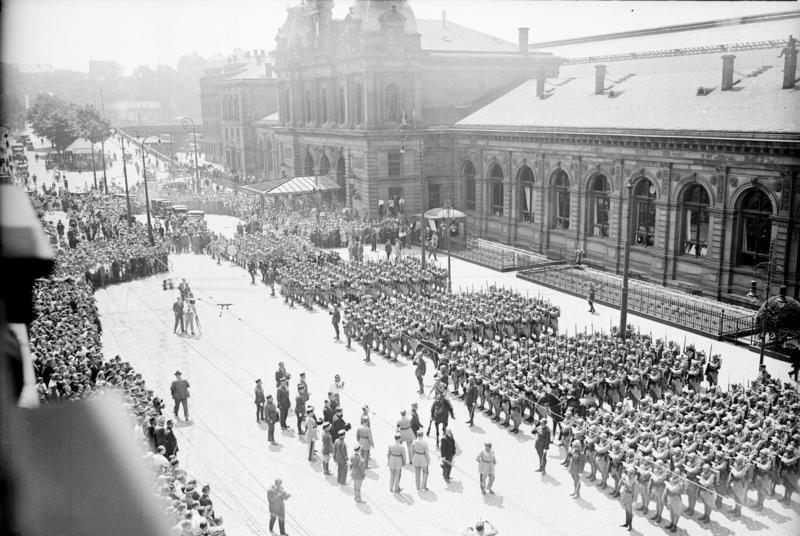
Mainz, Germany:  “Amid tremendous outbursts of enthusiasm of the populace, the last hobnailed boot of foreign troops vanished Monday from German soil.”  So leads the Universal Press article describing the scene in Mainz, throughout the Rhineland, and over much of Germany, as the last French forces occupying German soil after the World War depart.  At 11:15 a.m., the French flag is hauled down from the old Mainz castle, and the last several hundred French soldiers march to the train station to depart.  Some Germans cheer.  But at the train station, a crowd hisses and boos the departing troops.

The German government issues a statement tonight which reads in part: “There are still heavy clouds overhanging the political and economic life of our people.  The present day, however, gives reason for hope in the future.”  President Paul von Hindenburg refers to the occupation as “arbitrary foreign rule” in his comments.


Church bells are rung for an hour all over Germany, and public offices are closed.  At nightfall, bonfires are lit on the banks of the Rhine, and people celebrate into the night.

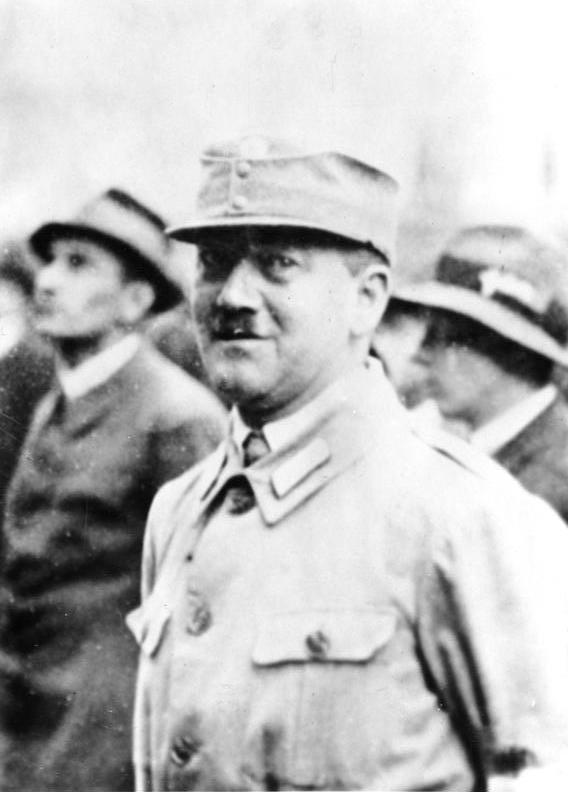
Paris:  The French press, on the other hand, worries that in the midst of their celebrations (and boos), Germans have not appreciated the fact that France is withdrawing its troops earlier than originally agreed.  Some even predict that Germany’s fascists – the nazis of Adolf Hitler – will grow in influence without a French presence.  


Matamoros, Mexico:  Twenty people are killed and eight more wounded when a mob of communists battles police in this central Mexican city.  The communists had sought permission for a march of protest against the Mexican government’s arrest of communists in other parts of the country.  When they were refused, they marched anyway.  Press reports say the communists opened fire on police.

Bilboa, Spain:  Communists are also implicated in two bomb blasts that destroy houses under construction here.  No one is injured.  Police, who seize two alleged perpetrators after a gun battle, say the bombs were an attempt to incite a general strike.

Saturday, January 28, 2017

Saturday, June 28, 1930

Rome:  Citing French fortifications in the Alps along the Italian border, Italy announces it will increase its military budget by US$26 million.

Berlin:  Chancellor Heinrich Bruening, in a speech before the Reichstrat, announces that he significantly underestimated the severity of Germany’s financial situation, and says drastic changes, including all of the new taxes he’s been proposing, must be implemented immediately if the country is get back on sound financial footing. 


New York:  A mob of 1,000 communists attempts to storm the British Consulate to protest British rule in India.  Five police are injured.

Thursday, January 26, 2017

Thursday, June 26, 1930: French Troops Evacuate The Palatinate

Speyer, Germany:  French troops depart The Palatinate, a region of about 2,100 square miles in southwestern Germany that has been occupied since the World War.  Residents celebrate by removing French-language street signs.  By prior agreement, all French troops will be out of the Rhineland by June 30.

Moscow:  The communist party’s annual convention opens at the Moscow Grand Opera House with speeches urging communists in the United States to agitate for revolution.

Washington:  Secretary of Commerce Robert P. Lamont releases census figures which indicate unemployment is just under 2.3 million, better than widely thought.  William Green, President of the American Federation of Labor, says unemployment is 3.6 million.

Berlin:  Herman Dietrich is appointed Finance Minister to replace Paul Moldenhauer, who resigned June 18.  Moldenhauer’s financial reform proposals proved unpopular.  Dietrich was Minister of Economics in Chancellor Heinrich Bruening’s cabinet.  Political observers say Dietrich’s appointment is Bruening’s last chance to save his government.

Budapest:  A group of 30 communists attacks the Polish Embassy with stones, smashing windows and shouting, “Down with Polish dictatorship!”  This after Poland executed a group of communists at Lwow (Lviv).  Police disperse the mob and arrest some.

Monday, January 23, 2017

Monday, June 23, 1930

Budapest:  A mass trial of more than 100 communists begins.  They are charged with revolutionary conspiracy against the state.

Tuesday, January 17, 2017

Tuesday, June 17, 1930: U.S. Enacts the Smoot-Hawley Tariff Act

Washington:  President Herbert Hoover signs the Smoot-Hawley Tariff Act, putting in force immediately a wide range of tariff increases on thousands of imported products.  The law changes the tariff rates on 1,122 products entering the United States, raising them in 887 cases.  Economic experts have warned that the act will only exacerbate the depression, and several U.S. trading partners have said they will retaliate.


Helsinki:  Communist agitation has reached such heights that citizens are taking matters into their own hands.  In northern Finland, mobs have begun driving communists toward the Russian border to rid their communities of their troublemaking.  In the capital, civic organizations have petitioned the government to suppress the communist party and its newspapers.  Communist organizations in Helsinki, Ulenborg and Vaza have ceased activities in the face of the opposition.

Monday, January 16, 2017

Monday, June 16, 1930

Berlin:  Four police are injured in a clash with demonstrating communists.

Sunday, January 15, 2017

Sunday, June 15, 1930

Berlin:  Having been banned from wearing their uniforms (see June 12), nazis hold a march shirtless. 

Meanwhile, S. Parker Gilbert, Agent General for Reparations under the now-expiring Dawes Plan (predecessor of the Young Plan), makes his final report on Germany’s financial condition.  He sounds repeated warnings that Germany needs “immediate and radical” budgetary reform if the nation is to meet its obligations and gets its financial house in order.  Tax revenues have improved “to an extent far exceeding expectations of experts,” Gilbert says.  The main problem: the government spends too much.  “There is evidence of unwillingness on the part of both government and parliament squarely and promptly to face the situation by taking the necessary steps either to control expenditures or to provide adequate resources to cover them.”

Gilbert’s report further complains that the German government’s budget presentations are “ideally calculated to obscure the real position.”  Yet Gilbert says social expenditures have risen 458% over the past five years, from 259 million marks to 1.345 billion, as the nation has become more deeply involved in subsidizing social insurance funds.  Germany’s public debt increased 11% in the last year alone, to 10.353 billion marks.  Germany’s gross deficit for the 1929-30 budget of about 1.075 billion marks is the worst in years.


“When the experts of the Dawes Committee were called together at the beginning of 1924, Germany was on the point of collapse after an unprecedented period of inflation,” Gilbert’s report says.  “Germany’s credit has been re-established both at home and abroad, her industries have been reorganized and her productive capacity has been restored, and the general standard of living has greatly improved.  The Dawes Plan, as was its object, also cleared the way for complete and final settlement of the reparations problem, which is embodied in the Young Plan and the Hague agreements of Jan. 20, 1930.  The new plan is an act of confidence in the good faith and financial integrity of Germany, and Germany now has a definite task to perform on her own responsibility, without foreign supervision and without the transfer protection provided by the Dawes Plan.”
S. Parker Gilbert

Leipzig:  Armed nazis and communists clash in Eythra, a suburb, killing 1 and injuring 12. 

Vienna:  Waldemar Pabst, the German leader of Austria’s fascist Heimwehr paramilitary who faces deportation for revolutionary activities, loses his appeal to stay in the country and leaves on a plane for Venice. 

Meanwhile, in economic news, reports have unemployment in Austria 20% higher than a year ago.  Export trade has declined significantly. 

Washington:  President Herbert Hoover announces, as expected, that he will sign the tariff bill known as the Smoot-Hawley Act that has been making its way through Congress.  Representatives of Spain, France and Great Britain have all warned that if Hoover signs the bill into law, it will unleash retaliatory tariffs from their countries. 

China:  Manchurian warlord Zhang Xueliang has reportedly told northern rebel forces he will join the fighting against them unless they accept his offer to mediate between them and nationalist government head Chiang Kai-shek (see March 21).

Saturday, January 14, 2017

Saturday, June 14, 1930: Pabst Arrested; Prince Wilhelm Joins the Nazis

Vienna:  Fresh off his parliamentary victory to disarm Austria’s paramilitaries, Chancellor Johann Schober orders the arrest of Waldemar Pabst, a German national who has been in Austria for several years helping lead the fascist Heimwehr paramilitary.  Pabst is charged with involvement in revolutionary activities; the government will begin expulsion proceedings against him immediately.  In an ironic twist, should Pabst be ordered expelled from Austria (which is likely), his only recourse of appeal would be to Karl Seitz, Mayor of Vienna – a socialist.
Waldemar Pabst

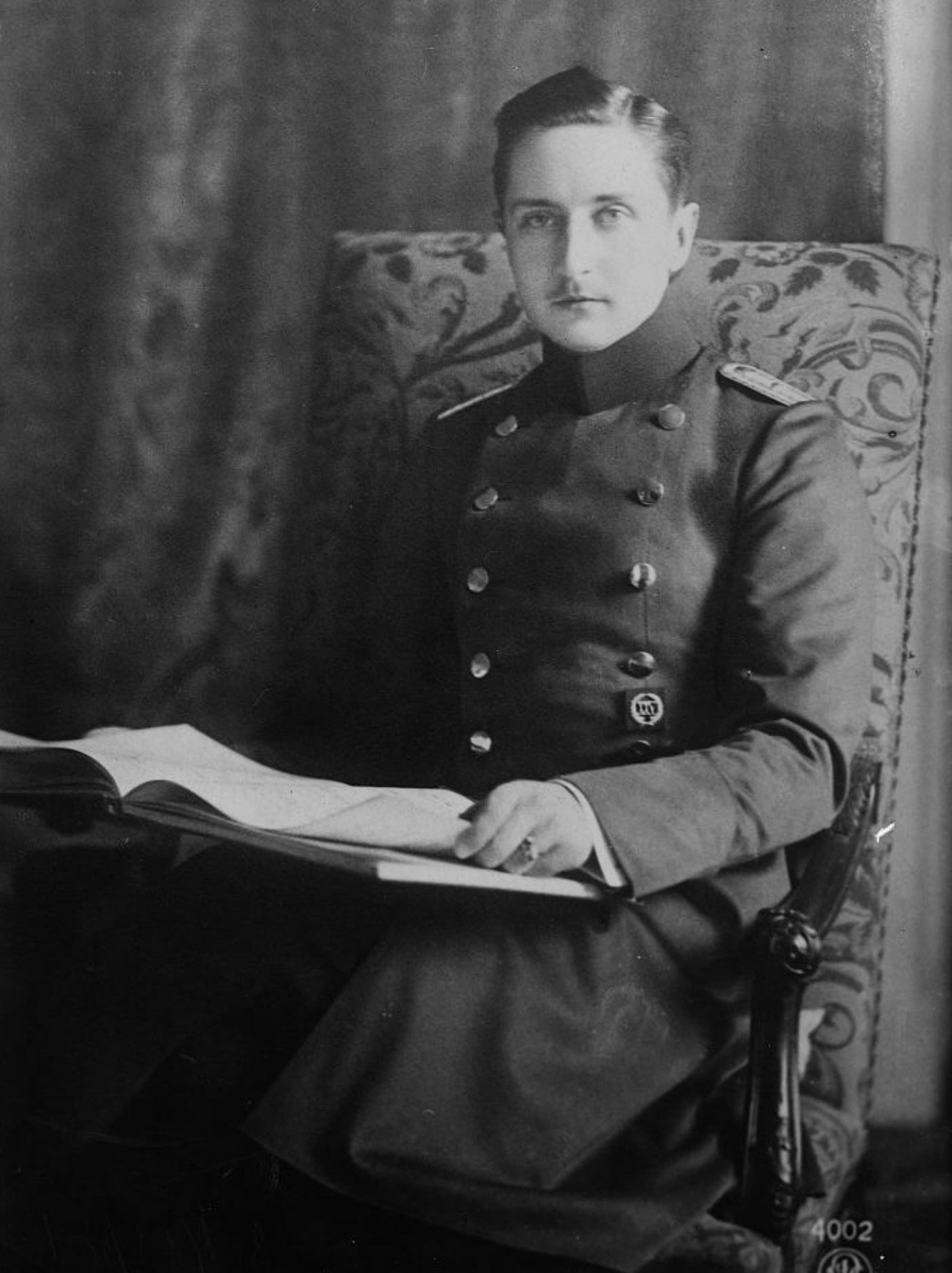
Berlin:  Prince August Wilhelm of Hohenzollern, son of the former Kaiser, announces he has abandoned his membership in the Stahlhelm nationalist paramilitary organization in favor of the nazis.  His reasons reportedly include the Stahlhelm’s lack of sufficient support for his fiery nationalist speeches, and his belief that Adolf Hitler and the nazis can provide the necessary zeal for the German nationalist movement.  He appeals to his own supporters to do the make the switch too.
Prince August Wilhelm of Hohenzollern

Helsinki:  The government suspends five communist newspapers and removes the governor of the Vaza district in an attempt to curb communist agitation.  President Lauri Kristian Relander cuts short his vacation to return home and deal with the crisis.

Friday, January 6, 2017

Friday, June 6, 1930

Berlin: Chancellor Heinrich Bruening’s plan for saving Germany’s finances by taxing workers’ salaries, corporate directors’ fees and bachelors, runs into immediate trouble.  Several political parties publicly oppose it.  They and their allied press outlets predict not only that the measure will fail to pass the Reichstag, but that Bruening’s cabinet will fall over it.  Meanwhile, the Prussian Trade Minister’s monthly report on economic conditions in that state (which makes up nearly 60% of Germany) describes “almost universal depression.”
 
Tokyo:  Government officials are said to be apprehensive about developments in Tsinan in the Chinese civil war: 2,000 Japanese students are trapped there as fighting approaches.  Tsinan was the scene of a brutal attack in 1928, when southern rebels overrunning the city killed 30 Japanese nationals. 

Gomel, Ukraine:  Kulaks (rich peasants) outraged at continued soviet collectivization of their farms, set fire to the two largest collective farms in the district.  Sheds containing agricultural equipment and machinery are destroyed, leaving the collectives without the means to produce food.  

Thursday, June 5, 1930

Germany:
Berlin:  Chancellor Heinrich Bruening’s cabinet proposes a plan to rescue Germany’s ailing finances by an emergency 10% tax increase on workers’ salaries, on fees earned by corporate directors, and on . . . unmarried men.  The latter is being called the “bachelor tax.”  How popular this idea will prove remains to be seen.

Nienburgh:  More evidence of the depression’s toll.  Farmers in this northern community tear up paving and barricade two streets into their village, wielding clubs and pitchforks, to prevent tax bailiffs from serving notice of non-payment on drainage assessments.  No violence breaks out; the bailiffs leave without delivering their notices.

Nice:  French authorities expel an ethnic Italian fascist for his role in sending a group from Nice’s Italian community to Rome as representatives of “Italian provinces and dominions” at a ceremony there.  That Nice is not an Italian province seems clear to the French.  But many in Italy still consider Nice and Savoy lost territories from the last century, before Italy’s unification.

Bucharest:  Romanian police uncover a widespread soviet propaganda organization in Bessarabia, the northeastern region which Romania has governed since 1918, but which Russia still considers her territory.  Police say the network had 16 centers, intended to agitate for the region’s communization and unification with the Soviet Union.

Sunday, January 1, 2017

Sunday, June 1, 1930

Halle, Germany:  In a speech here, nationalist politician Alfred Hugenberg proposes a “reparations duty” – a tariff on all goods and raw products imported into Germany – to extract from the rest of the world funds for Germany to pay its war debts under the Young Plan.  “Whoever utilizes central Europe, its market, traffic system and culture, must help us bear the burden which the rest of the world imposed.”  Hugenberg further suggests that this duty would be the first step in an economic fusion of central Europe centered around Germany, as opposed to France’s plan for a “United States of Europe.”

Dunkelstein, Austria:  Socialists and Heimwehr fascists clash in a street battle, throwing stones and firing shots.  Injuries are described as “numerous,” including gunshot wounds.

Manchuria:  Japanese consular police and Chinese troops mobilize in the Kurin province in anticipation of further outbreaks of violence by Korean communists.

Philadelphia:  More bad economic news -- new data indicate unemployment here is 40 percent higher than same time last year.  

Monday, December 19, 2016

Saturday, May 31, 1930

Lung Ching-Tsun (Jilin City), Manchuria:  Bands of Korean communists launch coordinated attacks on Japanese facilities here, in Yenki, and at other towns in this district on the border with Korea.  The communists burn and bomb Japanese consulates, utilities and schools, but the only casualty is an injured police officer.  Japanese consular police and Chinese troops band together to drive the attackers away.
 
Berlin:  Joseph Goebbels, nazi member of the Reichstag, is fined the equivalent of US$200 instead of getting the nine-month prison term requested by state prosecuting attorneys, for insulting President Paul von Hindenburg in an article he published in December in a nazi newspaper.  The article, titled “Is President von Hindenburg Still Alive?” excoriated Hindenburg for his “friendship with Jewish and Marxist advisors.” 

Meanwhile, more bad economic news: Paul Moldenhauer, Minister of Finance, reports to the Reichstag that government revenues are still falling, but spending is not, resulting in a projected annual deficit of US$180 million.  

Sunday, December 11, 2016

Saturday, May 24, 1930

Milan:  Dictator Benito Mussolini wraps up a tour of Tuscany with another fiery speech, although toned down from his last two.  “We are well enough informed of the spirit dominating some of our neighbors,” he says, another thinly veiled reference to France.  His audience again responds with cries of “Down with France!”  He also takes the opportunity to deny what he claims are rumors that Italy had sent troops to Albania to aid King Zog. 

Kiel, Germany:  Communists and nazis clash again, injuring 12.  

Saturday, December 3, 2016

Saturday, May 17, 1930

Florence:  Dictator Benito Mussolini, after months of relative quiet, gives a bellicose speech before 200,000 screaming fascists, emphasizing the military might of Italy and her readiness to battle her enemies.  “There are people who think they can isolate Italy, and who would not be adverse from starting war against the Italian people, even through the territory of a third power.”  It is widely understood that Mussolini refers to France, whose relations with eastern European countries, Italy believes, are intended to isolate Italy.  “Fascist Italy henceforth will be a unit so organized as to be unassailable and without mortal danger.  Though words are beautiful things, rifles, machine guns, ships, airplanes and big guns are still more beautiful.” 

The French Ambassador to Italy visits Italian Foreign Minister Dino Grandi to express his displeasure. 

Paris:  Foreign Minister Aristide Briand has presented a proposal to the 26 European countries that are members of the League of Nations, calling for a federation of European states.  Some in the U.S. press are calling the idea a “United States of Europe.”  Briand first floated the concept in a speech last year, but now has presented it, fully formed, in a “Memorandum on the Organization of a Regime of European Federal Union.”  It is a bold proposal, though not without some precedent in European history.  Some fear Italy and Germany will view it as an attempt to isolate them and expand French influence over the continent.

Berlin:  Three people are killed when communists and nazis, on their way home from various political gatherings, clash in street brawls.


New York:  Police battle a crowd of 2,000 communists when they attempt to free picketers who had been detained after ignoring a court injunction not to demonstrate.  Four are arrested.

Thursday, May 15, 1930

Heidenau, Germany:  Communists and nazis battle in the streets, injuring 25 and overwhelming the response capability of the village police force.

Sunday, November 27, 2016

Sunday, May 11, 1930

Bucharest:  The former chief of Romanian police is sentenced to 10 years in prison for communist spying; his wife and five aides get five years each.

Tuesday, November 22, 2016

Tuesday, May 6, 1930

Berlin:  A police lieutenant is injured and 22 communists arrested during demonstrations.

Monday, November 14, 2016

Thursday, May 1, 1930: May Day Passes with Relative Calm

May Day passes relatively calmly in most of the world.  Customarily a major event for labor and communists, the day passes with less unrest than many authorities and police had feared.  Berlin is the exception: riots and shooting mar the occasion, with one killed and 200 arrested.  In Paris, police arrest more than 3,200 demonstrators or potential troublemakers, raiding meetings of communist and labor groups to stop problems before they start, and there isn’t even much work stoppage.  Factories are running at 80%, and utilities are normal.

In New York, 1/3 of the city’s police force – 5,000 men – are on duty.  More than 100,000 people participate in two demonstrations – one pro-American, the other pro-Soviet, but both are relatively peaceful.  50 are arrested for disorderly conduct, mostly keeping kids out of school to participate in the demonstrations.  10,000 war veterans also demonstrate against communism.

Moscow, of course, sees its usual parades and demonstrations.  People carry signs and banners ridiculing religion, British imperialism in India, and the League of Nations.  Loudspeakers are set up over the Shrine of the Iberian Virgin at the entrance to Red Square, and blare revolutionary speeches all day.

Madrid:  A crowd of 10,000 cheers a speech by Miguel Unamuno, one of Spain’s leading philosophers, who ardently advocates a republic.  At one point the crowd begins shouting, “Death to the king!”  Police charge with swords drawn, injuring 50.  Nevertheless, Premier Gen. Damaso Berenguer says he doesn’t take the “shouting of students” too seriously, and says the monarchy will remain, but elections will be held.

Warsaw:  Communists and the unemployed clash with police using guns and rocks, injuring six.  Two are arrested. 

Tokyo:  In a press interview, Shoza Yabuki, Vice Minister of the Navy, appeals to “everyone who believes in party government” to support Japan’s approval of the London Naval Treaty. 

London:  The worldwide economic depression deepens: Margaret Bondfield, Minister of Labor, tells the House of Commons that unemployment has increased more than 500,000 in a year.

Wednesday, April 30, 2014

Wednesday, 30 April 1930

Paris:  France expels 22 communist leaders as a precaution against May Day agitation tomorrow. 

Friday, April 25, 2014

Friday, 25 April 1930: Opposition to London Naval Treaty Rises in Japan

Tokyo: 

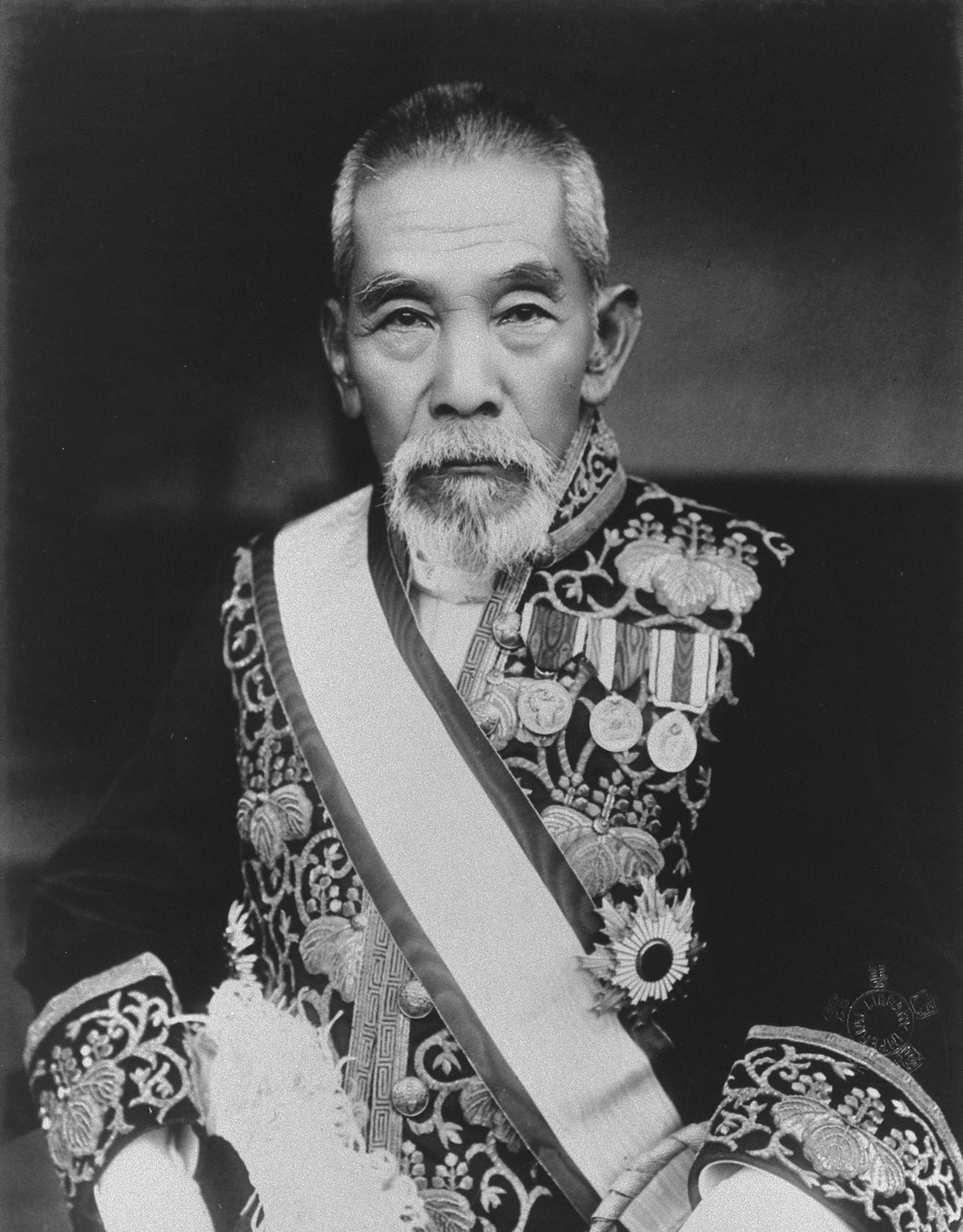
Opposition to Japan’s approval of the London Naval Treaty arises quickly.  Inukai Tsuyoshi, President of the Seiyukai opposition political party, attacks the treaty in the diet, claiming that because it was signed by a civilian government representative, it violates the Japanese constitution, which stipulates that the military be free from civilian control.  Foreign Minister Kijuro Shidehara, reviewing the treaty in the Diet, repeatedly has to refute the accusation that the Japanese delegation was forced to sign. 


Inukai Tsuyoshi


Paris:  Prime Minister Andre Tardieu proposes severe measures to prevent communist demonstrations on May Day, May 1. 

Halle, Germany:  A clash between nazis and communists after a nazi meeting results in injuries to 19 nazis.