Showing posts with label USA. Show all posts

Saturday, January 28, 2017

Saturday, June 28, 1930

Rome:  Citing French fortifications in the Alps along the Italian border, Italy announces it will increase its military budget by US$26 million.

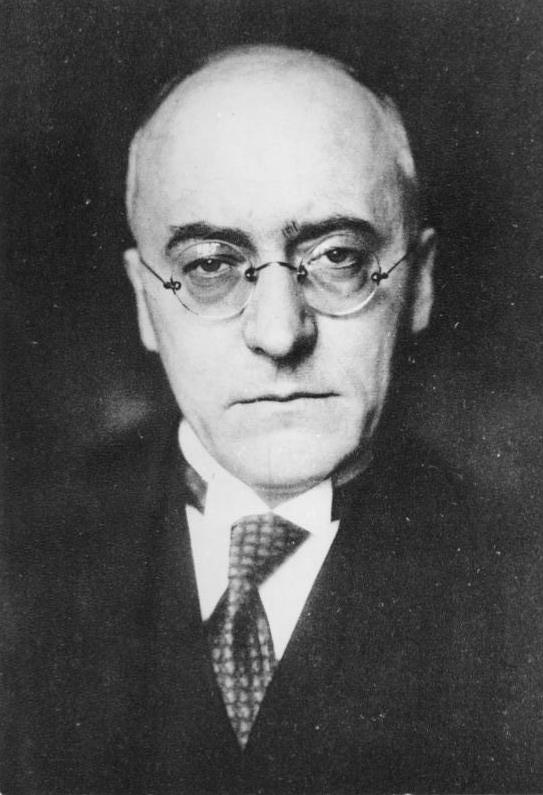
Berlin:  Chancellor Heinrich Bruening, in a speech before the Reichstrat, announces that he significantly underestimated the severity of Germany’s financial situation, and says drastic changes, including all of the new taxes he’s been proposing, must be implemented immediately if the country is get back on sound financial footing. 


New York:  A mob of 1,000 communists attempts to storm the British Consulate to protest British rule in India.  Five police are injured.

Thursday, January 26, 2017

Thursday, June 26, 1930: French Troops Evacuate The Palatinate

Speyer, Germany:  French troops depart The Palatinate, a region of about 2,100 square miles in southwestern Germany that has been occupied since the World War.  Residents celebrate by removing French-language street signs.  By prior agreement, all French troops will be out of the Rhineland by June 30.

Moscow:  The communist party’s annual convention opens at the Moscow Grand Opera House with speeches urging communists in the United States to agitate for revolution.

Washington:  Secretary of Commerce Robert P. Lamont releases census figures which indicate unemployment is just under 2.3 million, better than widely thought.  William Green, President of the American Federation of Labor, says unemployment is 3.6 million.

Berlin:  Herman Dietrich is appointed Finance Minister to replace Paul Moldenhauer, who resigned June 18.  Moldenhauer’s financial reform proposals proved unpopular.  Dietrich was Minister of Economics in Chancellor Heinrich Bruening’s cabinet.  Political observers say Dietrich’s appointment is Bruening’s last chance to save his government.

Budapest:  A group of 30 communists attacks the Polish Embassy with stones, smashing windows and shouting, “Down with Polish dictatorship!”  This after Poland executed a group of communists at Lwow (Lviv).  Police disperse the mob and arrest some.

Saturday, January 21, 2017

Saturday, June 21, 1930

Berlin:  In the crisis following the resignation of Finance Minister Paul Moldenhauer, reports say that some of the political parties represented in Chancellor Heinrich Bruening’s cabinet want to wait for the results from the landtag (parliament) elections in the German state of Saxony before deciding on a new finance minister.  They want to see which direction the winds of public opinion are blowing.  Those elections are set for tomorrow.


New York:  More signs of the economic depression -- unemployment in the city is estimated at 300,000.

Wednesday, January 18, 2017

Wednesday, June 18, 1930: European Backlash to Smoot-Hawley

London:  Protest and complaint come fast and fierce to the U.S. Smoot-Hawley tariff act.  Critics say it will jeopardize Britain’s war debt repayments to the U.S., and demand that Great Britain raise tariffs to protect her industries in turn.

Paris:  Newspapers and politicians of all stripes denounce the U.S. tariff act.  The Minister of Commerce calls it a “false remedy” for the worldwide economic depression.  French economists are calling for a European “tariff union” to offset the U.S. measure. 

Madrid:  The government orders a committee to study the effects of the U.S. tariff.  Critics are calling for Spain to break its current trade agreement with the U.S. in retaliation.


Berlin:  Finance Minister Paul Moldenhauer is reportedly resigning in the face of widespread disfavor for his financial reform measures, such as new taxes on employees and bachelors.  The cabinet of Chancellor Heinrich Bruening meets in special session tonight to discuss the matter.

Tuesday, January 17, 2017

Tuesday, June 17, 1930: U.S. Enacts the Smoot-Hawley Tariff Act

Washington:  President Herbert Hoover signs the Smoot-Hawley Tariff Act, putting in force immediately a wide range of tariff increases on thousands of imported products.  The law changes the tariff rates on 1,122 products entering the United States, raising them in 887 cases.  Economic experts have warned that the act will only exacerbate the depression, and several U.S. trading partners have said they will retaliate.


Helsinki:  Communist agitation has reached such heights that citizens are taking matters into their own hands.  In northern Finland, mobs have begun driving communists toward the Russian border to rid their communities of their troublemaking.  In the capital, civic organizations have petitioned the government to suppress the communist party and its newspapers.  Communist organizations in Helsinki, Ulenborg and Vaza have ceased activities in the face of the opposition.

Sunday, January 15, 2017

Sunday, June 15, 1930

Berlin:  Having been banned from wearing their uniforms (see June 12), nazis hold a march shirtless. 

Meanwhile, S. Parker Gilbert, Agent General for Reparations under the now-expiring Dawes Plan (predecessor of the Young Plan), makes his final report on Germany’s financial condition.  He sounds repeated warnings that Germany needs “immediate and radical” budgetary reform if the nation is to meet its obligations and gets its financial house in order.  Tax revenues have improved “to an extent far exceeding expectations of experts,” Gilbert says.  The main problem: the government spends too much.  “There is evidence of unwillingness on the part of both government and parliament squarely and promptly to face the situation by taking the necessary steps either to control expenditures or to provide adequate resources to cover them.”

Gilbert’s report further complains that the German government’s budget presentations are “ideally calculated to obscure the real position.”  Yet Gilbert says social expenditures have risen 458% over the past five years, from 259 million marks to 1.345 billion, as the nation has become more deeply involved in subsidizing social insurance funds.  Germany’s public debt increased 11% in the last year alone, to 10.353 billion marks.  Germany’s gross deficit for the 1929-30 budget of about 1.075 billion marks is the worst in years.


“When the experts of the Dawes Committee were called together at the beginning of 1924, Germany was on the point of collapse after an unprecedented period of inflation,” Gilbert’s report says.  “Germany’s credit has been re-established both at home and abroad, her industries have been reorganized and her productive capacity has been restored, and the general standard of living has greatly improved.  The Dawes Plan, as was its object, also cleared the way for complete and final settlement of the reparations problem, which is embodied in the Young Plan and the Hague agreements of Jan. 20, 1930.  The new plan is an act of confidence in the good faith and financial integrity of Germany, and Germany now has a definite task to perform on her own responsibility, without foreign supervision and without the transfer protection provided by the Dawes Plan.”
S. Parker Gilbert

Leipzig:  Armed nazis and communists clash in Eythra, a suburb, killing 1 and injuring 12. 

Vienna:  Waldemar Pabst, the German leader of Austria’s fascist Heimwehr paramilitary who faces deportation for revolutionary activities, loses his appeal to stay in the country and leaves on a plane for Venice. 

Meanwhile, in economic news, reports have unemployment in Austria 20% higher than a year ago.  Export trade has declined significantly. 

Washington:  President Herbert Hoover announces, as expected, that he will sign the tariff bill known as the Smoot-Hawley Act that has been making its way through Congress.  Representatives of Spain, France and Great Britain have all warned that if Hoover signs the bill into law, it will unleash retaliatory tariffs from their countries. 

China:  Manchurian warlord Zhang Xueliang has reportedly told northern rebel forces he will join the fighting against them unless they accept his offer to mediate between them and nationalist government head Chiang Kai-shek (see March 21).

Thursday, January 5, 2017

Wednesday, June 4, 1930

Berlin:  Chancellor Heinrich Bruening’s cabinet adjourns without agreeing on any new actions to solve Germany’s financial crisis.  Meanwhile representatives of the industrial community and labor unions, perhaps fed up with the government’s inactivity, reportedly hold their own bilateral discussions about cutting prices and pay wages in tandem, in an attempt to spur the economy.
 
Washington:  More evidence of the economic depression -- President Herbert Hoover considers a $3 billion federal bond issue to speed public works and get the unemployed working again.  The U.S. economic decline is said to total more than $63 billion to date.

Rome:  Foreign Minister Dino Grandi, in a speech to the Senate that appears intended to moderate (and “clarify”) Dictator Benito Mussolini’s bellicose comments from a few days before, says Italy is willing to postpone the aggressive naval building program it had announced earlier, if France does the same.  “The Italian government is disposed to postpone laying down its program for naval construction in 1930 provided the French government does the same for the program for 1930.  Considering the relative strength of the two fleets such a concession would have a greater effect on the Italian navy than on the French.”  

Sunday, January 1, 2017

Sunday, June 1, 1930

Halle, Germany:  In a speech here, nationalist politician Alfred Hugenberg proposes a “reparations duty” – a tariff on all goods and raw products imported into Germany – to extract from the rest of the world funds for Germany to pay its war debts under the Young Plan.  “Whoever utilizes central Europe, its market, traffic system and culture, must help us bear the burden which the rest of the world imposed.”  Hugenberg further suggests that this duty would be the first step in an economic fusion of central Europe centered around Germany, as opposed to France’s plan for a “United States of Europe.”

Dunkelstein, Austria:  Socialists and Heimwehr fascists clash in a street battle, throwing stones and firing shots.  Injuries are described as “numerous,” including gunshot wounds.

Manchuria:  Japanese consular police and Chinese troops mobilize in the Kurin province in anticipation of further outbreaks of violence by Korean communists.

Philadelphia:  More bad economic news -- new data indicate unemployment here is 40 percent higher than same time last year.  

Saturday, December 3, 2016

Saturday, May 17, 1930

Florence:  Dictator Benito Mussolini, after months of relative quiet, gives a bellicose speech before 200,000 screaming fascists, emphasizing the military might of Italy and her readiness to battle her enemies.  “There are people who think they can isolate Italy, and who would not be adverse from starting war against the Italian people, even through the territory of a third power.”  It is widely understood that Mussolini refers to France, whose relations with eastern European countries, Italy believes, are intended to isolate Italy.  “Fascist Italy henceforth will be a unit so organized as to be unassailable and without mortal danger.  Though words are beautiful things, rifles, machine guns, ships, airplanes and big guns are still more beautiful.” 

The French Ambassador to Italy visits Italian Foreign Minister Dino Grandi to express his displeasure. 

Paris:  Foreign Minister Aristide Briand has presented a proposal to the 26 European countries that are members of the League of Nations, calling for a federation of European states.  Some in the U.S. press are calling the idea a “United States of Europe.”  Briand first floated the concept in a speech last year, but now has presented it, fully formed, in a “Memorandum on the Organization of a Regime of European Federal Union.”  It is a bold proposal, though not without some precedent in European history.  Some fear Italy and Germany will view it as an attempt to isolate them and expand French influence over the continent.

Berlin:  Three people are killed when communists and nazis, on their way home from various political gatherings, clash in street brawls.


New York:  Police battle a crowd of 2,000 communists when they attempt to free picketers who had been detained after ignoring a court injunction not to demonstrate.  Four are arrested.

Sunday, November 27, 2016

Thursday, May 8, 1930

Spain:  The nation is abuzz with rumors that a group of military officers plans a coup to return a dictatorship, but nothing materializes other than clashes between students and police in Saragossa.

Washington:  More evidence of the growing economic depression: the government reports that U.S. foreign trade fell by $500 million compared to the same quarter prior year. 

Thursday, November 17, 2016

Sunday, May 4, 1930

Madrid:  Students shouting “Viva el rey!” enter a theater where Republicans have gathered and start hitting the meeting’s leaders over the head with sticks, sparking a riot.  From there, the fighting spreads outside, and eventually to the street in front of a hotel where the meeting’s speaker is staying.  Several are injured and arrested.

Rome:  Benito Mussolini reviews 25,000 fascist youth who have been participating in a camp.  Mussolini praises their morale and discipline.

Austria:  Chancellor Johann Schober, who had just promised the League of Nations he would disarm the country’s militarized political factions as a condition for receiving financing to improve Austria’s infrastructure, returns home to find a 10,000-man march being held by the nationalist Heimwehr paramilitary in Vienna, and 16,000 uniformed socialists gathering in St. Polten.  Police with machine guns keep the peace.

Washington:  More than 1,000 economists sign a letter to President Herbert Hoover, asking him to veto the Smoot-Hawley tariff bill pending in Congress.  The bill would raise tariffs on more than 20,000 import products to record levels, in hopes of protecting domestic producers during the economic depression.  The economists say it will have the opposite effect, provoking reprisal tariffs from other countries and worsening the depression.


Manchuria:  Warlord Zhang Xueliang, de facto ruler of Manchuria, is reportedly acquiring a small “air force” of bombers and scout planes after suffering under Russia’s air superiority during the Soviet incursion into Manchuria (see Nov. 17, 1929).  

Thursday, April 10, 2014

Thursday, 10 April 1930

London: 

At the London Naval Conference, the U.S. delegation comes up with a scheme that will allow all five participants to sign something, thus preventing a complete conference failure, although most of what France and Italy will sign is of less consequence.  The idea is to break the treaty into three parts.  The first calls for a temporary suspension of battleship building.  The second will deal with the “humanization” of submarine warfare.  France and Italy will reportedly sign those two.  The third part will be trilateral between the U.S., Great Britain and Japan, governing broader naval quotas. 


Berlin: 

The new cabinet of Heinrich Bruening is already finding the going rough.  One economic measure after another is defeated in committee: yesterday it was the cabinet’s proposal to raise the beer tax 75%; today it is plans for funding unemployment insurance.  President Paul von Hindenburg has called another meeting of all political party leaders to try to find a solution.  If he doesn’t, rumors are he will consider again his earlier threat to dissolve the Reichstag and have Bruening run the country by the constitution’s emergency provisions. 

Elsewhere:

Washington:  More bad economic news: farm wages are the lowest since the government started collecting figures in 1923. 

Belgrade:  13 people are sentenced to prison on charges of belonging to a communist organization. 

Tuesday, April 8, 2014

Tuesday, 8 April 1930

Berlin:  New Chancellor Heinrich Bruening introduces plans to try to solve Germany’s financial crisis by raising duties on a wide range of agricultural products.  Once finalized, the measures will be introduced in the Reichstag.

Washington:  More economic bad news: the government announces that exports to Europe are down $30 million from 1929 levels, and imports from Europe down nearly $20 million.

Tuesday, April 1, 2014

Tuesday, 1 April 1930: Japan Announces it will Accept the Two-Thirds Ratio

Tokyo: 

The government of Prime Minister Osachi Hamaguchi announces that it will accept the terms of the London Naval Treaty being proposed by the United States and Great Britain, and instructs its delegates to the London Naval Conference to sign it.  This will preserve the requirement that Japan have a smaller ratio of capital ships compared to the U.S. and U.K. – a sore point among Japanese military leaders (although the ratio does improve).  The last treaty (with the 60% ratio) created a sharp rift in the Japanese navy between pro-treaty factions and nationalist admirals who wanted full parity with the other powers.  Many in Japan – in the military, the government and the public – view the reduced ratio as a national insult. 


Berlin: 

President Paul von Hindenburg gives Heinrich Bruening, his candidate to become chancellor of a new government, permission to dissolve the Reichstag and run the country under Article 48 -- the “emergency provision” -- of the German constitution, if the Reichstag doesn’t give Bruening a vote of confidence.  Armed with this, Bruening gives a curt speech in the Reichstag, telling the delegates the country needs work, not words, and action, not argument, if Germany is to dig through its financial issues.  Nonetheless, his speech is interrupted often by jeering from the communist delegates.

Elsewhere:

London:  More evidence of the Depression: the government announces that its plans to help the nation’s unemployed will cost the equivalent of US$350 million.

Washington:  More bad economic news:  William Green, President of the American Federation of Labor, testifies before Congress that 3.7 million are out of work. 
China:  Civil war resumes in China’s northern territories.  It has been brewing for weeks.  The governor of Shansi province has allied himself with a general who was a leader in Chiang Kai-shek’s nationalist army until he led a rebellion against Chiang late last year.  The two have moved their forces into Kaifeng, capital of Honan province, and into northern Shantung province, in a bid to challenge Chiang.  So far they are unopposed by government troops in the area – many of which have reportedly joined their rebellion. 

Friday, March 28, 2014

Friday, 28 March 1930

Berlin:  

President Paul von Hindenburg asks Heinrich Bruening, floor leader of the Centrist party, to form a cabinet.  And he’s given him 24 hours to do it, telling him to focus on constructing a cabinet that can get approval by the Reichstag, regardless of which parties it contains, and then can push through financial reforms necessary to get Germany’s financial house in order. 

Bruening is reportedly considering asking Martin Schiele to join his cabinet.  Schiele is a member of Alfred Hugenberg’s National People’s Party, the nationalist group that spearheaded the Liberty Law campaign.  By including Schiele in his cabinet, Bruening would be hoping to create a rift within the National People’s Party and divide their vote, possibly giving his government a better chance to succeed.  The nationalists, however, announce today that they won’t participate in a new Bruening cabinet, and demand that the Reichstag be dissolved and new elections held. 


Meanwhile, a scathing article by Gen. Erich von Ludendorff is published, in which he calls Hindenburg a “false hero” for signing the Young Plan.  Ludendorff says the world war veterans’ organization of which both he and Hindenburg are members should expel Hindenburg for “violation of duty.”  Ludendorff was a participant in Adolf Hitler’s “Beer Hall Putsch” in 1923 and a former Reichstag member, but he has been largely out of the public eye since 1928.  “Through four hard years, Hindenburg did what I told him to do,” Ludendorff writes.  “Now he has forfeited the right to wear the field-gray uniform or carry it to his grave.” 

Elsewhere:

Washington:  It’s all bad news on the economic front.  Retail sales through February in the United States are down 4% from same period last year.  And farm prices are at their lowest levels in 3 years – wheat the lowest in 17 years.

Tuesday, March 25, 2014

Tuesday, 25 March 1930

London:  More evidence of the growing worldwide economic depression – new government figures put unemployment at over 1.6 million, worst since 1922.  The National Unemployed Workers’ Movement announces plans for a jobless march, asking for government relief.

Washington:  Still more evidence of the depression -- unemployment among union members is at 21%, according to the American Federation of Labor.  That’s actually down a notch from 22% in February, but, “Improvement is not yet general,” says William Green, President of the AFL.  

Tuesday, March 18, 2014

Tuesday, 18 March 1930

United States:

New York:  More evidence of the worldwide economic depression: Francis H. Sisson, Vice President of Guaranty Trust Company, says export trade by the United States has declined $117 million since November 1929.  Meanwhile, at two different “bread lines” in the city, more than 1,000 unemployed are reportedly in cue. 

Pittsburgh:  Newspapers report more than 1,700 people standing in a bread line at one location, 800 at another. 

Elsewhere:

Moscow:  Notwithstanding the soviet executive’s order of Saturday, the Moscow soviet votes to close 56 more churches in Moscow and the surrounding region.  The churches are to be converted to schools, clubs, libraries, restaurants and laboratories.  The congregations have the right of appeal, however.

Hanau, Germany:  Communists attack Paul Rehbein, a Social Democrat member of the Prussian diet, while he is visiting a cemetery.  They knock him down and beat him with spades so severely he is taken to a local hospital.  The attack is understood to be in retribution: Rehbein was formerly a communist, but became a socialist.  

Sunday, March 16, 2014

Sunday, 16 March 1930

Tokyo:  

Press reports state that the “two-thirds” ratio of capital ships proposed for Japan at the London Naval Conference is causing a rift between military and civilian government leaders in Japan.  Naval officers are displeased with the “second-class citizen” status the ratio would give Japan.

Vienna:  

The government announces that the Austrian national anthem has been changed (for the fourth time since the World War).  The new anthem will be Deutschland, Deutschland-Uber Alles (Germany, Germany Above All) which is also Germany’s national anthem.  This was also Austria’s national anthem before the war (though with different words).  The socialist mayor of Vienna, Karl Seitz, dislikes the anthem so much he refuses to stand or remove his hat when it is played.

England:  

In response to a call from Cosmo Gordon Lang, Archbishop of Canterbury, Anglicans throughout the country hold special prayer services on behalf of persecuted Christians in Russia.  Indeed, Christians as well as Jews around the world are supposed to be holding similar prayer services .  Rev. A.F.W. Ingram, Bishop of London, says, “to think that all those bishops have been butchered [in Russia], all those priests murdered!”

New York:  

Police are busy guarding special prayer meetings in area churches, called on behalf of persecuted Christians in Russia, as well as guarding 12,000 people attending a communist anti-religion rally at Bronx Coliseum.  At the communist rally, the crowd boos religion, calls for an end to class war, and pillories everyone from New York Police Chief Grover Whalen to Italian Dictator Benito Mussolini to the Pope.  The meeting is guarded by 450 police with riot gear, machine guns and paddy wagons, but it is peaceful.


Paris:  

Miguel Primo de Rivera, who until six weeks ago was dictator of Spain, dies unexpectedly in his hotel room here.  Cause of death is said to be an embolism, a complication of his diabetes.

Saturday, March 15, 2014

Saturday, 15 March 1930

Germany:

Berlin:  A newspaper reports that Germany and Russia are scheduled to hold a conference to discuss German concerns about the spread of communist propaganda in Germany.  Meanwhile, Chancellor Hermann Mueller announces that he expects Germany’s approval of the Young Plan to help the nation’s economy, attracting fresh capital, stimulating trade and helping with unemployment.

Schleswig-Holstein:  Bombs connected to clock timers are found in two different places – one in the cellar of the town hall, the other against the wall of the treasury building.  Both are discovered before they explode, and are safely removed and disarmed.  No claims of responsibility. 

New York:  

The impact of the worldwide economic depression widens:  The Family Welfare Association of America releases a report indicating that 54 of its city agencies around the country are reporting a 100% increase or higher in families needing welfare assistance compared to a year ago.  Moreover, “A number of the societies stated the number of families under their care at present does not give a true picture of the unemployment situation in their respective communities,” the report states, “as many dependent families whose difficulties are only of unemployment are being referred to the tax-supported departments.”  It goes on to say, “It is estimated that between 55 and 60 per cent of the relief funds for January, 1930, went for unemployment relief.  There was never, in the history of the society, a month like January, 1930.”

Moscow:  

Despite Russia’s fiery rhetoric defending its elimination of religion, the soviet Central Executive Committee issues a new decree ordering punishment for those who ridicule religion or close churches without consent of the majority of a local populace.  In doing so, the order effectively concedes that earlier claims by various Russian authorities and media, that churches and synagogues were closed at the request of the people, were lies: it prohibits church closures under the pretense of “fictitious petitions of the inhabitants.”  Additionally, it says party officials and organizers “unnecessarily” ridiculing religion will be severely punished. 

The order comes the day before Christians both Protestant and Catholic, as well as Jews, are scheduled to hold coordinated prayer services for persecuted people of faith in Russia.  

Tuesday, March 4, 2014

Tuesday, 4 March 1930

Washington:  The worldwide economic depression worsens: Labor Secretary James J. Davis announces that unemployment in the U.S. is at 3 million. 

New York:  A New York Times article says that while soviet Russia is fomenting unemployment riots around the world, its own official figures put unemployment there at 7-10 million -- higher than any country it agitates against.  Moreover, Russia’s unemployed are ruthlessly suppressed from demonstrating.