Showing posts with label Hindenburg. Show all posts

Thursday, April 10, 2014

Thursday, 10 April 1930

London: 

At the London Naval Conference, the U.S. delegation comes up with a scheme that will allow all five participants to sign something, thus preventing a complete conference failure, although most of what France and Italy will sign is of less consequence.  The idea is to break the treaty into three parts.  The first calls for a temporary suspension of battleship building.  The second will deal with the “humanization” of submarine warfare.  France and Italy will reportedly sign those two.  The third part will be trilateral between the U.S., Great Britain and Japan, governing broader naval quotas. 


Berlin: 

The new cabinet of Heinrich Bruening is already finding the going rough.  One economic measure after another is defeated in committee: yesterday it was the cabinet’s proposal to raise the beer tax 75%; today it is plans for funding unemployment insurance.  President Paul von Hindenburg has called another meeting of all political party leaders to try to find a solution.  If he doesn’t, rumors are he will consider again his earlier threat to dissolve the Reichstag and have Bruening run the country by the constitution’s emergency provisions. 

Elsewhere:

Washington:  More bad economic news: farm wages are the lowest since the government started collecting figures in 1923. 

Belgrade:  13 people are sentenced to prison on charges of belonging to a communist organization. 

Tuesday, April 1, 2014

Tuesday, 1 April 1930: Japan Announces it will Accept the Two-Thirds Ratio

Tokyo: 

The government of Prime Minister Osachi Hamaguchi announces that it will accept the terms of the London Naval Treaty being proposed by the United States and Great Britain, and instructs its delegates to the London Naval Conference to sign it.  This will preserve the requirement that Japan have a smaller ratio of capital ships compared to the U.S. and U.K. – a sore point among Japanese military leaders (although the ratio does improve).  The last treaty (with the 60% ratio) created a sharp rift in the Japanese navy between pro-treaty factions and nationalist admirals who wanted full parity with the other powers.  Many in Japan – in the military, the government and the public – view the reduced ratio as a national insult. 


Berlin: 

President Paul von Hindenburg gives Heinrich Bruening, his candidate to become chancellor of a new government, permission to dissolve the Reichstag and run the country under Article 48 -- the “emergency provision” -- of the German constitution, if the Reichstag doesn’t give Bruening a vote of confidence.  Armed with this, Bruening gives a curt speech in the Reichstag, telling the delegates the country needs work, not words, and action, not argument, if Germany is to dig through its financial issues.  Nonetheless, his speech is interrupted often by jeering from the communist delegates.

Elsewhere:

London:  More evidence of the Depression: the government announces that its plans to help the nation’s unemployed will cost the equivalent of US$350 million.

Washington:  More bad economic news:  William Green, President of the American Federation of Labor, testifies before Congress that 3.7 million are out of work. 
China:  Civil war resumes in China’s northern territories.  It has been brewing for weeks.  The governor of Shansi province has allied himself with a general who was a leader in Chiang Kai-shek’s nationalist army until he led a rebellion against Chiang late last year.  The two have moved their forces into Kaifeng, capital of Honan province, and into northern Shantung province, in a bid to challenge Chiang.  So far they are unopposed by government troops in the area – many of which have reportedly joined their rebellion. 

Friday, March 28, 2014

Friday, 28 March 1930

Berlin:  

President Paul von Hindenburg asks Heinrich Bruening, floor leader of the Centrist party, to form a cabinet.  And he’s given him 24 hours to do it, telling him to focus on constructing a cabinet that can get approval by the Reichstag, regardless of which parties it contains, and then can push through financial reforms necessary to get Germany’s financial house in order. 

Bruening is reportedly considering asking Martin Schiele to join his cabinet.  Schiele is a member of Alfred Hugenberg’s National People’s Party, the nationalist group that spearheaded the Liberty Law campaign.  By including Schiele in his cabinet, Bruening would be hoping to create a rift within the National People’s Party and divide their vote, possibly giving his government a better chance to succeed.  The nationalists, however, announce today that they won’t participate in a new Bruening cabinet, and demand that the Reichstag be dissolved and new elections held. 


Meanwhile, a scathing article by Gen. Erich von Ludendorff is published, in which he calls Hindenburg a “false hero” for signing the Young Plan.  Ludendorff says the world war veterans’ organization of which both he and Hindenburg are members should expel Hindenburg for “violation of duty.”  Ludendorff was a participant in Adolf Hitler’s “Beer Hall Putsch” in 1923 and a former Reichstag member, but he has been largely out of the public eye since 1928.  “Through four hard years, Hindenburg did what I told him to do,” Ludendorff writes.  “Now he has forfeited the right to wear the field-gray uniform or carry it to his grave.” 

Elsewhere:

Washington:  It’s all bad news on the economic front.  Retail sales through February in the United States are down 4% from same period last year.  And farm prices are at their lowest levels in 3 years – wheat the lowest in 17 years.

Thursday, March 13, 2014

Thursday, 13 March 1930

Germany:

Berlin:  President Paul von Hindenburg signs the Young Plan bills passed yesterday by the Reichstag.  Among other things, they commit Germany to World War debt payments until 1988.  After the morning signing ceremony, Hindenburg issues the following proclamation.  “With a heavy but firm heart and after thorough and conscientious examination, I affixed my name to the Young Plan.  After hearing the advocates and opponents of the plan, I have reached the conclusion that, despite the heavy burden which the plan puts on the German people for long years, despite the strong criticism of some of its terms, compared to the Dawes Plan, the Young Plan means progress on the long road of liberation and reconstruction of Germany.  I could not refuse to sign, since such a refusal would bring immeasurable harm to German economics and finances and would cause a great crisis to our fatherland.  I am wholly convinced that the acceptance of the Young Plan does not free us from all sorrows in the future, but I believe it is the road that will bring us our long-desired freedom.  I have received many letters asking me to keep my name – the name of a former field marshal – from being darkened in history through these documents.  My answer is: during my entire life I have served in the school of duty, and I have learned to do my duty for the fatherland without consideration for my person.  Therefore any thoughts my person had was abandoned in this decision, and I gave up the idea of relieving myself of the responsibility by a plebiscite or resignation.”

Dresden:  Communists conduct a “hunger march,” which quickly leads to clashes with police.  Armored cars are used to disperse the demonstrators, and 125 people are arrested. 


Elsewhere:

Madrid:  One thousand unemployed people march peacefully, with banners announcing simply: “We want work.”

Tuesday, December 31, 2013

Tuesday, 31 December 1929

Berlin:  

President Paul von Hindenberg files suit against the newspaper Der Angriff (The Attack), founded and published by nazi party leader Joseph Goebbels, for an article published two days ago entitled, “Is Hindenberg still alive?”  The article claimed that Hindenberg had not voted against the Young Plan because “he always does what his Jewish and Marxist advisers tell him to do,” and that “nobody should be under any delusions concerning him.” 

Paris:  

Authorities seize three Italian communists with explosives.  Their papers outline a plan to assassinate Italy’s delegation to the League of Nations at an upcoming meeting in Geneva.

London:  

Not four weeks after Great Britain restored diplomatic relations with the Soviet Union (see Dec. 4), a New Year’s message from the Communist International (Comintern) to workers in England is causing a stir.  The message appears in The Daily Worker, a new communist newspaper in England, describing itself as “a new and powerful weapon in the hands of the British working class.”  This doesn’t sit well with the British government, which remains wary of communist agitation within its borders. 


Friday, October 18, 2013

Friday, 18 October 1929: More Soviet Action in Manchuria

Manchuria: 

NEW FIGHTING IS REPORTED BETWEEN SOVIET AND MANCHURIAN/CHINESE TROOPS, both today and yesterday.  Reports say Russian forces penetrated 100 miles up the Sungari River into Manchuria, using 7 gunboats and 12 warplanes, likely looking for and destroying arms or boats that might be used to harass Russian river traffic along the Amur River on the Russia/China border.  The soviets are largely unopposed, and withdraw after the incursion.  

Berlin: 

President Paul von Hindenburg blasts the Liberty Law plebiscite supported by Alfred Hugenberg’s nationalists, especially the provision that would impeach and imprison government officials who support the Young Plan.*  Votes in favor of the Liberty Law are reportedly light.

Meanwhile, a new report on unemployment among labor union members shows unemployment increased from 9% in August to 9.6% in September.  

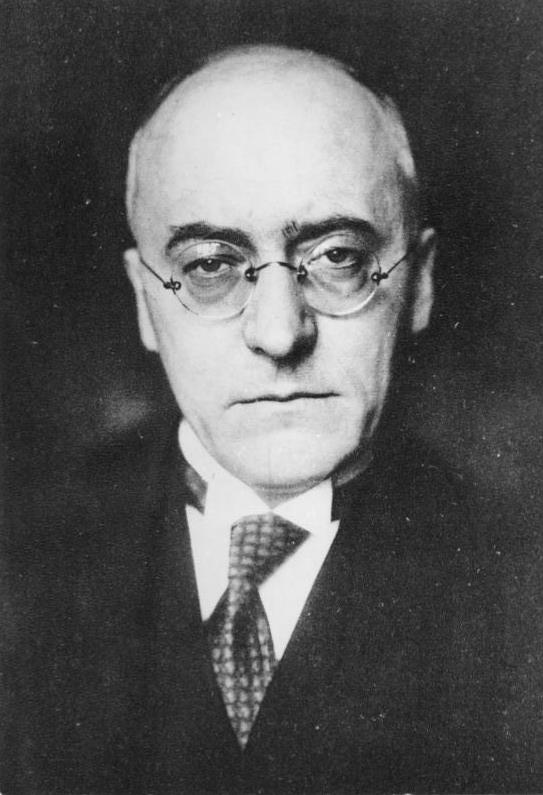
Paul v. HindenburgBundesarchiv, Bild 183-C06886 / CC-BY-SA.  Used under a Creative Commons Attribution-ShareAlike license: http://creativecommons.org/licenses/by-sa/3.0/

Vienna:  

Chancellor Johann Schober submits a revised Austrian constitution to the Reichstrat (legislature) that reduces the autonomy of the largely socialist province of Vienna and places it more under the control of the national government, which contains powerful fascist elements.  Tension between socialist-leaning Vienna and the national government and rest of the country has been an ongoing feature of post-war Austrian politics.


Elsewhere: 

New York: The stock market loses another 2.5%, rising early then falling hard.  A report today from the New York Stock Exchange says Wall Street lost nearly $2.6 billion in September.
  
China: Some 500 troops mutiny in the city of Wuhu, and capture the city for seven hours.  Foreigners seek safety from Japanese and British gunboats in the harbor, and forces of the nationalist government subdue the rebellion.  Meanwhile, communist rebels are attacking the city of Chengchow, in north-central Honan province.