Tokyo: The All-Japan Students Association holds a
protest meeting against the London Naval Treaty at the Kanda Theater. Police break up the meeting halfway through.
Showing posts with label London Naval Treaty. Show all posts
Showing posts with label London Naval Treaty. Show all posts
Wednesday, January 25, 2017

Wednesday, January 11, 2017
Wednesday, June 11, 1930
Berlin: As Chancellor Heinrich Bruening’s cabinet
continues to debate solutions to Germany’s financial condition, the number of unemployed
needing public relief grows. New
government reports put the total unemployed at 2.6 million, of which nearly 1.9 million
need government assistance.
Tokyo: Kato Hiroharu,
Chief of Naval Staff and recently appointed member of the Supreme War Council,
makes good on his threat from May, and resigns in protest over the London Naval
Treaty.
Tuesday, January 10, 2017
Tuesday, June 10, 1930
Tokyo: Two more high level naval officials resign in
protest over the London Naval Treaty: Admiral Yamanashi Katsunoshin, Vice
Minister of the Navy, and Nobumasa Suyetsugu, Assistant Chief of General
Staff.
Thursday, December 15, 2016
Thursday, May 29, 1930
Tokyo: Admiral Takarabe
Takeshi, Minister of the Navy, holds a closed-door all-day meeting with the
naval members of Japan’s Supreme Military Council to explain his position in
agreeing to the London Naval Treaty. Reports
of the meeting’s outcome are conflicting.
Monday, December 12, 2016
Monday, May 26, 1930: German Skirmish at the Polish Border, and Lawsuit to Stop Frick's 'Prayers of Hate'
Neuhoefen, Germany / Opalenie, Poland: German and Polish border guards exchange
gunfire in a brief skirmish that reportedly leaves one Polish soldier dead and
a German officer wounded. Each side
claims the other started it: Germany says Polish shell casings were found on its
side of the border; Poland says German blood was found on its side of the
border. Both sides promise an
investigation.
Berlin: The German
government files a lawsuit against Wilhelm Frick, the nazi Minister of
Education in the state of Thuringia, to stop the “prayers of hate” he has
introduced into schools there. From a
legal standpoint, the question is whether the federal government can interfere
in the state’s authority over its schools.
The hate prayers are one of several anti-semitic activities nazi leaders
in Thuringia have introduced.
Tokyo: Kato Hiroharu,
Chief of Naval Staff, threatens to resign in protest over Japan’s approval of
the London Naval Treaty.
London: More bad economic
news: the opposition party predicts unemployment will reach 2 million by
winter.
Monday, December 5, 2016
Monday, May 19, 1930
Tokyo: Admiral Takarabe
Takeshi, Minister of the Navy, is given a dagger with the recommendation that
he use it to commit suicide to expiate the “crime” of his agreeing to the
London Naval Treaty. He doesn’t. In fact, he publicly refuses today an earlier
demand that he resign over the treaty.
Meanwhile, a naval officer does
commit suicide to express his bitterness and despondency over the treaty. Lt. Commander Eiji Jusakari, attached to the
naval general staff, slashes his abdomen with a sword while on a train from
Kobe to Tokyo. He dies in a hospital
where he is taken en route.
Paris: An
all-but-forgotten German-French committee discussing the return of the
Rhineland to German control announces success: they have reached full agreement
on withdrawing the last occupying French troops by June 30. Separately, French officials burn US$37
billion worth of German bonds in a symbolic gesture illustrating the
liquidation of all past reparation efforts, in view of the superseding Young
Plan.
London: The worldwide
economic depression worsens: officials announce British unemployment has
reached 2.5 million. Just last week it
was being announced at 1.7 million.
Friday, November 18, 2016
Monday, May 5, 1930
Tokyo: Shinya Uchida,
former Vice Minister of the Navy and a bitter opponent of the London Naval
Treaty, sends a letter to the War Minister, Gen. Issei Ugaki, trying to get him
involved in opposing it too.
Madrid: More violence
by university students, this time leaving two dead, which prompts Prime
Minister Damaso Berenguer to issue a statement saying his government will
tolerate no more demonstrations. Both of
the dead are workers, killed by gunfire.
40 are injured, many by thrown rocks.
Tuesday, November 15, 2016
Friday, May 2, 1930
Prague: Communists and
socialists in parliament come to blows for the second day in a row during debate
of routine business.
Berlin: The cabinet of Chancellor Heinrich Bruening announces its budget for the
fiscal year, which amounts to US$84 million more than last year, which already
carried a US$75 million deficit. The
cabinet’s opponents are increasing their complaints that the government must
get its financial house in order.
Tokyo: Rumors swirl that Kanja Kato, Navy Chief of Staff, will
resign in protest of Japan’s acceptance of the London Naval Treaty.
Harbin, Manchuria: A
mob of Chinese and Korean “radicals” attacks the Japanese consulate here. Police arrest 32.
Monday, November 14, 2016
Thursday, May 1, 1930: May Day Passes with Relative Calm
May Day passes relatively calmly in most of the world. Customarily a major event for labor and
communists, the day passes with less unrest than many authorities and police
had feared. Berlin is the exception:
riots and shooting mar the occasion, with one killed and 200 arrested. In Paris, police arrest more than 3,200
demonstrators or potential troublemakers, raiding meetings of communist and labor
groups to stop problems before they start, and there isn’t even much work
stoppage. Factories are running at 80%,
and utilities are normal.
In New York, 1/3 of the city’s police force – 5,000 men – are on
duty. More than 100,000 people participate
in two demonstrations – one pro-American, the other pro-Soviet, but both are
relatively peaceful. 50 are arrested for
disorderly conduct, mostly keeping kids out of school to participate in the
demonstrations. 10,000 war veterans also
demonstrate against communism.
Moscow, of course, sees its usual parades and
demonstrations. People carry signs and
banners ridiculing religion, British imperialism in India, and the League of
Nations. Loudspeakers are set up over
the Shrine of the Iberian Virgin at the entrance to Red Square, and blare
revolutionary speeches all day.
Madrid: A crowd of 10,000
cheers a speech by Miguel Unamuno, one of Spain’s leading philosophers, who
ardently advocates a republic. At one
point the crowd begins shouting, “Death to the king!” Police charge with swords drawn, injuring
50. Nevertheless, Premier Gen. Damaso
Berenguer says he doesn’t take the “shouting of students” too seriously, and
says the monarchy will remain, but elections will be held.
Warsaw: Communists and
the unemployed clash with police using guns and rocks, injuring six. Two are arrested.
Tokyo: In a press
interview, Shoza Yabuki, Vice Minister of the Navy, appeals to “everyone who
believes in party government” to support Japan’s approval of the London Naval
Treaty.
London: The worldwide
economic depression deepens: Margaret Bondfield, Minister of Labor, tells the
House of Commons that unemployment has increased more than 500,000 in a year.
Friday, April 25, 2014
Friday, 25 April 1930: Opposition to London Naval Treaty Rises in Japan
Tokyo:
Opposition to Japan’s approval of the London Naval Treaty arises quickly. Inukai Tsuyoshi, President of the Seiyukai opposition political party, attacks the treaty in the diet, claiming that because it was signed by a civilian government representative, it violates the Japanese constitution, which stipulates that the military be free from civilian control. Foreign Minister Kijuro Shidehara, reviewing the treaty in the Diet, repeatedly has to refute the accusation that the Japanese delegation was forced to sign.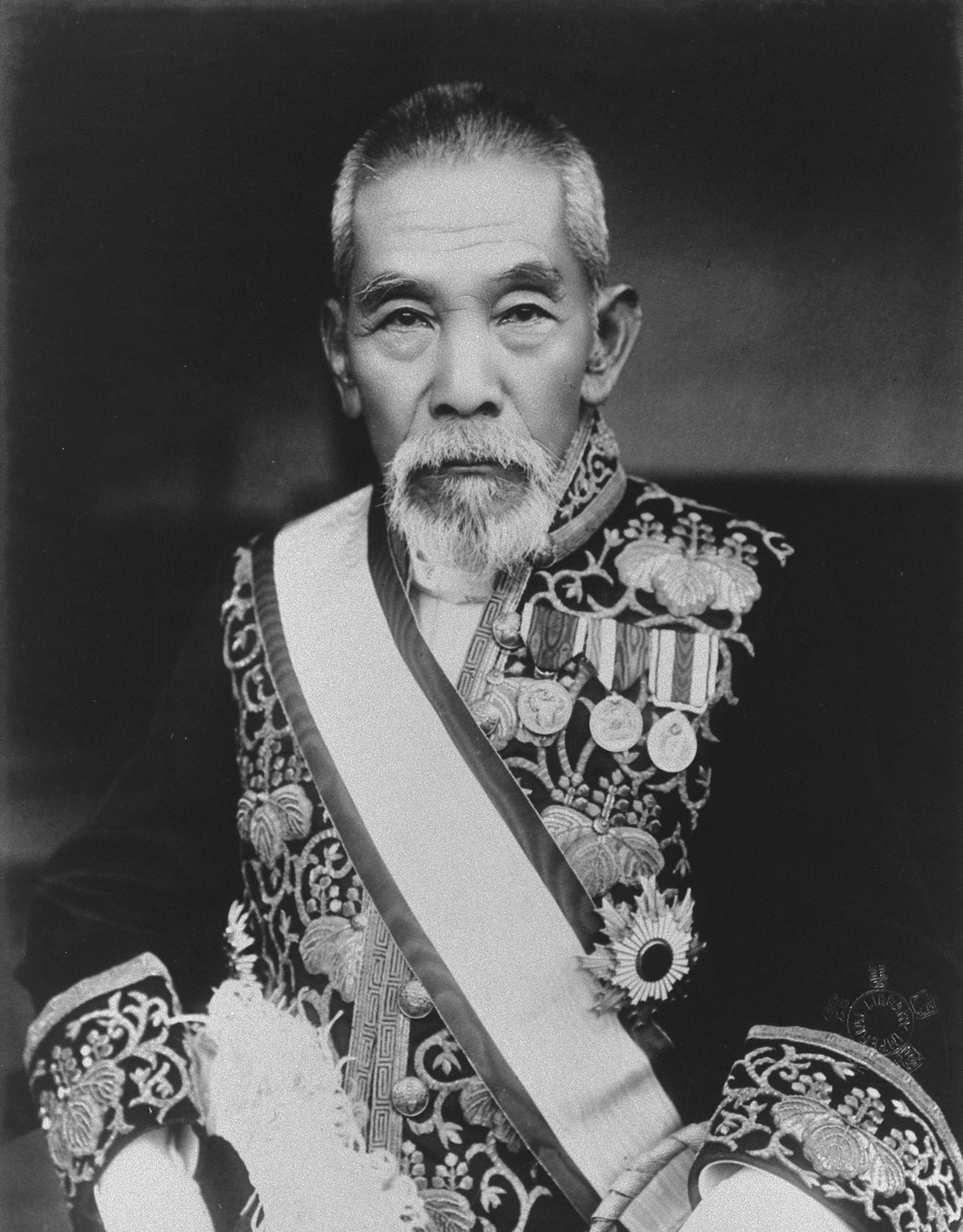
Inukai Tsuyoshi
Paris: Prime Minister Andre
Tardieu proposes severe measures to prevent communist demonstrations on May
Day, May 1.
Halle, Germany: A
clash between nazis and communists after a nazi meeting results in injuries to
19 nazis.
Tuesday, April 22, 2014
Tuesday, 22 April 1930: London Naval Conference Ends with Incomplete Results
London:
The London Naval Treaty – focal point of the London Naval Conference which has been going on for the past two months -- is signed by the five participating nations: Japan, the United States, Great Britain, France and Italy. The treaty marks a partial victory for diplomacy: all five nations agree to suspend expansion of their battleship fleets until 1936. However, only three of the countries – Japan, the U.S., and U.K. – agree to limitations on their fleet sizes. France and Italy could never resolve their differences with each other nor the rest of the participants, and so did not agree to fleet size limitations. Perhaps indicative of the anticlimactic ending after 13 weeks of meetings, the U.S. delegation is already at the docks ready to board their ship home the same day of the signing.
British Prime Minister Ramsay MacDonald says, “We have now
gone as far as we can at present.
Compared with Washington and Geneva [earlier conferences], we have
progressed far. Compared with our
desires, we have fallen short. We part
today in a spirit of active good will, prepared to take every means which
offers itself to secure a five-power agreement on all points. Our work has been but partly done, but all
good work must be done in stages.”

London Naval Conference delegates
Cettinje, Yugoslavia:
A communist agitator guns down four people, including the chief of the
gendarmes, and wounds three others, before being killed by police.
Thursday, April 10, 2014
Thursday, 10 April 1930
London:
At the London Naval Conference, the U.S. delegation comes up with a scheme that will allow all five participants to sign something, thus preventing a complete conference failure, although most of what France and Italy will sign is of less consequence. The idea is to break the treaty into three parts. The first calls for a temporary suspension of battleship building. The second will deal with the “humanization” of submarine warfare. France and Italy will reportedly sign those two. The third part will be trilateral between the U.S., Great Britain and Japan, governing broader naval quotas.Berlin:
The new cabinet
of Heinrich Bruening is already finding the going rough. One economic measure after another is
defeated in committee: yesterday it was the cabinet’s proposal to raise the
beer tax 75%; today it is plans for funding unemployment insurance. President Paul von Hindenburg has called
another meeting of all political party leaders to try to find a solution. If he doesn’t, rumors are he will
consider again his earlier threat to dissolve the Reichstag and have Bruening
run the country by the constitution’s emergency provisions.
Elsewhere:
Washington: More bad
economic news: farm wages are the lowest since the government started
collecting figures in 1923.
Belgrade: 13 people are
sentenced to prison on charges of belonging to a communist organization.
Thursday, April 3, 2014
Thursday, 3 April 1930
Berlin:
Heinrich Bruening’s new cabinet wins its first vote of confidence from the Reichstag, with the deciding votes ironically being cast by the party of nationalist leader Alfred Hugenberg. The vote is 252-187, with socialists, communists and nazis voting against. Hugenberg had threatened to defeat the new government, but after Bruening outlines his cabinet’s agriculture policies, which are under the care of Martin Schiele from Hugenberg’s National People’s Party, Hugenberg evidently changes his mind, and his party votes in favor of Bruening. Hugenberg still says his party may desert the government and bring about its downfall, however, at any time it feels so inclined.
Moscow:
Rabbi
Lazarev, Chief Rabbi of Leningrad, and 15 others, are sentenced to 10 years in
a concentration camp for alleged anti-soviet activity.
London:
At the London
Naval Conference, the delegates from the United States, Great Britain and Japan
officially agree to a three-way naval treaty which is intended to reduce the
navies of all three, with the U.S. and British delegations accepting certain
reservations from Japan. U.S. Senator
David A. Reed, a U.S. delegate who did most of the negotiating with Japan,
says, “I cannot impress on you too strongly the fine spirit with which the
Japanese and British have met us. There
was no disposition to quibble on the part of any one of the three
delegations. All three delegations have
been frank and fair. I cannot imagine a
more pleasant negotiation than this has been.
The result is not a victory for anyone, but an honorable and reasonable
settlement between the three powers.”
Wednesday, April 2, 2014
Wednesday, 2 April 1930
Tokyo: Admiral Kato Kanji,
Chief of the Naval General Staff, lodges an official protest against Japan’s
approval of the London Naval Treaty with Emperor Hirohito.
Budapest: 58 people are arrested as a result of a riot of the unemployed.
Budapest: 58 people are arrested as a result of a riot of the unemployed.
Istanbul: Turkish
police announce they have uncovered a spy plot infiltrating both military and
government circles, and thought to be soviet in origin.
Hamburg: A powerful
bomb explodes in a crowded department store, blowing out windows and crumbling
walls. No information yet on who did it
or why.
Tuesday, April 1, 2014
Tuesday, 1 April 1930: Japan Announces it will Accept the Two-Thirds Ratio
Tokyo:
The government
of Prime Minister Osachi Hamaguchi announces that it will accept the terms of the
London Naval Treaty being proposed by the United States and Great Britain, and
instructs its delegates to the London Naval Conference to sign it. This will preserve the requirement that Japan
have a smaller ratio of capital ships compared to the U.S. and U.K. – a sore
point among Japanese military leaders (although the ratio does improve). The last treaty (with the 60% ratio) created
a sharp rift in the Japanese navy between pro-treaty factions and nationalist
admirals who wanted full parity with the other powers. Many in Japan – in the military, the
government and the public – view the reduced ratio as a national insult.

Berlin:
President Paul von Hindenburg gives Heinrich
Bruening, his candidate to become chancellor of a new government, permission to
dissolve the Reichstag and run the country under Article 48 -- the “emergency
provision” -- of the German constitution, if the Reichstag doesn’t give
Bruening a vote of confidence. Armed
with this, Bruening gives a curt speech in the Reichstag, telling the delegates
the country needs work, not words, and action, not argument, if Germany is to
dig through its financial issues. Nonetheless,
his speech is interrupted often by jeering from the communist delegates.
Elsewhere:
London: More evidence
of the Depression: the government announces that its plans to help the nation’s
unemployed will cost the equivalent of US$350 million.
Washington: More bad
economic news: William Green, President
of the American Federation of Labor, testifies before Congress that 3.7 million
are out of work.
China: Civil war
resumes in China’s northern territories.
It has been brewing for weeks.
The governor of Shansi province has allied himself with a general who
was a leader in Chiang Kai-shek’s nationalist army until he led a rebellion
against Chiang late last year. The two
have moved their forces into Kaifeng, capital of Honan province, and into
northern Shantung province, in a bid to challenge Chiang. So far they are unopposed by government
troops in the area – many of which have reportedly joined their rebellion.
Thursday, March 27, 2014
Thursday, 27 March 1930: German Chancellor Hermann Mueller's Government Falls
Berlin:
The “Grand Coalition” government of Chancellor
Hermann Mueller falls. Having held
together long enough to see the Young Plan through, against growing financial
pressure, it falls apart now over a disagreement about funding unemployment
insurance. Two of the political parties
that make up Mueller’s government, the German People’s Party and the Social
Democrats –Mueller’s own party – cannot agree on the matter, and the Social
Democrats announce they are withdrawing.
The Social Democrats, representing primarily socialists, want to see unemployment insurance funded to the fullest extent possible, despite the cry from many in the populace for relief from taxes. The German People’s Party, representing primarily industrialists, want to see the cost of funding the unemployment insurance reduced. Mueller and many of the socialists were prepared to negotiate a compromise, but Rudolf Wissell, Social Democrat Minister of Labor, wouldn’t budge and led the withdrawal. Mueller tendered his resignation to President Paul von Hindenburg shortly thereafter.
The Social Democrats, representing primarily socialists, want to see unemployment insurance funded to the fullest extent possible, despite the cry from many in the populace for relief from taxes. The German People’s Party, representing primarily industrialists, want to see the cost of funding the unemployment insurance reduced. Mueller and many of the socialists were prepared to negotiate a compromise, but Rudolf Wissell, Social Democrat Minister of Labor, wouldn’t budge and led the withdrawal. Mueller tendered his resignation to President Paul von Hindenburg shortly thereafter.
Mueller’s cabinet has governed
since June 1928. Early speculation
centers on Heinrich Bruening, a centrist, as a replacement. Mueller himself has recommended him.

The Mueller cabinet
Elsewhere:
England: More evidence of the worldwide economic
depression: a new survey shows that 100,000 mill workers are unemployed in
Lancashire. Sources call it the worst
economic depression in that part of the country since the 1860s.
Tokyo: The government still hasn’t replied to a U.S.-backed proposal from the London Naval Conference that Japan accept a 66-2/3 ratio of capital ships compared to the U.S. and Great Britain (which is less than the 70% Japan sought). Sources say opposition to the reduced ratio from within the naval general staff is so fierce, the government is fearful of precipitating a crisis if it moves too quickly.
Tokyo: The government still hasn’t replied to a U.S.-backed proposal from the London Naval Conference that Japan accept a 66-2/3 ratio of capital ships compared to the U.S. and Great Britain (which is less than the 70% Japan sought). Sources say opposition to the reduced ratio from within the naval general staff is so fierce, the government is fearful of precipitating a crisis if it moves too quickly.
Saturday, March 22, 2014
Saturday, 22 March 1930
England:
London: At the naval
conference, a scheduled meeting between British Prime Minister Ramsay MacDonald
and French Prime Minister Andrae Tardieu is cancelled, signaling definitively
that France is out of the parley. After
two months of meetings, the conference is at a complete standstill – with
nothing to show for its effort -- as Great Britain and the U.S. await word from
Japan on whether a 3-way pact can still be signed. Many in the press are saying the conference
will have been a complete failure if Japan’s reply is negative.
Manchester:
More evidence of the Depression’s spread: an estimated 25% of cotton
operatives in Lancashire are out of work, some so destitute they can’t get food
to eat.
Elsewhere:
Paris: Finance
Minister Paul Reynaud, in a committee speech, says that barring unforeseen
circumstances, he expects France will remove all forces and end its occupation
of the Rhineland by June 30.
Moscow: Tens of
thousands of demonstrators march for three hours here and in other cities
around Russia in protest against religion.
Friday, March 21, 2014
Friday, 21 March 1930
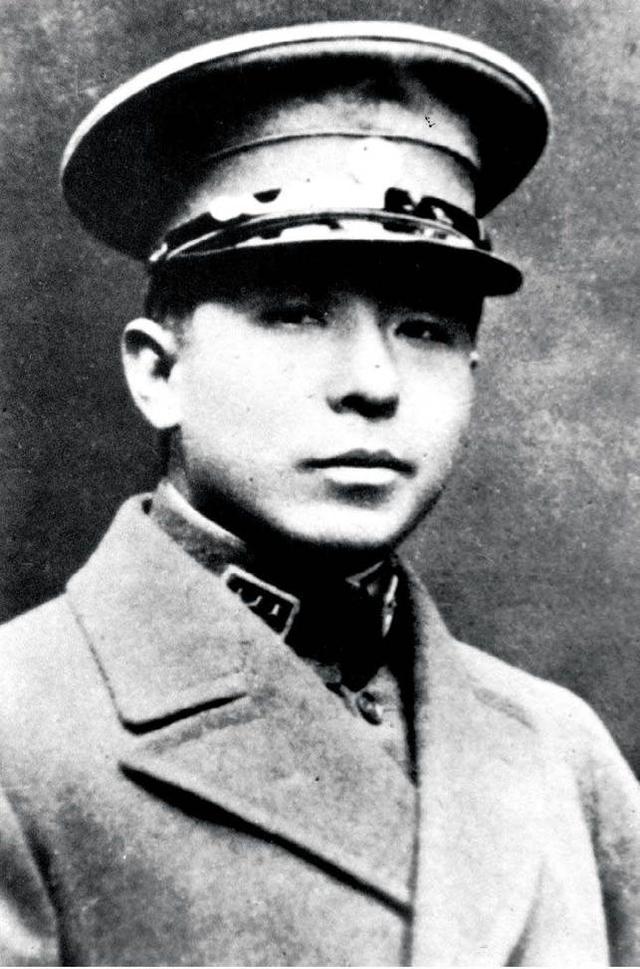
Manchuria:
Warlord
Zhang Xueliang, effective ruler of Manchuria, offers his services as mediator
between Chinese President Chiang Kai-shek and rebellious Governor Yen Hsishan
of Shansi. The threat of renewed civil
war in China has been looming for weeks.
London:
The French
delegation appears to withdraw from the naval conference, having left for Paris
for the weekend and announcing that they won’t be back. Observers think it’s a ploy to try to wrest
an 11th hour concession out of either Italy (to give up its demand
for naval parity with France) or England (for a naval deal that includes continental
security). But Great Britain, the U.S.
and Japan evidently saw this coming, and reportedly have a three-way “fallback”
pact they will go to work on. It is
expected that if France is out, Italy will be too, as Italy presumably would
not agree to any limitations on naval power with France under no such
obligation.
Chisinau, Romania:
Russian and Romanian border guards get into a firefight on the Dniester
River near here. According to reports,
the Russian guards board a boat on their side of the river, then cross over and
attack the Romanian border post with hand grenades. The Romanians respond with rifle fire. One Romanian is killed and several Russians
wounded. No one knows a reason for the
attack, but tensions relative to Russia are high in Romania, as the government
says it has uncovered communist plots to attempt a coup in the country.
Elsewhere:
Moscow: Crowds of
Young Communists and Young Pioneers (a communist version of the boy scouts)
converge on the Italian Embassy and hold protests against the Pope.
Bogota: Thousands of
unemployed conduct a demonstration that devolves into a riot when police fire
on the crowd. Two are killed and at
least 20 injured.
Thursday, March 20, 2014
Thursday, 20 March 1930
Soviet Union:
Moscow: Newspapers run headlines, articles and cartoons ridiculing the Pope’s prayers on behalf of Christians in Russia. Pravda runs a cartoon of a warrior wearing the Pope’s headpiece, riding a horse and carrying a banner that reads “Anti-Soviet Crusade.”
Yet at a meeting of the All-Union Congress of Atheists tonight, speaker after speaker reminds the audience that religion cannot be stamped out of Russia overnight, and warns against excessive force or zeal in closing churches, synagogues or mosques. The chairman of the meeting says removing God from the people should be done by peaceful persuasion, propaganda and scientific argument. Special and intensified propaganda should be brought to bear on women and children, says one speaker.
Elsewhere in the Soviet Union, reports say peasant revolts are flaring up in several places, as the people protest food shortages and having their lands collectivized. Factory workers are living on black bread and thin soup, and striking for better food. The OGPU (secret police) is arresting strike and revolt leaders.
London:
At the naval
conference (still going), the meeting is deadlocked.
Italy and France cannot come to agreement on Italy’s insistence for
parity with France, and France’s demand for a high level of naval tonnage. An unnamed British officials says, “My
reasoning tells me that the present deadlock will not be broken . . . .”
Sunday, March 16, 2014
Sunday, 16 March 1930
Tokyo:
Press reports state that the “two-thirds”
ratio of capital ships proposed for Japan at the London Naval Conference is
causing a rift between military and civilian government leaders in Japan. Naval officers are displeased with the
“second-class citizen” status the ratio would give Japan.
Vienna:
The government announces that the Austrian
national anthem has been changed (for the fourth time since the World
War). The new anthem will be Deutschland, Deutschland-Uber Alles (Germany, Germany Above All) which is also
Germany’s national anthem. This was also
Austria’s national anthem before the war (though with different words). The socialist mayor of Vienna, Karl Seitz,
dislikes the anthem so much he refuses to stand or remove his hat when it is
played.
England:
In response to a call from Cosmo Gordon Lang,
Archbishop of Canterbury, Anglicans throughout the country hold special prayer
services on behalf of persecuted Christians in Russia. Indeed, Christians as well as Jews around the world are
supposed to be holding similar prayer services . Rev. A.F.W. Ingram, Bishop of London, says,
“to think that all those bishops have been butchered [in Russia], all those
priests murdered!”
New York:
Police are busy guarding special prayer
meetings in area churches, called on behalf of persecuted Christians in Russia,
as well as guarding 12,000 people attending a communist anti-religion rally at
Bronx Coliseum. At the communist rally,
the crowd boos religion, calls for an end to class war, and pillories everyone
from New York Police Chief Grover Whalen to Italian Dictator Benito Mussolini
to the Pope. The meeting is guarded by
450 police with riot gear, machine guns and paddy wagons, but it is peaceful.
Paris:
Miguel Primo de Rivera, who until six weeks ago was dictator of Spain, dies unexpectedly in his hotel room here. Cause of death is said to be an embolism, a complication of his diabetes.
Subscribe to:
Posts (Atom)