Tokyo: The All-Japan Students Association holds a
protest meeting against the London Naval Treaty at the Kanda Theater. Police break up the meeting halfway through.
Showing posts with label Japan. Show all posts
Showing posts with label Japan. Show all posts
Wednesday, January 25, 2017

Wednesday, January 11, 2017
Wednesday, June 11, 1930
Berlin: As Chancellor Heinrich Bruening’s cabinet
continues to debate solutions to Germany’s financial condition, the number of unemployed
needing public relief grows. New
government reports put the total unemployed at 2.6 million, of which nearly 1.9 million
need government assistance.
Tokyo: Kato Hiroharu,
Chief of Naval Staff and recently appointed member of the Supreme War Council,
makes good on his threat from May, and resigns in protest over the London Naval
Treaty.
Tuesday, January 10, 2017
Tuesday, June 10, 1930
Tokyo: Two more high level naval officials resign in
protest over the London Naval Treaty: Admiral Yamanashi Katsunoshin, Vice
Minister of the Navy, and Nobumasa Suyetsugu, Assistant Chief of General
Staff.
Friday, January 6, 2017
Friday, June 6, 1930
Berlin: Chancellor
Heinrich Bruening’s plan for saving Germany’s finances by taxing workers’
salaries, corporate directors’ fees and bachelors, runs into immediate
trouble. Several political parties publicly
oppose it. They and their allied press
outlets predict not only that the measure will fail to pass the Reichstag, but
that Bruening’s cabinet will fall over it.
Meanwhile, the Prussian Trade Minister’s monthly report on economic
conditions in that state (which makes up nearly 60% of Germany) describes
“almost universal depression.”
Tokyo: Government officials are said to be
apprehensive about developments in Tsinan in the Chinese civil war: 2,000
Japanese students are trapped there as fighting approaches. Tsinan was the scene of a brutal attack in
1928, when southern rebels overrunning the city killed 30 Japanese
nationals.
Gomel,
Ukraine: Kulaks (rich peasants) outraged
at continued soviet collectivization of their farms, set fire to the two
largest collective farms in the district.
Sheds containing agricultural equipment and machinery are destroyed,
leaving the collectives without the means to produce food.
Sunday, January 1, 2017
Sunday, June 1, 1930
Halle,
Germany: In a speech here, nationalist
politician Alfred Hugenberg proposes a “reparations duty” – a tariff on all
goods and raw products imported into Germany – to extract from the rest of the
world funds for Germany to pay its war debts under the Young Plan. “Whoever utilizes central Europe, its market,
traffic system and culture, must help us bear the burden which the rest of the
world imposed.” Hugenberg further
suggests that this duty would be the first step in an economic fusion of
central Europe centered around Germany, as opposed to France’s plan for a
“United States of Europe.”
Dunkelstein,
Austria: Socialists and Heimwehr
fascists clash in a street battle, throwing stones and firing shots. Injuries are described as “numerous,”
including gunshot wounds.
Manchuria: Japanese consular police and Chinese troops
mobilize in the Kurin province in anticipation of further outbreaks of violence
by Korean communists.
Philadelphia: More bad economic news -- new data indicate unemployment
here is 40 percent higher than same time last year.
Monday, December 19, 2016
Saturday, May 31, 1930
Lung Ching-Tsun (Jilin City), Manchuria: Bands of Korean communists launch coordinated
attacks on Japanese facilities here, in Yenki, and at other towns in this
district on the border with Korea. The
communists burn and bomb Japanese consulates, utilities and schools, but the
only casualty is an injured police officer.
Japanese consular police and Chinese troops band together to drive the
attackers away.
Berlin: Joseph
Goebbels, nazi member of the Reichstag, is fined the equivalent of US$200
instead of getting the nine-month prison term requested by state prosecuting
attorneys, for insulting President Paul von Hindenburg in an article he
published in December in a nazi newspaper.
The article, titled “Is President von Hindenburg Still Alive?”
excoriated Hindenburg for his “friendship with Jewish and Marxist
advisors.”
Meanwhile, more bad economic news: Paul Moldenhauer, Minister
of Finance, reports to the Reichstag that government revenues are still
falling, but spending is not, resulting in a projected annual deficit of US$180
million.
Thursday, December 15, 2016
Thursday, May 29, 1930
Tokyo: Admiral Takarabe
Takeshi, Minister of the Navy, holds a closed-door all-day meeting with the
naval members of Japan’s Supreme Military Council to explain his position in
agreeing to the London Naval Treaty. Reports
of the meeting’s outcome are conflicting.
Monday, December 12, 2016
Monday, May 26, 1930: German Skirmish at the Polish Border, and Lawsuit to Stop Frick's 'Prayers of Hate'
Neuhoefen, Germany / Opalenie, Poland: German and Polish border guards exchange
gunfire in a brief skirmish that reportedly leaves one Polish soldier dead and
a German officer wounded. Each side
claims the other started it: Germany says Polish shell casings were found on its
side of the border; Poland says German blood was found on its side of the
border. Both sides promise an
investigation.
Berlin: The German
government files a lawsuit against Wilhelm Frick, the nazi Minister of
Education in the state of Thuringia, to stop the “prayers of hate” he has
introduced into schools there. From a
legal standpoint, the question is whether the federal government can interfere
in the state’s authority over its schools.
The hate prayers are one of several anti-semitic activities nazi leaders
in Thuringia have introduced.
Tokyo: Kato Hiroharu,
Chief of Naval Staff, threatens to resign in protest over Japan’s approval of
the London Naval Treaty.
London: More bad economic
news: the opposition party predicts unemployment will reach 2 million by
winter.
Monday, December 5, 2016
Monday, May 19, 1930
Tokyo: Admiral Takarabe
Takeshi, Minister of the Navy, is given a dagger with the recommendation that
he use it to commit suicide to expiate the “crime” of his agreeing to the
London Naval Treaty. He doesn’t. In fact, he publicly refuses today an earlier
demand that he resign over the treaty.
Meanwhile, a naval officer does
commit suicide to express his bitterness and despondency over the treaty. Lt. Commander Eiji Jusakari, attached to the
naval general staff, slashes his abdomen with a sword while on a train from
Kobe to Tokyo. He dies in a hospital
where he is taken en route.
Paris: An
all-but-forgotten German-French committee discussing the return of the
Rhineland to German control announces success: they have reached full agreement
on withdrawing the last occupying French troops by June 30. Separately, French officials burn US$37
billion worth of German bonds in a symbolic gesture illustrating the
liquidation of all past reparation efforts, in view of the superseding Young
Plan.
London: The worldwide
economic depression worsens: officials announce British unemployment has
reached 2.5 million. Just last week it
was being announced at 1.7 million.
Monday, November 28, 2016
Monday, May 12, 1930
Vienna: Prince Oscar
von Hohenzollern, son of the former Kaiser of Germany, visits Austria’s nationalist
Heimwehr paramilitary with 30 members of Germany’s Stahlhelm (also a
nationalist paramilitary), of which Prince Oscar is a member. The timing couldn’t be worse for Austrian
Chancellor Johan Schober, trying to disarm such groups as he promised the
League of Nations. In the face of
Schober’s intentions, the Heimwehr has announced it intends to hold parades
every Sunday through the summer.
Tokyo: Japan confirms
it is sending 25 (not 30) military officers as trainers for China’s nationalist
government military. Chinese communists
accuse Japan of meddling in China’s internal affairs. Meanwhile, a group of reserve naval officers
calls on Naval Minister Takarabe Takeshi to resign for the “unpardonable” act of
agreeing to the London Naval Treaty.

Sunday, November 27, 2016
Saturday, May 10, 1930
Tokyo: Japan and China
reportedly reach an agreement whereby 30 Japanese military officers will serve
as instructors and organizers for the nationalist government’s forces in their civil war with communist rebels. This comes as something of a
surprise; many Chinese still bitterly resent the Japanese military for the Jinan Incident of May 1928, in which Japanese forces clashed with nationalist
government troops on Chinese soil, causing thousands of casualties.
Friday, November 18, 2016
Monday, May 5, 1930
Tokyo: Shinya Uchida,
former Vice Minister of the Navy and a bitter opponent of the London Naval
Treaty, sends a letter to the War Minister, Gen. Issei Ugaki, trying to get him
involved in opposing it too.
Madrid: More violence
by university students, this time leaving two dead, which prompts Prime
Minister Damaso Berenguer to issue a statement saying his government will
tolerate no more demonstrations. Both of
the dead are workers, killed by gunfire.
40 are injured, many by thrown rocks.
Tuesday, November 15, 2016
Friday, May 2, 1930
Prague: Communists and
socialists in parliament come to blows for the second day in a row during debate
of routine business.
Berlin: The cabinet of Chancellor Heinrich Bruening announces its budget for the
fiscal year, which amounts to US$84 million more than last year, which already
carried a US$75 million deficit. The
cabinet’s opponents are increasing their complaints that the government must
get its financial house in order.
Tokyo: Rumors swirl that Kanja Kato, Navy Chief of Staff, will
resign in protest of Japan’s acceptance of the London Naval Treaty.
Harbin, Manchuria: A
mob of Chinese and Korean “radicals” attacks the Japanese consulate here. Police arrest 32.
Monday, November 14, 2016
Thursday, May 1, 1930: May Day Passes with Relative Calm
May Day passes relatively calmly in most of the world. Customarily a major event for labor and
communists, the day passes with less unrest than many authorities and police
had feared. Berlin is the exception:
riots and shooting mar the occasion, with one killed and 200 arrested. In Paris, police arrest more than 3,200
demonstrators or potential troublemakers, raiding meetings of communist and labor
groups to stop problems before they start, and there isn’t even much work
stoppage. Factories are running at 80%,
and utilities are normal.
In New York, 1/3 of the city’s police force – 5,000 men – are on
duty. More than 100,000 people participate
in two demonstrations – one pro-American, the other pro-Soviet, but both are
relatively peaceful. 50 are arrested for
disorderly conduct, mostly keeping kids out of school to participate in the
demonstrations. 10,000 war veterans also
demonstrate against communism.
Moscow, of course, sees its usual parades and
demonstrations. People carry signs and
banners ridiculing religion, British imperialism in India, and the League of
Nations. Loudspeakers are set up over
the Shrine of the Iberian Virgin at the entrance to Red Square, and blare
revolutionary speeches all day.
Madrid: A crowd of 10,000
cheers a speech by Miguel Unamuno, one of Spain’s leading philosophers, who
ardently advocates a republic. At one
point the crowd begins shouting, “Death to the king!” Police charge with swords drawn, injuring
50. Nevertheless, Premier Gen. Damaso
Berenguer says he doesn’t take the “shouting of students” too seriously, and
says the monarchy will remain, but elections will be held.
Warsaw: Communists and
the unemployed clash with police using guns and rocks, injuring six. Two are arrested.
Tokyo: In a press
interview, Shoza Yabuki, Vice Minister of the Navy, appeals to “everyone who
believes in party government” to support Japan’s approval of the London Naval
Treaty.
London: The worldwide
economic depression deepens: Margaret Bondfield, Minister of Labor, tells the
House of Commons that unemployment has increased more than 500,000 in a year.
Friday, April 25, 2014
Friday, 25 April 1930: Opposition to London Naval Treaty Rises in Japan
Tokyo:
Opposition to Japan’s approval of the London Naval Treaty arises quickly. Inukai Tsuyoshi, President of the Seiyukai opposition political party, attacks the treaty in the diet, claiming that because it was signed by a civilian government representative, it violates the Japanese constitution, which stipulates that the military be free from civilian control. Foreign Minister Kijuro Shidehara, reviewing the treaty in the Diet, repeatedly has to refute the accusation that the Japanese delegation was forced to sign.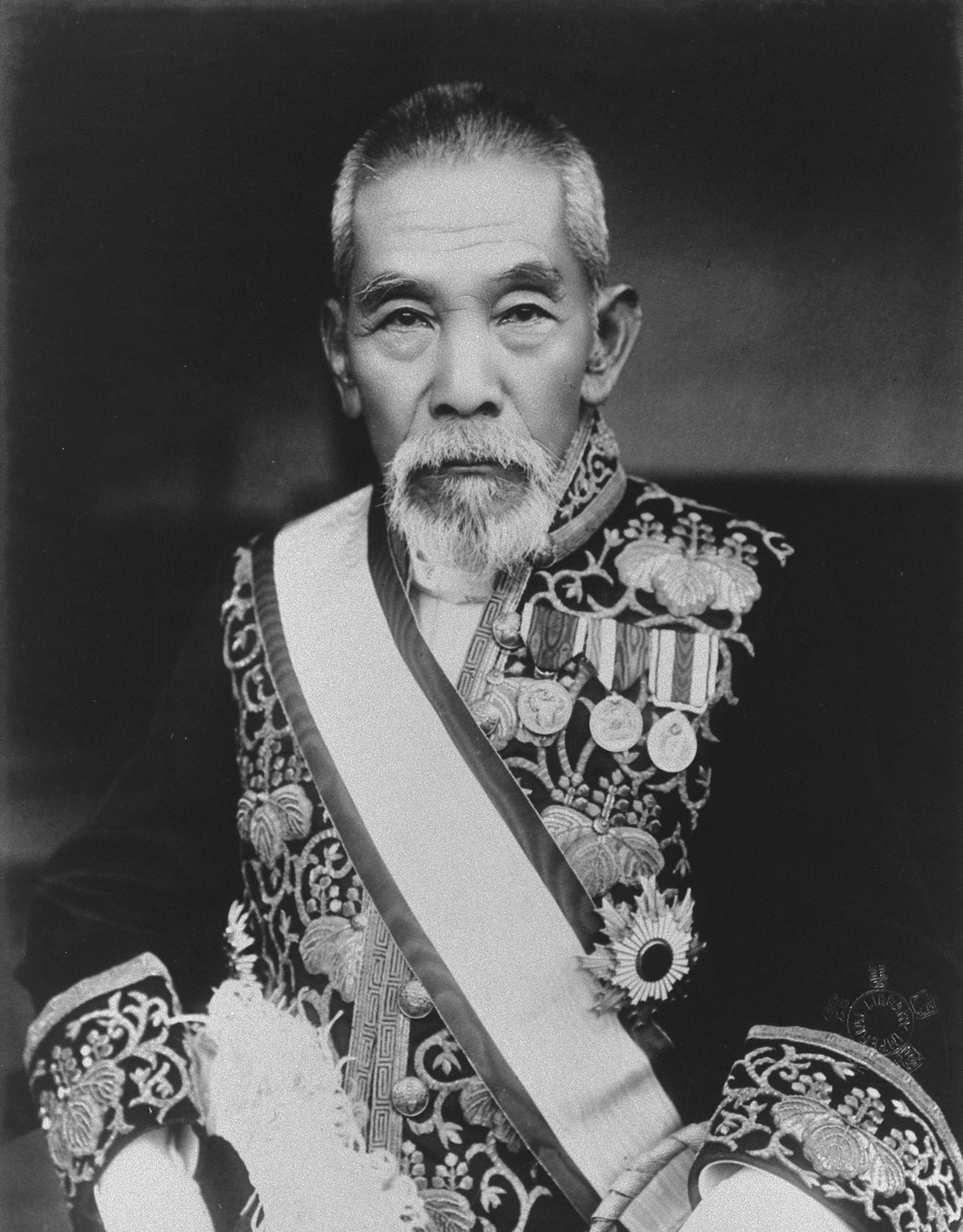
Inukai Tsuyoshi
Paris: Prime Minister Andre
Tardieu proposes severe measures to prevent communist demonstrations on May
Day, May 1.
Halle, Germany: A
clash between nazis and communists after a nazi meeting results in injuries to
19 nazis.
Wednesday, April 2, 2014
Wednesday, 2 April 1930
Tokyo: Admiral Kato Kanji,
Chief of the Naval General Staff, lodges an official protest against Japan’s
approval of the London Naval Treaty with Emperor Hirohito.
Budapest: 58 people are arrested as a result of a riot of the unemployed.
Budapest: 58 people are arrested as a result of a riot of the unemployed.
Istanbul: Turkish
police announce they have uncovered a spy plot infiltrating both military and
government circles, and thought to be soviet in origin.
Hamburg: A powerful
bomb explodes in a crowded department store, blowing out windows and crumbling
walls. No information yet on who did it
or why.
Tuesday, April 1, 2014
Tuesday, 1 April 1930: Japan Announces it will Accept the Two-Thirds Ratio
Tokyo:
The government
of Prime Minister Osachi Hamaguchi announces that it will accept the terms of the
London Naval Treaty being proposed by the United States and Great Britain, and
instructs its delegates to the London Naval Conference to sign it. This will preserve the requirement that Japan
have a smaller ratio of capital ships compared to the U.S. and U.K. – a sore
point among Japanese military leaders (although the ratio does improve). The last treaty (with the 60% ratio) created
a sharp rift in the Japanese navy between pro-treaty factions and nationalist
admirals who wanted full parity with the other powers. Many in Japan – in the military, the
government and the public – view the reduced ratio as a national insult.

Berlin:
President Paul von Hindenburg gives Heinrich
Bruening, his candidate to become chancellor of a new government, permission to
dissolve the Reichstag and run the country under Article 48 -- the “emergency
provision” -- of the German constitution, if the Reichstag doesn’t give
Bruening a vote of confidence. Armed
with this, Bruening gives a curt speech in the Reichstag, telling the delegates
the country needs work, not words, and action, not argument, if Germany is to
dig through its financial issues. Nonetheless,
his speech is interrupted often by jeering from the communist delegates.
Elsewhere:
London: More evidence
of the Depression: the government announces that its plans to help the nation’s
unemployed will cost the equivalent of US$350 million.
Washington: More bad
economic news: William Green, President
of the American Federation of Labor, testifies before Congress that 3.7 million
are out of work.
China: Civil war
resumes in China’s northern territories.
It has been brewing for weeks.
The governor of Shansi province has allied himself with a general who
was a leader in Chiang Kai-shek’s nationalist army until he led a rebellion
against Chiang late last year. The two
have moved their forces into Kaifeng, capital of Honan province, and into
northern Shantung province, in a bid to challenge Chiang. So far they are unopposed by government
troops in the area – many of which have reportedly joined their rebellion.
Thursday, March 27, 2014
Thursday, 27 March 1930: German Chancellor Hermann Mueller's Government Falls
Berlin:
The “Grand Coalition” government of Chancellor
Hermann Mueller falls. Having held
together long enough to see the Young Plan through, against growing financial
pressure, it falls apart now over a disagreement about funding unemployment
insurance. Two of the political parties
that make up Mueller’s government, the German People’s Party and the Social
Democrats –Mueller’s own party – cannot agree on the matter, and the Social
Democrats announce they are withdrawing.
The Social Democrats, representing primarily socialists, want to see unemployment insurance funded to the fullest extent possible, despite the cry from many in the populace for relief from taxes. The German People’s Party, representing primarily industrialists, want to see the cost of funding the unemployment insurance reduced. Mueller and many of the socialists were prepared to negotiate a compromise, but Rudolf Wissell, Social Democrat Minister of Labor, wouldn’t budge and led the withdrawal. Mueller tendered his resignation to President Paul von Hindenburg shortly thereafter.
The Social Democrats, representing primarily socialists, want to see unemployment insurance funded to the fullest extent possible, despite the cry from many in the populace for relief from taxes. The German People’s Party, representing primarily industrialists, want to see the cost of funding the unemployment insurance reduced. Mueller and many of the socialists were prepared to negotiate a compromise, but Rudolf Wissell, Social Democrat Minister of Labor, wouldn’t budge and led the withdrawal. Mueller tendered his resignation to President Paul von Hindenburg shortly thereafter.
Mueller’s cabinet has governed
since June 1928. Early speculation
centers on Heinrich Bruening, a centrist, as a replacement. Mueller himself has recommended him.

The Mueller cabinet
Elsewhere:
England: More evidence of the worldwide economic
depression: a new survey shows that 100,000 mill workers are unemployed in
Lancashire. Sources call it the worst
economic depression in that part of the country since the 1860s.
Tokyo: The government still hasn’t replied to a U.S.-backed proposal from the London Naval Conference that Japan accept a 66-2/3 ratio of capital ships compared to the U.S. and Great Britain (which is less than the 70% Japan sought). Sources say opposition to the reduced ratio from within the naval general staff is so fierce, the government is fearful of precipitating a crisis if it moves too quickly.
Tokyo: The government still hasn’t replied to a U.S.-backed proposal from the London Naval Conference that Japan accept a 66-2/3 ratio of capital ships compared to the U.S. and Great Britain (which is less than the 70% Japan sought). Sources say opposition to the reduced ratio from within the naval general staff is so fierce, the government is fearful of precipitating a crisis if it moves too quickly.
Sunday, March 16, 2014
Sunday, 16 March 1930
Tokyo:
Press reports state that the “two-thirds”
ratio of capital ships proposed for Japan at the London Naval Conference is
causing a rift between military and civilian government leaders in Japan. Naval officers are displeased with the
“second-class citizen” status the ratio would give Japan.
Vienna:
The government announces that the Austrian
national anthem has been changed (for the fourth time since the World
War). The new anthem will be Deutschland, Deutschland-Uber Alles (Germany, Germany Above All) which is also
Germany’s national anthem. This was also
Austria’s national anthem before the war (though with different words). The socialist mayor of Vienna, Karl Seitz,
dislikes the anthem so much he refuses to stand or remove his hat when it is
played.
England:
In response to a call from Cosmo Gordon Lang,
Archbishop of Canterbury, Anglicans throughout the country hold special prayer
services on behalf of persecuted Christians in Russia. Indeed, Christians as well as Jews around the world are
supposed to be holding similar prayer services . Rev. A.F.W. Ingram, Bishop of London, says,
“to think that all those bishops have been butchered [in Russia], all those
priests murdered!”
New York:
Police are busy guarding special prayer
meetings in area churches, called on behalf of persecuted Christians in Russia,
as well as guarding 12,000 people attending a communist anti-religion rally at
Bronx Coliseum. At the communist rally,
the crowd boos religion, calls for an end to class war, and pillories everyone
from New York Police Chief Grover Whalen to Italian Dictator Benito Mussolini
to the Pope. The meeting is guarded by
450 police with riot gear, machine guns and paddy wagons, but it is peaceful.
Paris:
Miguel Primo de Rivera, who until six weeks ago was dictator of Spain, dies unexpectedly in his hotel room here. Cause of death is said to be an embolism, a complication of his diabetes.
Thursday, February 13, 2014
Thursday, 13 February 1930: Soviet Press Fires Back at Churches
Libya:
Italian air
strafing and bombing of fleeing Libyan resistance fighters, and their civilian
family members, continues along the Libya-Algeria border.
Moscow:
The Soviet
press fires back at Russia’s religious critics around the world. Pravda,
the official communist newspaper, says of the Pope’s recent criticisms of
Russia’s persecution of religion: “His appeal is really a call to the nations
to sever relations with the Soviet Union, for the soviet never will allow
foreigners to interfere in their religious policy. So far, all evil yelping against the soviets
lacked only the Holy Father’s sweet voice.
This representative of God on earth hitherto preferred to hold his
peace; he thought the weakening Orthodox Church would clear the way for
Rome. Only now, when he has become
convinced that the working class in Russia intends to wipe out all
superstitions without distinction of creed, has his Holiness decided to take up
the defense of persecuted religion. This
head of the Catholic Church certainly is less interested in the problems of the
Orthodox Church, Judaism, or even Catholicism than the worldly goods it may
involve. This means indifference to the
progress of our industrialization, to collectivization of our agriculture,
which spoil the beauty sleep of the western birds of prey. Like every other financier and exploiter of
labor, the Pope is an enemy of the working class. That is why he appeals to all countries to
make religious freedom a condition of recognizing the soviets.”
The Komsomolskal
Pravda, newspaper of the Young Communists’ League, publishes a cartoon of a
bloated Pope holding a swastika with a small cross nailed upon it.
London:
Religious
persecution in soviet Russia dominates discussion in the House of Commons. Foreign Secretary Arthur Henderson, answering
questions from legislators, says “Reports as regards the religious situation in
Russia are receiving serious consideration of his majesty’s government. The house may rest assured that his majesty’s
government will use its influence in support of the cause of religious liberty
and freedom of religious practices.” British
Ambassador to Moscow, Sir Esmond Ovey, is ordered to investigate reports of religious
persecution in Russia, and the House of Lords passes a resolution denouncing
Russia for its anti-religious activity. Joseph
Hertz, Chief Rabbi of the United Kingdom, joins his voice with those of the
Catholic and Anglican churches in protest of Soviet religious persecution.
Meanwhile, at the naval conference, reliable reports surface
that Japan has agreed to a 66-2/3 ratio of cruisers compared to the United
States and Great Britain. This would
represent an increase from Japan’s current 60% ratio, but less than the 70%
Japan came into the conference seeking. “Japan
attaches special importance to eight-inch gun cruisers, and desires to maintain
here a minimum strength sufficient for national defense, taking into
consideration the strengths held by the other powers,” says Raijiro Wakatsuki,
of Japan’s delegation, in an official statement before the conference. But he makes no mention of the 70% ratio,
which observers thought he would. Thus
the belief that Japan has agreed to yield on its stated demands. “This certainly leaves the door wide open for
future discussion and is not in any sense the ultimatum which might be apprehended
in some quarters,” says an unofficial spokesman for the U.S. delegation.
Yet Japan is unwilling to make such an explicit statement
officially, in part because Japanese elections are coming up next Tuesday, and the
delegation is concerned that the present government would be perceived as
having backed down in London.
Elsewhere:
Paris: Russia claims French
police have arrested the Second Secretary of the Soviet Embassy in the case of
the disappearance of Alexander Koutiepoff.
Paris police deny the charge.
Offenbach, Germany:
Communists and nazis clash in a street battle.
Berlin: More impact
from the global economic depression: The government decides to appropriate no
funds for completion of a second Deutschland-class heavy cruiser, sometimes
called a “pocket battleship,” which would be one of six Germany is allowed
under the Treaty of Versailles. An
estimated $14 million is needed to complete it.
Spain: The depression also adds to the new government’s
difficulties in getting established after the resignation of dictator Miguel
Primo de Rivera. Parades and
demonstrations by the unemployed have left Madrid and Barcelona under heavy
police presence.
Italy: Still more
impact from the global economic depression: unemployment is reported over
462,000.
Subscribe to:
Posts (Atom)