Showing posts with label fascism. Show all posts

Sunday, January 15, 2017

Sunday, June 15, 1930

Berlin:  Having been banned from wearing their uniforms (see June 12), nazis hold a march shirtless. 

Meanwhile, S. Parker Gilbert, Agent General for Reparations under the now-expiring Dawes Plan (predecessor of the Young Plan), makes his final report on Germany’s financial condition.  He sounds repeated warnings that Germany needs “immediate and radical” budgetary reform if the nation is to meet its obligations and gets its financial house in order.  Tax revenues have improved “to an extent far exceeding expectations of experts,” Gilbert says.  The main problem: the government spends too much.  “There is evidence of unwillingness on the part of both government and parliament squarely and promptly to face the situation by taking the necessary steps either to control expenditures or to provide adequate resources to cover them.”

Gilbert’s report further complains that the German government’s budget presentations are “ideally calculated to obscure the real position.”  Yet Gilbert says social expenditures have risen 458% over the past five years, from 259 million marks to 1.345 billion, as the nation has become more deeply involved in subsidizing social insurance funds.  Germany’s public debt increased 11% in the last year alone, to 10.353 billion marks.  Germany’s gross deficit for the 1929-30 budget of about 1.075 billion marks is the worst in years.


“When the experts of the Dawes Committee were called together at the beginning of 1924, Germany was on the point of collapse after an unprecedented period of inflation,” Gilbert’s report says.  “Germany’s credit has been re-established both at home and abroad, her industries have been reorganized and her productive capacity has been restored, and the general standard of living has greatly improved.  The Dawes Plan, as was its object, also cleared the way for complete and final settlement of the reparations problem, which is embodied in the Young Plan and the Hague agreements of Jan. 20, 1930.  The new plan is an act of confidence in the good faith and financial integrity of Germany, and Germany now has a definite task to perform on her own responsibility, without foreign supervision and without the transfer protection provided by the Dawes Plan.”
S. Parker Gilbert

Leipzig:  Armed nazis and communists clash in Eythra, a suburb, killing 1 and injuring 12. 

Vienna:  Waldemar Pabst, the German leader of Austria’s fascist Heimwehr paramilitary who faces deportation for revolutionary activities, loses his appeal to stay in the country and leaves on a plane for Venice. 

Meanwhile, in economic news, reports have unemployment in Austria 20% higher than a year ago.  Export trade has declined significantly. 

Washington:  President Herbert Hoover announces, as expected, that he will sign the tariff bill known as the Smoot-Hawley Act that has been making its way through Congress.  Representatives of Spain, France and Great Britain have all warned that if Hoover signs the bill into law, it will unleash retaliatory tariffs from their countries. 

China:  Manchurian warlord Zhang Xueliang has reportedly told northern rebel forces he will join the fighting against them unless they accept his offer to mediate between them and nationalist government head Chiang Kai-shek (see March 21).

Saturday, January 14, 2017

Saturday, June 14, 1930: Pabst Arrested; Prince Wilhelm Joins the Nazis

Vienna:  Fresh off his parliamentary victory to disarm Austria’s paramilitaries, Chancellor Johann Schober orders the arrest of Waldemar Pabst, a German national who has been in Austria for several years helping lead the fascist Heimwehr paramilitary.  Pabst is charged with involvement in revolutionary activities; the government will begin expulsion proceedings against him immediately.  In an ironic twist, should Pabst be ordered expelled from Austria (which is likely), his only recourse of appeal would be to Karl Seitz, Mayor of Vienna – a socialist.
Waldemar Pabst

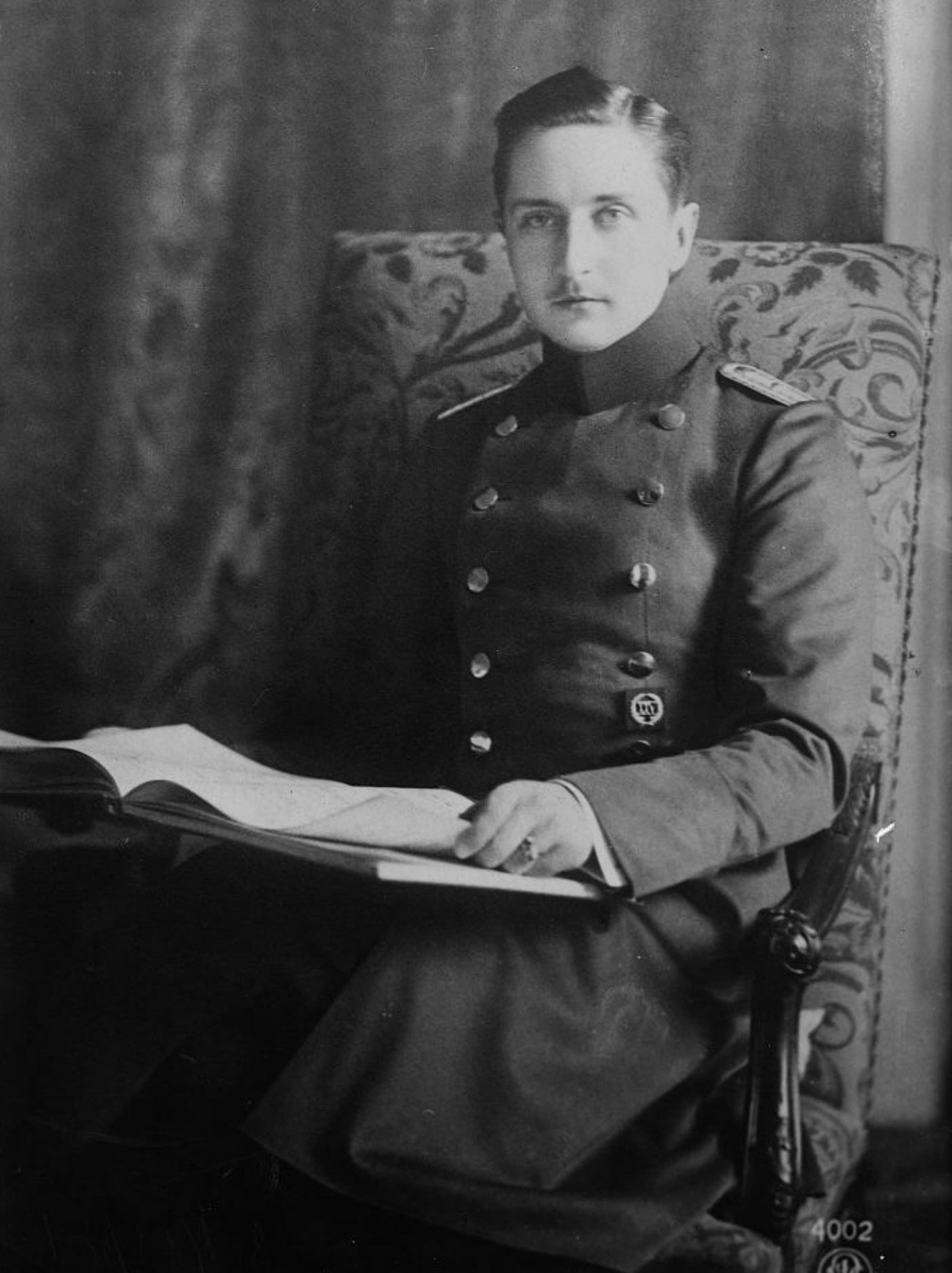
Berlin:  Prince August Wilhelm of Hohenzollern, son of the former Kaiser, announces he has abandoned his membership in the Stahlhelm nationalist paramilitary organization in favor of the nazis.  His reasons reportedly include the Stahlhelm’s lack of sufficient support for his fiery nationalist speeches, and his belief that Adolf Hitler and the nazis can provide the necessary zeal for the German nationalist movement.  He appeals to his own supporters to do the make the switch too.
Prince August Wilhelm of Hohenzollern

Helsinki:  The government suspends five communist newspapers and removes the governor of the Vaza district in an attempt to curb communist agitation.  President Lauri Kristian Relander cuts short his vacation to return home and deal with the crisis.

Friday, January 13, 2017

Friday, June 13, 1930

Vienna:  Chancellor Johann Schober’s bill to disarm Austria’s paramilitaries (including the fascist Heimwehr, see May 22), passes parliament.  Whether the government will in fact succeed in disarming the groups remains to be seen.

Friday, January 6, 2017

Thursday, June 5, 1930

Germany:
Berlin:  Chancellor Heinrich Bruening’s cabinet proposes a plan to rescue Germany’s ailing finances by an emergency 10% tax increase on workers’ salaries, on fees earned by corporate directors, and on . . . unmarried men.  The latter is being called the “bachelor tax.”  How popular this idea will prove remains to be seen.

Nienburgh:  More evidence of the depression’s toll.  Farmers in this northern community tear up paving and barricade two streets into their village, wielding clubs and pitchforks, to prevent tax bailiffs from serving notice of non-payment on drainage assessments.  No violence breaks out; the bailiffs leave without delivering their notices.

Nice:  French authorities expel an ethnic Italian fascist for his role in sending a group from Nice’s Italian community to Rome as representatives of “Italian provinces and dominions” at a ceremony there.  That Nice is not an Italian province seems clear to the French.  But many in Italy still consider Nice and Savoy lost territories from the last century, before Italy’s unification.

Bucharest:  Romanian police uncover a widespread soviet propaganda organization in Bessarabia, the northeastern region which Romania has governed since 1918, but which Russia still considers her territory.  Police say the network had 16 centers, intended to agitate for the region’s communization and unification with the Soviet Union.

Tuesday, December 6, 2016

Tuesday, May 20, 1930

Ludwigshaven, Germany:  Consistent with yesterday’s announcement, the commander of French forces occupying the Rhineland gives orders for the first 2,000 troops to prepare to leave.  A total of 40,000 troops will evacuate by June 30. 

Prague:  A socialist newspaper alleges that Italian dictator Benito Mussolini has plans to put Otto von Hapsburg, the last crown prince of Austria-Hungary, on the throne of Hungary as part of his designs to dominate eastern Europe. 


Milan:  Meanwhile, “Il Duce” keeps up the speechmaking.  At a ceremony honoring the fascist dead and inaugurating a new headquarters for the fascist party here, Mussolini calls fascism the “hope of Europe.”  

Sunday, December 4, 2016

Sunday, May 18, 1930: Bellicose speeches from Mussolini; Austria's fascists release Korneuburg Oath

Florence:  Another bellicose speech from Dictator Benito Mussolini as he reviews a massive assemblage of Italian armed forces that includes 45 planes and 14,000 troops.  Seated on a magnificent horse, Mussolini watches a parade of soldiers, sailors and blackshirt militiamen that’s being called the largest gathering of Italian armed forces since the end of the World War.

“Italy’s friendship is precious, but her enmity is hard.  There is great ignorance about us.  People abroad think we are a minor people, but we are a nation numbering 40 million.  They think we are governed by tyranny, but it is the Italian people who govern.  I am certain that in order not to remain prisoners of the sea, the Italian people are capable of great sacrifices.  More important than my speech today are the big guns and machine guns which I shall see in tomorrow’s parade.  The new naval program will be carried out exactly as it was laid down in 1929, and new ships will be afloat because the fascist will is a will of iron.  There are people who think they can isolate Italy, and who would not be adverse from starting a war against the Italian people, even through the territory of a third power.  We will await them at the crossing.”

“Fascist Italy henceforth will be a unit so organized as to be unassailable and without mortal danger.  Though words are beautiful things, rifles, machine guns, ships, airplanes, and big guns are still more beautiful.  Right is a vain word unless it is accompanied by might.”

“If by chance something should happen on the frontier, then we people, black shirts, army and former service men, would be at our posts ready to break the proud and vain attack.”  The crowd responds with cries of, “Down with France!”

In France, the full text of Mussolini’s similarly combative speech from yesterday is reprinted in many newspapers.
 

Korneuburg, Austria:  The fascist Heimwehr paramilitary releases the “Korneuburg Oath,” a declaration condemning both “Marxist class struggle” and “liberal-capitalist economic system,” as well as rejecting the Western democratic parliamentary and multi-party systems, and calling for an authoritarian system in Austria.  A translation of the text of the oath:

“We want to renew Austria completely.  We want the Republic of the Heimwehr.
From every comrade we demand an unshrinking belief in the mother country, utter fervor of coopration and a passionate love of homeland.  We want to reach for power in the state and reorganize state and economy for the benefit of the entire people.

We must forget our own interests, must subordinate all the ties and demands of the parties to our objective, because we wish to serve the community of the entire German people.

We reject Western democratic parliamentarianism and the party state.  We want to replace it with the autonomy of the corporations and strong governance that will not be formed from party representatives, but from leading figures from the major corporations and the most capable and proven men of our popular movement.

We shall fight against the corruption of our people by the Marxist class struggle and the liberal-capitalist economic system.  We want to realize the autonomy of the economy on the basis of occupational groups.  We shall overcome the class struggle and establish social dignity and justice.

We want to increase the prosperity of our people through a native economy of public utility.  The state is the embodiment of the nation as a whole; its power and leadership ensure that the corporations remain integrated in the imperatives of the national community.

May every comrade feel and avow himself to be an upholder of the new German state thinking; may he be prepared to sacrifice property and blood; may he know the three powers: belief in God, his own firm will, and the word of his leaders.”


Harbin, China:  A raid by soviet authorities on the Japanese consulate at Blagovestchensk, Russia, is provoking an outraged response by Japan.  Russia says it suspected the consulate of being involved in smuggling food from Manchuria into Siberia, and raided the facility to investigate.  Japan countercharges that the allegations are false, no evidence of such smuggling was found, and that the real issue is that Russian farmers and fishermen are starving due to Russian food shortages.  Japan says 300 starving miners ransacked a railway station searching for food, and trains on the Trans-Siberian Railroad have been held up for food as well.  “The threatening atmosphere is deepening daily in the villages in the vicinity of Khabarovsk due to a shortage of food throughout Siberia and as a result the Red Army stationed at Vladivostok has been mobilized in order to cope with the situation.”  Japan dispatches its consul from Harbin to investigate the situation.  


Monday, November 28, 2016

Monday, May 12, 1930

Vienna:  Prince Oscar von Hohenzollern, son of the former Kaiser of Germany, visits Austria’s nationalist Heimwehr paramilitary with 30 members of Germany’s Stahlhelm (also a nationalist paramilitary), of which Prince Oscar is a member.  The timing couldn’t be worse for Austrian Chancellor Johan Schober, trying to disarm such groups as he promised the League of Nations.  In the face of Schober’s intentions, the Heimwehr has announced it intends to hold parades every Sunday through the summer.


Tokyo:  Japan confirms it is sending 25 (not 30) military officers as trainers for China’s nationalist government military.  Chinese communists accuse Japan of meddling in China’s internal affairs.  Meanwhile, a group of reserve naval officers calls on Naval Minister Takarabe Takeshi to resign for the “unpardonable” act of agreeing to the London Naval Treaty.

Friday, April 18, 2014

Friday, 18 April 1930

Zurich:  Political exiles from fascist Italy report that political prisoners of dictator Benito Mussolini’s government, being held in prisons on the Lipari Islands in the Mediterranean, are being killed by their guards – two, at least, are reported dead.


Berlin:  More bad economic news: reports measuring economic activity such as railway car loadings of coal and other heavy goods are all down from the same time last year. 

Bydgoszcz, Poland:  Nine members of the Deutschtumbund, a German organization in the areas of Poland that were taken from Germany after the World War, are sentenced to prison for sabotaging Polish administrative decisions and spying.

Monday, April 14, 2014

Monday, 14 April 1930

Germany: 

Wilhelm Frick, nazi Minister of the Interior and Education in the state of Thuringia, issues an order that will revoke the licenses of entertainment establishments that present black performers or their music.  Frick says he is acting to save Germany from “negro culture,” which he says is corrupting morals in the country.


Berlin:  New Chancellor Heinrich Bruening’s package of financial reform bills (mostly taxes) and agrarian relief passes the Reichstag by slim margins – in the case of the budget bill, by just four votes.  Bruening’s authority to dissolve the Reichstag, granted him by President Paul von Hindenburg, again looms large over the proceedings, with political parties sending cars and in some cases even planes out to bring legislators in for the vote, rather than face elections for a new parliament.  The measures implement new taxes on tobacco, sugar, beer and mineral water. 

Elsewhere:

Paris:  Two fascists are shot to death in the street by communists in revenge for recent arrests of communists in France.

New York: The Rand School of Social Science, a socialist institution, releases its American Labor Year Book for 1930, which states that the growing worldwide unemployment problem caused by the Great Depression is worst in Russia.

Saturday, February 22, 2014

Saturday, 22 February 1930

Berlin:  Police raid the headquarters of the communist central committee and discover plans for a nationwide march on Berlin.  Meanwhile, Austrian Chancellor Johann Schober, fresh off his visit to and treaty with Italy (see Feb. 7), visits Berlin, giving rise to rumors that he may be seeking a revival of the alliance between Germany, Austria and Italy from before the World War.  He is scheduled to stay for 3 days.  The city holds no official reception for him, however, due to its dire financial situation.
 
Genoa:  The government suppresses the newspaper Genoa Caffaro, which clears away competition for the fascist newspaper Genoa Journal

Moscow:  The Society of the Godless, a soviet atheist body, announces that 3,380 churches, synagogues and mosques have been closed in Russia since the communist revolution in 1917 -- 1,380 were closed last year alone.  

Friday, January 3, 2014

Friday, 3 January 1930: Second Reparations Conference Opens

The Hague:  

The second conference of the Young Plan committee on reparations (or “Second Reparations Conference”) opens.  The committee was established in 1929 when it became apparent that Germany could not meet its war debt payments under then-existing terms.  In its first meeting, the committee drafted the plan, which has since been circulated among the participating nations (including the U.S., Germany, Great Britain and France).  The Young Plan is expected to be adopted at this meeting.

Prime Minister Henri Jaspar of Belgium, who is presiding at the conference, urges the delegates to work expeditiously, as many of them also want to attend the London Naval conference, scheduled to start in about two weeks. 

Brussels:  

The train carrying Princess Marie Jose to Rome for her wedding to Italy’s Crown Prince Umberto leaves Belgium.  Due to bomb plots, the train will take a secret, flexible and circuitous route. 

Amsterdam:  

The Amsterdam Bureau of the International Federation of Trade Unions releases a statement saying that the fascist government of Benito Mussolini has resulted in real wage decline of 20 to 40% in Italy since he came to power in 1922.  

Friday, December 27, 2013

Friday, 27 December 1929

Washington:  

Secretary of State Henry Stimson releases a report clearing Italian officials and residents in the United States of inappropriate activity relative to fascism.  He also expresses appreciation to the Fascist League of North America for disbanding.  “The investigation of the incidents referred to in the article in Harper’s magazine [see 26 October] has been completed by this department, and it has not revealed any activities on the part of any resident in this country of Italian extraction or on the part of any Italian officials which were directed against this government or against its institution.”


Rome:  

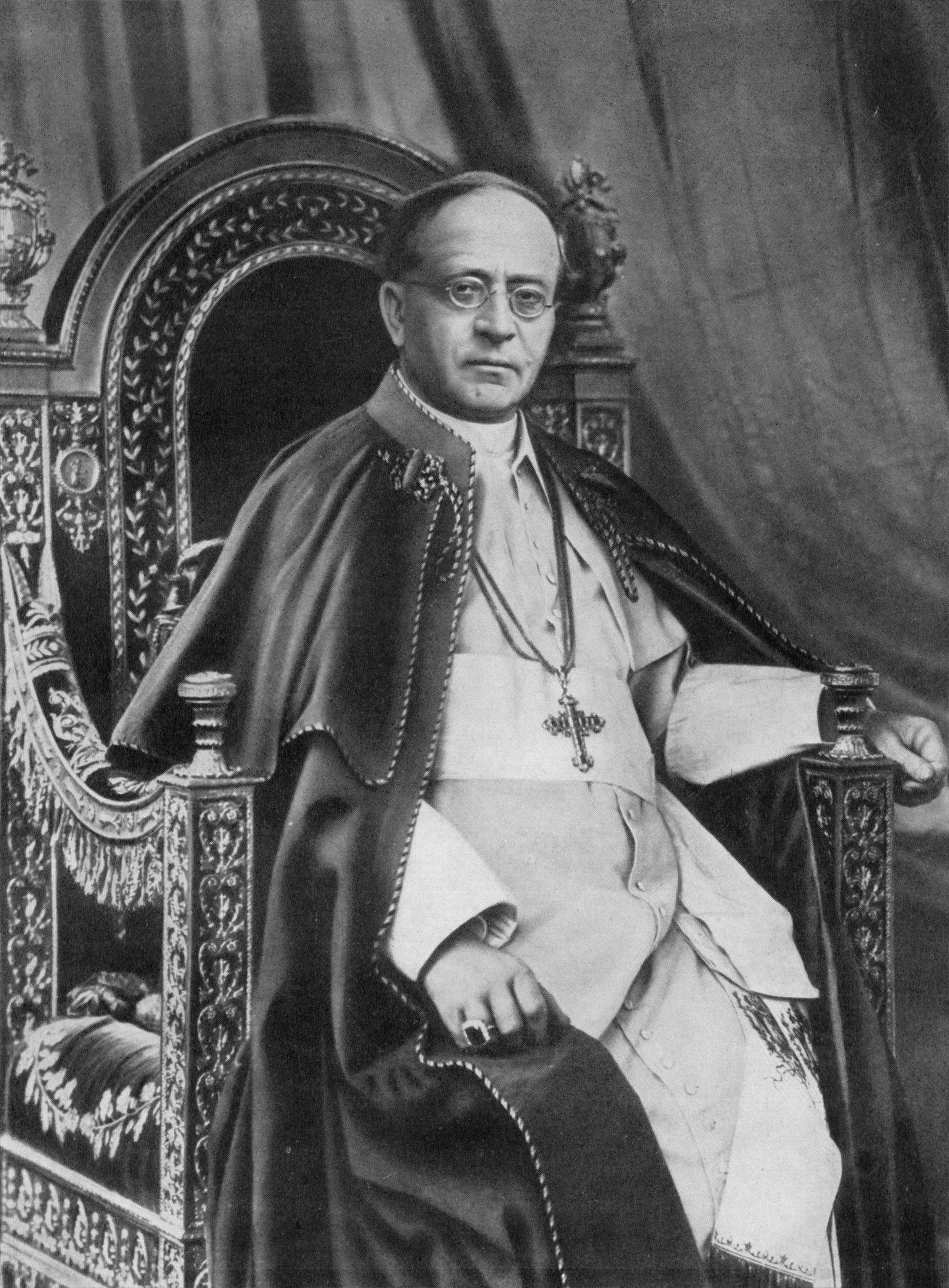
Pope Pius XI again complains of ill treatment by the fascist government of Italy, and of fascist interference in church publications.  During his Christmas address to the College of Cardinals, the Pope says the Italian government censors church newspapers, erects monuments which the church finds insulting, and has published a book allegedly “explaining” the relationship between church and state, but with which the church disagrees.  He says Catholic youth organizations are falsely accused of political involvement, but he knows this is not so, because the church has given them strict orders not to do so.  Meanwhile, the Pope says, “irreverent publications,” which attack the church, are given free reign to publish without hindrance.  The pope’s speech was not reported in Italy’s fascist newspapers. 

Tokyo:  

Police arrest 180 Korean students at area universities on charges of inciting recent student unrest in Korea as part of a “secret society of communist tendency.” 

Paris:  

Parliament approves a bill near the end of the session appropriating the equivalent of US$40 million in 1930 for construction of the line of forts proposed by Defense Minister Andre Maginot earlier this year, to protect France in the direction of Germany.  The engineering section of the army will get roughly 75% of the funds, which is itself only a portion of the estimated 3 billion francs the government agreed would need to be spent on the fortifications. 

China:  

China rejects Japan’s nomination of Torikichi Obata as its Minister to China.  China’s objection is based on the fact that Obata was Charge d’Affaires in Peking in 1915 when Japan presented China with its now-infamous “Twenty-One Demands,” which asked for humiliating concessions from China.  Japan is refusing to withdraw Obata’s nomination and has asked China if it is fully aware of the consequences potentially arising from the rejection.

Monday, December 23, 2013

Monday, 23 December 1929

Berlin:  

Dr. Paul Moldenhauer is appointed Minister of Finance to replace Dr. Rudolf Hilferding.  Moldenhauer was previously Minister of Economics.  Robert Schmidt will replace him in that post. 

Molenhauer’s appointment pleases industrialists and bankers.  He is a member of the people’s party (as is Foreign Minister Julius Curtius), a party friendly to business interests, and is expected to make changes to his predecessor’s policies that these interests will find more favorable.  This also restores the people’s party to four seats in Chancellor Hermann Mueller’s cabinet.

Meanwhile, Alfred Hugenberg, nationalist political leader who lost the Liberty Law vote, reportedly is planning to appeal the law’s defeat to the German courts and to ask President Paul von Hindenburg to proclaim the measure law.  He claims that only a majority of those who actually voted on Sunday was required for the Liberty Law to pass – not a majority of registered voters.  It’s a grasp at straws.  Neither the court nor Hindenburg is expected to give his argument any merit. 

Brussels:  

A young man, variously said to be an anarchist or a communist, is arrested on charges of plotting to bomb a train carrying the king and queen of Belgium.  The royals’ daughter, Princess Marie Jose, plans to marry Crown Prince Umberto of Italy in January.  The bomb plot was in protest of Italy’s fascist government.  A newspaper article in Brussels says the Belgian Prime Minister, Justice Minister and Defense Minister had all recently received threats as well that they would be killed unless they stopped the wedding.
 

Manchuria: 

Japanese reports say that ethnic Mongolians in the Barga district of western Manchuria are considering forming a new nation -- with Soviet Russian encouragement and under Russian influence – from territory that Russia invaded last month. 


Sunday, December 22, 2013

Sunday, 22 December 1929: Germany's Liberty Law is Defeated at the Polls

Berlin:  

The Liberty Law is defeated at the polls as expected.  Nationalist politician Alfred Hugenberg’s proposed measure to reject the Young Plan in favor of ending war debt payments altogether is supported by less than 6 million voters, or 14%.  Still, that’s an increase from the roughly 10% who signed the petition earlier in the year that brought the measure up for a public vote, and it surprises some observers, who hadn’t expected the vote to be any higher.  Some places show marked increases: in Potsdam, for example, 45% more people vote for the Liberty Law than signed the plebiscite.  Dusseldorf, a socialist and centrist stronghold, sees a 35% increase in voters for the measure.  Pfalz and Wurttemberg report 100% increases. 

The measure, sometimes also referred to as the law “against the enslavement of the German people,” would also have prosecuted German officials who favored reparations payments, and would have renounced the war guilt clause in the Treaty of Versailles.  Voting is relatively quiet, although some clashes are reported in Berlin, including one polling place having all its ballots stolen at gunpoint. 

Khabarovsk, Russia:  

China and Russia sign an agreement to restore Russian control of the Chinese Eastern Railway, which was a major focus of a Russian invasion of Manchuria last month.  Prisoners will be exchanged, troops will be withdrawn, and China additionally says it will disband the White Russian military organizations operating in Manchuria. 

Manchuria:  

In a related development, Japan’s Rengo news agency reports that some 200 Japanese nationals living in Manchuria, who were caught in the fighting during Russia’s invasion, are suffering cold, hunger and other hazards in the wake of the conflict.  Meanwhile, in Shanghai, reports are that Japan’s Dempo news agency has displeased the nationalist government, allegedly spreading “ill reports specifically intended to undermine public confidence in the nationalist government,” according to a foreign office announcement, which also said the government had requested Japan’s legation in Peiking to “restrain these propagandists.”  The news agency’s telegraph and radio privileges are withdrawn. 

New York:  

The Fascist League of North America disbands.  The organization, which formed primarily in Italian-American communities around the country, received mixed reactions from the Italian government and was viewed with ambivalence by the U.S. government.  A Harper’s magazine article on Oct. 26, entitled “Mussolini’s American Empire,” claimed the FLNA was raising “soldiers for fascism.”  This caused an uproar nationwide, including Congressional calls for an investigation of the FLNA.

League President Count Ignazio Thaon di Revel says that the Harper’s article and ensuing calls for investigation had nothing to do with it.  Rather, the league’s work in “contributing to the enlightenment of the American public pertaining to the ideals of fascism” has been accomplished.


Sunday, December 1, 2013

Sunday, 1 December 1929

Rome:  

Pope Pius XI, in a speech to a gathering of Rome’s parish priests, criticizes Italy’s fascist government and press, saying Catholic newspapers in Italy are finding it more difficult to discuss church issues freely.  Conversely, he says Italy’s fascist press is discussing matters related to the church with “indiscretion.” 


Moscow:  

The communist government jails Princess Sophie Lieven, sister-in-law of Sir Kynaston Studd, former Lord Mayor of London, for teaching Bible lessons to the children of workers’ families.  Ms. Lieven is also daughter of the former Grand Master of Ceremonies of the Russian Imperial Court.  She is being held in the Lublanka jail in Moscow.  

Friday, November 8, 2013

Friday, 8 November 1929

New York:  

A crowd of perhaps 200 anti-fascists holds a demonstration outside the Italian Consulate, waving banners that read “Down with Mussolini!” and “Down with fascism!”  When police attempt to confiscate their banners, the crowd rushes the building.  Outnumbered, the police call in reinforcements, who quickly restore order.  Eleven are arrested.

Vienna:  

The subcommittee in parliament that has been discussing Chancellor Johann Schober’s proposed constitutional amendments to reduce the autonomy of largely socialist Vienna, terminates its work.  It has not reached any agreement on the proposal, as the legislators with ties to the nationalist Heimwehr and those with ties to the socialist Schutzbund cannot agree on anything.  Next step: send the proposals to the full Constitutional Committee, to see if they can sort it out. 

Kyoto:

The Institute of Pacific Relations conference ends with historian James T. Shotwell urging all parties to pursue peace.  
James Shotwell, © German Federal ArchivesBundesarchiv, Bild 146-2004-0095 / CC-BY-SA.
 Used under a Creative Commons Attribution-ShareAlike license: http://creativecommons.org/licenses/by-sa/3.0/

Sunday, October 27, 2013

Sunday, 27 October 1929

Russia: 

THE SOVIETS KILL 26 more OF THEIR CITIZENS.  Today it's mostly “kulaks” (rich peasants), who oppose having their lands confiscated as part of soviet collectivization.  In the village of Gari, one of those shot is a priest, allegedly for spreading a rumor that the government would destroy the local church cemetery and close the church.  In Maly Penky, two kulaks are shot for burning their grain and terrorizing local communists in opposition to collectivization.  Five more are shot in Taskoava for killing a government grain inspector.  

In Kimri, another priest is sentenced to death -- in his case, when soviet authorities showed up to close his church, he ran to the church tower and rang the bells, bringing out a mob who attacked the government officials.  

Rome:  

Dictator Benito Mussolini gives an inflammatory speech before a raucous crowd on the 7th anniversary of the “March on Rome” that put him in power, saying his fascist Italy is strong, ready for war, and courageous.  "Italy today is really as I wished it, an army of citizens and soldiers ready for works of peace, laborious, silent and disciplined."  He follows this, however, with a question for the crowd: would they respond it he called on them should any country disturb Italy?  The crowd responds with a resounding yes.  "After seven years, we are younger, stronger and more implacable than before," he went on.  

Standing on the balcony of the Venezia Palace, Mussolini also reviews 40,000 “blackshirts” – his fascist militia -- and army regulars.  Mussolini makes fond references to the “Manganello,” a club which his blackshirts used to beat anti-fascists in earlier years.  “This club,” he says, “has now been laid aside, but could promptly be dusted and made to refunction.  Besides this instrument we also have rifles and machine guns.”  His speech is interrupted at times by shouts of "Death to political exiles," thought to be a reference to the would-be assassin who fired a shot at Prince Umberto last week in Brussels.  


London:

Several hundred communist demonstrators attempt a march from Trafalgar Square to the U.S. Embassy to protest the treatment of textile workers in North Carolina.  Bearing signs and banners reading, "Textile Workers Starved and Murdered in Gastonia," the marchers try to smash windows on vehicles as they march past.  The real trouble starts when they are informed that the U.S. Ambassador won't receive them; the communists then rush police near Victoria Station, and the police counter-charge on horseback.  It takes roughly 30 minutes to restore order.


Vienna:  

The nationalist Heimwehr paramilitary organization holds a 10,000-man parade, complete with cavalry.  But there is no violence.

Saturday, October 26, 2013

Saturday, 26 October 1929

Berlin:  

Germany observes the 1,000th anniversary of the year 929, when East Prussia and Brandenburg officially became German.  But the celebration raises sore points relative to Germany’s post-war borders.  West Prussia is now part of Poland, creating a strip of land called the “Polish Corridor” between two German-controlled territories.  Former Chancellor Hans Luther, in an address, says, “First, the east provinces' fate is Germany's fate.  Second, a nation's duty is to help its weakest members.  Third, the impossible corridor has no support either in history, common sense, or justice.  As Abraham Lincoln once said, 'No piece of work is done until it is done right.'  For us Germans who are working for a true European peace and who must work to hold and strengthen the German east provinces, the rule must now become, 'What thou hast inherited from thy fathers, strive to deserve, that thou mayest actually possess it.'"

Washington: 

Senator Thomas Heflin introduces a resolution in Congress calling for Secretary of State Henry Stimson to turn over all information he has on the Fascist League of North America.  This comes after Harper’s Magazine published an article entitled “Mussolini’s American Empire,” which claimed that the FLNA is part of a Mussolini plot to “raise soldiers for fascism” in the U.S.  The article also says Italian consular officials in the U.S. have been been involved in training Italian-American children in an effort to get them to join the Italian army when they're older.  "These youngsters," the article says, "most of them born here, not only are being taught in Italian schools established by the Fascisti, but actually are being given preliminary training to fit them for the Fascist army.  The article claims Italian-Americans are being taxed by Italian authorities, and that Italian-Americans traveling in Italy are being detained and forced to undergo training in the Italian army reserve.  "This, again, is in accord with Mussolini's idea that all Italians are his subjects and that war material can and should be drawn from America as well as from any other colony."

Nobile Giacomo de Martino, Italian Ambassador to the U.S., issues a formal statement denying these accusations.  "The Italian military law which is attacked in the article is not a product of fascism.  It was promulgated long before the advent of fascism and was enforced by previous governments.  It is not a system unique in the relations between the United States and Italy, such a system existing in numerous other countries."

The U.S. State Department also recently instructed its Ambassador to Rome to protest to the Italian government abouts the allegations.  

Manchuria:

A London Times military correspondent files a report stating that the "real problem" in the Soviet-Sino Manchurian conflict is White Russian troops who fled the Russian revolution and now virtually control Manchuria and even parts of northern China.  According to the report, White Russian generals serve as military advisors to the Chinese nationalist government, and in Manchuria, they actively work to provoke conflict with Russia, in hopes of re-igniting their lost war.

At Mukden, these soldiers keep a munitions factory which produces 500 shells, 300,000 cartridges and 120 rifles per day -- by far the highest and best output of any military factory in China.  They also maintain a rudimentary air force of 250 outdated planes.  They have also formed several mounted infantry units.  "There is no doubt that it is these men who are the driving power behind the Chinese to rid Manchuria of soviet Russians and soviet influence," the dispatch says.

China:  

Continued fighting between nationalist government forces and communist rebels is reported around Chengchow, an important railroad hub in north-central China.

Thursday, October 24, 2013

Thursday, 24 October 1929: New York Stock Market Crashes

THE NEW YORK STOCK MARKET IS CRASHING

New York

Wall Street crashes again – Panic selling prevails: nearly 13 million shares move.  it's the Heaviest trading day and biggest drop in U.S. stock market history -- Down nearly 11% at one point, the market recovers to end the day only minus 2%.  But thousands of accounts are wiped out nonetheless.  The day's volume, 12.9 million shares, dwarfs the previous volume record by 50%.  

"The remarkable era of avid public speculation in stocks which has swept over the country during the last five years came to a climax Thursday in the most terrifying stampede of selling ever experienced on the New York Stock Exchange and other leading security markets."  (Associated Press)

The collapse begins shortly after the opening bell and continues through much of the day, as the sell-off that shook the market late yesterday continues.  The ticker falls several hours behind, and for a while it appears the exchange might have to close.  At one point, the roar from the trading floor grows so loud it can be heard for several blocks down Wall and Broad streets in every direction, and crowds gather to see what the commotion is about.  Thousands of people mill around outside the exchange, some of them investors who have lost everything.    

Five Wall Street bankers, including Thomas Lamont, head of Morgan Bank, and Richard Whitney, Vice President of the NYSE, are credited with the late rally that turns the rampage.  They hold a hurried meeting at the J.P. Morgan offices, then place large purchase orders above market value to stem the tide.  Lamont tells reporters, "We consider the situation on the floor of the stock exchange this morning a technical one rather than a fundamental one, and that it will result in betterment.  I still see nothing to worry about."

Treasury Secretary Andrew Mellon holds an urgent meeting with the Federal Reserve Bank Board, but basically concludes the same thing as Lamont: the fundamental business environment in the United States is sound, and there is no need for federal intervention.  The Reserve Board declines to change discount rates or take any other action.

The London and Paris markets also drop, but Berlin’s stock market rises.


Brussels: 

Prince Umberto II, heir to the throne of Italy, survives an assassination attempt while he is laying a wreath on Belgium's Tomb of the Unknown Soldier.  It happens on the same day as the announcement of his betrothal to Princess Marie Jose of Belgium.  As Umberto is about to lay the wreath during a morning ceremony, a man runs out of the crowd and fires a single shot that goes wild.  Some witnsses say he is crying out, “Down with Mussolini!”  Before he can get off another shot, police and bystanders subdue him.  Umberto, staying surprisingly calm, continues with the ceremony and finishes it.

Later, in police custody, the would-be assassin claims he missed on purpose, only intending to fire into the air in protest.  He gives his name as Fernando di Rosa, an Italian national and law student at the University of Paris.


Wednesday, October 9, 2013

Wednesday, 9 October 1929: Prussia Declares Stahlhelm Illegal

Berlin: 

The government of Prussia, the state that makes up some 60 percent of Germany, bans the Stahlhelm (“Steel Helmets”), a nationalist paramilitary organization, in two provinces, on grounds that it is effectively an army.  The move is in response to the Stahlhelm’s support of the the Liberty Law campaign.

For months, a coalition of groups called the Reich Committee for the German People’s Petition has been campaigning, sometimes violently, for the Liberty Law, which opposes the Young Plan, would discontinue war debt payments altogether, and even prosecute government officials who support the Young Plan. The coalition was the brainchild of Alfred Hugenberg, a nationalist press baron who owns multiple newspapers, and is made up of many groups, including the German National People’s Party, a nationalist political party of which Hugenberg is head, and the radical, fascist, fringe National Socialist German Worker’s Party (nazis).  The coalition was formed to drum up support for a national plebiscite on the Liberty Law, to be conducted in October.  Under German law adopted after the World War, if 10 percent of voters nationwide sign a petition in favor of a proposed law, the Reichstag has to take up the measure. Hugenberg’s plebiscite is intended to gather the necessary signatures to force the Liberty Law to the Reichstag.

Also part of the coalition is the Stahlhelm, the largest of the many paramilitary organizations that operate in Germany, boasting some half a million members.  President Paul von Hindenburg is its honorary president.  The Stahlhelm is heavily comprised of former soldiers, and serves as an unofficial army reserve of sorts, after the standing German army was required to shrink under the Treaty of Versailles.  It was pro-nationalist from its beginning, and often serves as a kind of armed wing of Hugenberg’s political party.

Prussia’s Minister of the Interior issues his ruling in reprisal for the Stahlhelm’s sometimes heavy-handed activities in support of the Liberty Law, including violence.  The minister is a socialist, and much of Prussia is socialist-leaning.  Prussia issues a handbill as well, stating:  “The German government as well as an overwhelming majority in the German nation, realizes that the improvement in Germany’s international position cannot be forced by any German law, but is only obtainable step by step through constant efforts and negotiations with other powers.”  

Stahlhelm with old imperial flag

Moscow:  

Pravda, newspaper of the communist party, launches a new occasional feature titled, “To Know Our Enemies in Order to Hate them.”  It’s a review of capitalist countries, with the United States winning the honor of being evaluated first.  “Millions of European proletarians who sought freedom and happiness on American farms are disillusions after paying a bitter price.  Farmers are being reduced to beggars.  Taxes aggregate 30 percent of the value of farm production, while from four to five million workers are permanently unemployed.  Workers do not get vacations.  They are given no means to support themselves properly, and are likely one morning to find their jobs gone when they return to work.  Millionaires’ daughters order colored limousines to match every new gown.”

“Hence we must imbue communists with a real hatred for capitalists so that communists will fight harder.  Those American communists who refuse to believe in the inherent rottenness of American capitalism are being expelled.  Business is their god, money their king and commerce their ruler; but, as churches and thrones were crushed, so this American paradise will be crushed.”

Harbin, Manchuria:  

The U.S. consulate here receives a report from Leonard Lilliestrom, U.S. Vice Consul, confirming reports of atrocities by Red Army soldiers against White Russians in Hailar and Manzhouli.  Among the gruesome details: soviet cavalry has surrounded villages and forced males over 10 to the edge of town where they are mowed down with machine gun fire.  An estimated 150 White Russians have been killed by the soviets.

Elsewhere: 

Jaryczowo, Poland:  Anti-semitic unrest among ethnic Ukrainians flares into violence and death.  Last night a mob of Ukrainians attacked a synagogue during evening prayers, resulting in four Ukrainians killed and 11 Jews and 5 Ukrainians injured as the Jews fought back with candlesticks and furniture.  Today a large Ukranian mob attacks Jewish merchants, wounding 7, vowing revenge for the deaths of their kin.  Police are out in force, as both groups are heavily armed.

Hungary:  Jewish students are beaten in schools after distributing handbills.  Schools in Hungary have been known to ban Jewish students from classes with Hungarians, and Jews who protest this can face mistreatment.  

Rome: The fascist government bans certain editions of Jack London novels, branding them “anti-fascist.”