Showing posts with label Johann Schober. Show all posts

Saturday, January 14, 2017

Saturday, June 14, 1930: Pabst Arrested; Prince Wilhelm Joins the Nazis

Vienna:  Fresh off his parliamentary victory to disarm Austria’s paramilitaries, Chancellor Johann Schober orders the arrest of Waldemar Pabst, a German national who has been in Austria for several years helping lead the fascist Heimwehr paramilitary.  Pabst is charged with involvement in revolutionary activities; the government will begin expulsion proceedings against him immediately.  In an ironic twist, should Pabst be ordered expelled from Austria (which is likely), his only recourse of appeal would be to Karl Seitz, Mayor of Vienna – a socialist.
Waldemar Pabst

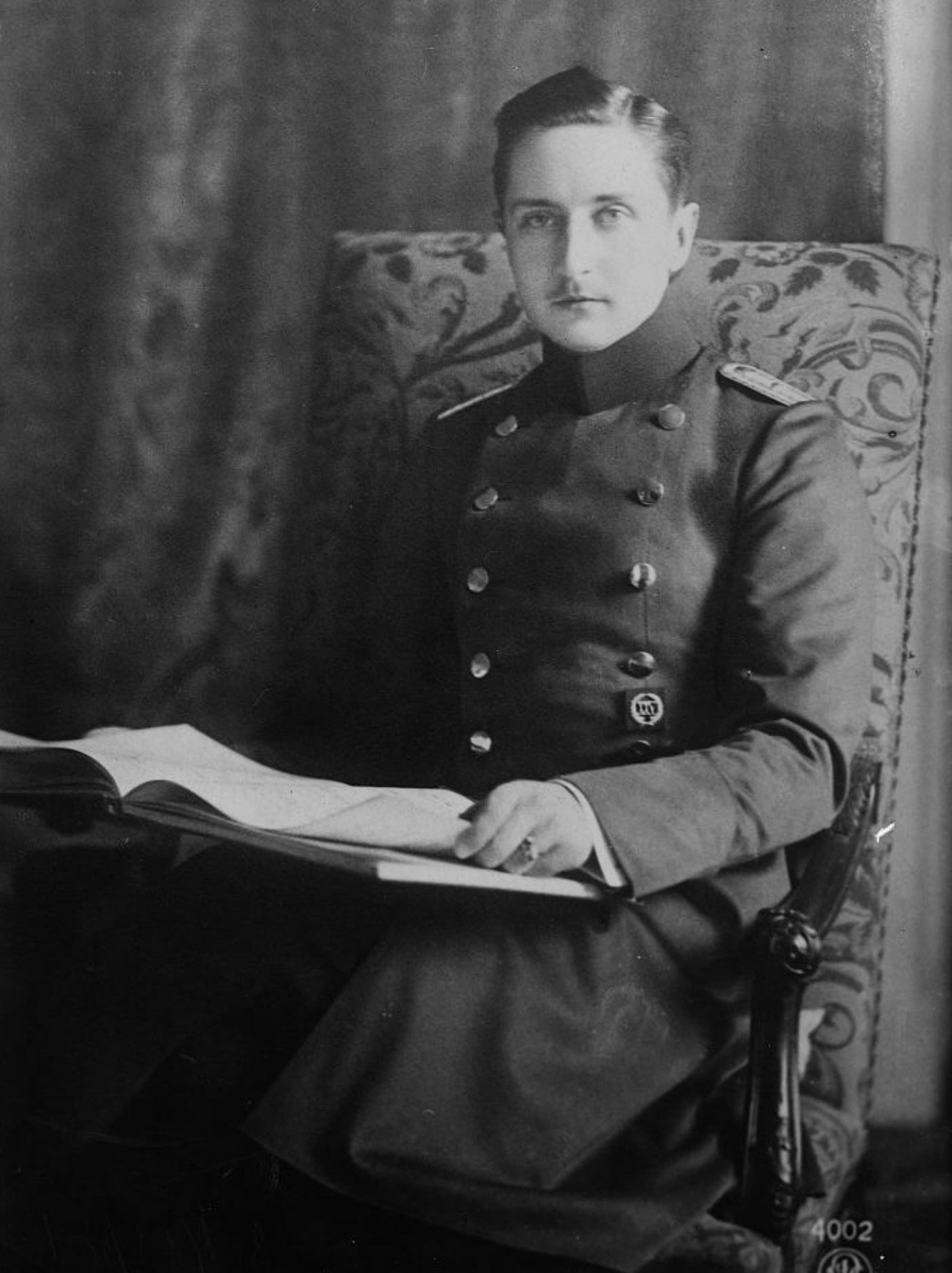
Berlin:  Prince August Wilhelm of Hohenzollern, son of the former Kaiser, announces he has abandoned his membership in the Stahlhelm nationalist paramilitary organization in favor of the nazis.  His reasons reportedly include the Stahlhelm’s lack of sufficient support for his fiery nationalist speeches, and his belief that Adolf Hitler and the nazis can provide the necessary zeal for the German nationalist movement.  He appeals to his own supporters to do the make the switch too.
Prince August Wilhelm of Hohenzollern

Helsinki:  The government suspends five communist newspapers and removes the governor of the Vaza district in an attempt to curb communist agitation.  President Lauri Kristian Relander cuts short his vacation to return home and deal with the crisis.

Friday, January 13, 2017

Friday, June 13, 1930

Vienna:  Chancellor Johann Schober’s bill to disarm Austria’s paramilitaries (including the fascist Heimwehr, see May 22), passes parliament.  Whether the government will in fact succeed in disarming the groups remains to be seen.

Thursday, December 8, 2016

Thursday, May 22, 1930

Vienna:  New information on Chancellor Johan Schober: he is not resigning, but rather is reportedly planning to move forward with submitting to parliament a bill to disarm Austria’s paramilitaries, ignoring the Heimwehr’s conditions for doing so.  It is a bold, risky political game, but one Schober appears to be winning: leading politicians who were aligned with the Heimwehr are reported defecting, emboldening the chancellor.
 

Berlin:  The German public is incensed as it comes to light that France has demanded the destruction of three large airship hangars at Griesbach, considering them a threat to French security.  

Wednesday, December 7, 2016

Wednesday, May 21, 1930

Vienna:  Newspapers are reporting that Chancellor Johan Schober, still embroiled in a struggle to get both nationalist and socialist paramilitary groups to disarm peaceably, has threatened to resign rather than meet the conditions the nationalist Heimwehr paramilitary has demanded for disarmament, which include appointing a Heimwehr member as his Minister of the Interior and appointing a new police chief for Vienna.

Monday, November 28, 2016

Monday, May 12, 1930

Vienna:  Prince Oscar von Hohenzollern, son of the former Kaiser of Germany, visits Austria’s nationalist Heimwehr paramilitary with 30 members of Germany’s Stahlhelm (also a nationalist paramilitary), of which Prince Oscar is a member.  The timing couldn’t be worse for Austrian Chancellor Johan Schober, trying to disarm such groups as he promised the League of Nations.  In the face of Schober’s intentions, the Heimwehr has announced it intends to hold parades every Sunday through the summer.


Tokyo:  Japan confirms it is sending 25 (not 30) military officers as trainers for China’s nationalist government military.  Chinese communists accuse Japan of meddling in China’s internal affairs.  Meanwhile, a group of reserve naval officers calls on Naval Minister Takarabe Takeshi to resign for the “unpardonable” act of agreeing to the London Naval Treaty.

Thursday, November 17, 2016

Sunday, May 4, 1930

Madrid:  Students shouting “Viva el rey!” enter a theater where Republicans have gathered and start hitting the meeting’s leaders over the head with sticks, sparking a riot.  From there, the fighting spreads outside, and eventually to the street in front of a hotel where the meeting’s speaker is staying.  Several are injured and arrested.

Rome:  Benito Mussolini reviews 25,000 fascist youth who have been participating in a camp.  Mussolini praises their morale and discipline.

Austria:  Chancellor Johann Schober, who had just promised the League of Nations he would disarm the country’s militarized political factions as a condition for receiving financing to improve Austria’s infrastructure, returns home to find a 10,000-man march being held by the nationalist Heimwehr paramilitary in Vienna, and 16,000 uniformed socialists gathering in St. Polten.  Police with machine guns keep the peace.

Washington:  More than 1,000 economists sign a letter to President Herbert Hoover, asking him to veto the Smoot-Hawley tariff bill pending in Congress.  The bill would raise tariffs on more than 20,000 import products to record levels, in hopes of protecting domestic producers during the economic depression.  The economists say it will have the opposite effect, provoking reprisal tariffs from other countries and worsening the depression.


Manchuria:  Warlord Zhang Xueliang, de facto ruler of Manchuria, is reportedly acquiring a small “air force” of bombers and scout planes after suffering under Russia’s air superiority during the Soviet incursion into Manchuria (see Nov. 17, 1929).  

Saturday, February 22, 2014

Saturday, 22 February 1930

Berlin:  Police raid the headquarters of the communist central committee and discover plans for a nationwide march on Berlin.  Meanwhile, Austrian Chancellor Johann Schober, fresh off his visit to and treaty with Italy (see Feb. 7), visits Berlin, giving rise to rumors that he may be seeking a revival of the alliance between Germany, Austria and Italy from before the World War.  He is scheduled to stay for 3 days.  The city holds no official reception for him, however, due to its dire financial situation.
 
Genoa:  The government suppresses the newspaper Genoa Caffaro, which clears away competition for the fascist newspaper Genoa Journal

Moscow:  The Society of the Godless, a soviet atheist body, announces that 3,380 churches, synagogues and mosques have been closed in Russia since the communist revolution in 1917 -- 1,380 were closed last year alone.  

Saturday, December 7, 2013

Saturday, 7 December 1929: Nazis Gain in Thuringia Elections

Germany:

Berlin:  Reaction to Reichsbank President Hjalmar Schacht’s broadside relative to the Young Plan (see Dec. 5) is fierce, both from inside and outside of Germany.  The federal government says that for Schacht even to make such statements risks violating Germany’s agreements following the World War.  And sources within the government are letting it be known that Schacht may not be asked to attend the second round of meetings on the Young Plan, scheduled to start in a couple of weeks in The Hague.

Outside of Germany, the French press see Schacht’s comments as political maneuvering for leadership of the nationalist movement within Germany (especially with Alfred Hugenberg in decline after his Liberty Law fiasco), as well as posturing in advance of the upcoming Hague conference at which the debt payments will be discussed. 

Schacht’s memo, though, is already producing a divide within Germany.  Bankers and big industry are tending to line up behind Schacht’s analysis, hailing the statement as just the kind of strong tonic Germany needs to solve its economic problems.  The government of Chancellor Hermann Mueller has called for a vote of confidence in the Reichstag next Wednesday.

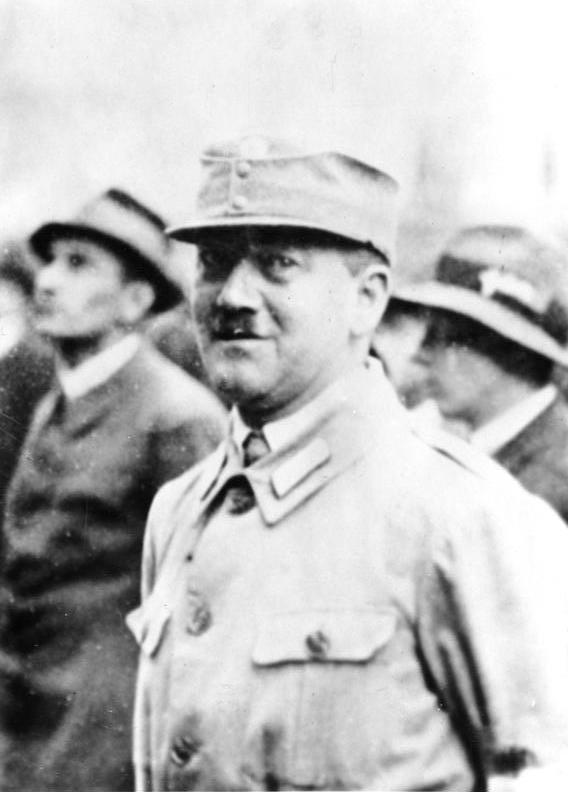
Weimar:  Meanwhile, elections for the legislature (or “Landtag”) of the central German state of Thuringia are being held today.  By nightfall, when results are coming out, it is clear that the national socialist party (nazis) have scored another victory, though their numbers are still small.  The nazis have garnered 11% of the popular vote, which will give them 6 seats in the Landtag, making them the 3rd-largest party.  That’s far below the 34% earned by the leading Social Democrats.  But enough that it will make forming a coalition government difficult without including the nazis. 

Vienna:  

The Federal Assembly (parliament) approves the constitutional revisions that Chancellor Johann Schober has been working on for five weeks.  The changes: reduce the autonomy of socialist-leaning Vienna within the country, but retain its status as a state; reduce Vienna’s tax contribution to the federal government but steer part of it to an adjoining state; introduce direct election of Austria’s President; broaden some of the President’s powers, for example emergency powers and to dissolve Parliament, but also restrict others in an attempt to avoid dictatorship; and call for absorption of the Social Democratic militia into the state police.  Of immediate practical importance, the changes are thought to defuse the potential for a coup by the nationalist Heimwehr paramilitary, as both nationalists and socialists got some of what they wanted.

China: 

The nationalist government capital of Nanking is cut off from communication, as rebel troops have it under siege.  Many of Chiang Kai-shek’s best generals have defected.  Communist rebel forces are also still reported to be advancing on Canton.  Both Nanking and Canton, as well as Shanghai and Hankow, are under martial law.  British gunboats are preparing to remove British nationals.  Chiang is reportedly mustering 70,000 troops for a last stand in his capital. 

Saturday, November 23, 2013

Saturday, 23 November 1929

Vienna:  

In the crisis surrounding Chancellor Johann Schober’s proposal to change the Austrian constitution to reduce the autonomy of mostly socialist Vienna, Schober achieves a breakthrough.  He secures agreement from the socialists to the proposal; in exchange, the federal government will reduce Vienna’s taxes.  This crisis has been the source of much of the recent agitation by the nationalist Heimwehr paramilitary.  The Heimwehr has threatened to overthrow the government if the constitutional change isn’t approved. 

Friday, November 8, 2013

Friday, 8 November 1929

New York:  

A crowd of perhaps 200 anti-fascists holds a demonstration outside the Italian Consulate, waving banners that read “Down with Mussolini!” and “Down with fascism!”  When police attempt to confiscate their banners, the crowd rushes the building.  Outnumbered, the police call in reinforcements, who quickly restore order.  Eleven are arrested.

Vienna:  

The subcommittee in parliament that has been discussing Chancellor Johann Schober’s proposed constitutional amendments to reduce the autonomy of largely socialist Vienna, terminates its work.  It has not reached any agreement on the proposal, as the legislators with ties to the nationalist Heimwehr and those with ties to the socialist Schutzbund cannot agree on anything.  Next step: send the proposals to the full Constitutional Committee, to see if they can sort it out. 

Kyoto:

The Institute of Pacific Relations conference ends with historian James T. Shotwell urging all parties to pursue peace.  
James Shotwell, © German Federal ArchivesBundesarchiv, Bild 146-2004-0095 / CC-BY-SA.
 Used under a Creative Commons Attribution-ShareAlike license: http://creativecommons.org/licenses/by-sa/3.0/

Friday, October 18, 2013

Friday, 18 October 1929: More Soviet Action in Manchuria

Manchuria: 

NEW FIGHTING IS REPORTED BETWEEN SOVIET AND MANCHURIAN/CHINESE TROOPS, both today and yesterday.  Reports say Russian forces penetrated 100 miles up the Sungari River into Manchuria, using 7 gunboats and 12 warplanes, likely looking for and destroying arms or boats that might be used to harass Russian river traffic along the Amur River on the Russia/China border.  The soviets are largely unopposed, and withdraw after the incursion.  

Berlin: 

President Paul von Hindenburg blasts the Liberty Law plebiscite supported by Alfred Hugenberg’s nationalists, especially the provision that would impeach and imprison government officials who support the Young Plan.*  Votes in favor of the Liberty Law are reportedly light.

Meanwhile, a new report on unemployment among labor union members shows unemployment increased from 9% in August to 9.6% in September.  

Paul v. HindenburgBundesarchiv, Bild 183-C06886 / CC-BY-SA.  Used under a Creative Commons Attribution-ShareAlike license: http://creativecommons.org/licenses/by-sa/3.0/

Vienna:  

Chancellor Johann Schober submits a revised Austrian constitution to the Reichstrat (legislature) that reduces the autonomy of the largely socialist province of Vienna and places it more under the control of the national government, which contains powerful fascist elements.  Tension between socialist-leaning Vienna and the national government and rest of the country has been an ongoing feature of post-war Austrian politics.


Elsewhere: 

New York: The stock market loses another 2.5%, rising early then falling hard.  A report today from the New York Stock Exchange says Wall Street lost nearly $2.6 billion in September.
  
China: Some 500 troops mutiny in the city of Wuhu, and capture the city for seven hours.  Foreigners seek safety from Japanese and British gunboats in the harbor, and forces of the nationalist government subdue the rebellion.  Meanwhile, communist rebels are attacking the city of Chengchow, in north-central Honan province.