Showing posts with label Finland. Show all posts

Tuesday, January 17, 2017

Tuesday, June 17, 1930: U.S. Enacts the Smoot-Hawley Tariff Act

Washington:  President Herbert Hoover signs the Smoot-Hawley Tariff Act, putting in force immediately a wide range of tariff increases on thousands of imported products.  The law changes the tariff rates on 1,122 products entering the United States, raising them in 887 cases.  Economic experts have warned that the act will only exacerbate the depression, and several U.S. trading partners have said they will retaliate.


Helsinki:  Communist agitation has reached such heights that citizens are taking matters into their own hands.  In northern Finland, mobs have begun driving communists toward the Russian border to rid their communities of their troublemaking.  In the capital, civic organizations have petitioned the government to suppress the communist party and its newspapers.  Communist organizations in Helsinki, Ulenborg and Vaza have ceased activities in the face of the opposition.

Saturday, January 14, 2017

Saturday, June 14, 1930: Pabst Arrested; Prince Wilhelm Joins the Nazis

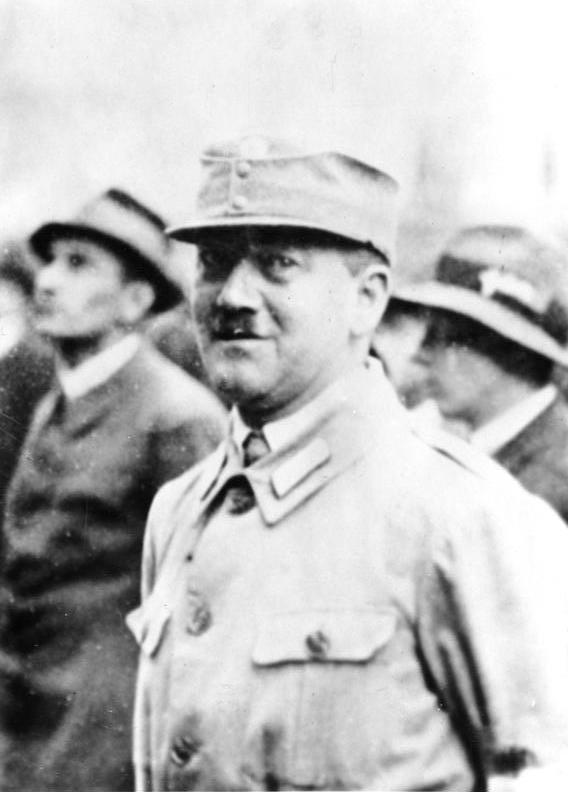
Vienna:  Fresh off his parliamentary victory to disarm Austria’s paramilitaries, Chancellor Johann Schober orders the arrest of Waldemar Pabst, a German national who has been in Austria for several years helping lead the fascist Heimwehr paramilitary.  Pabst is charged with involvement in revolutionary activities; the government will begin expulsion proceedings against him immediately.  In an ironic twist, should Pabst be ordered expelled from Austria (which is likely), his only recourse of appeal would be to Karl Seitz, Mayor of Vienna – a socialist.
Waldemar Pabst

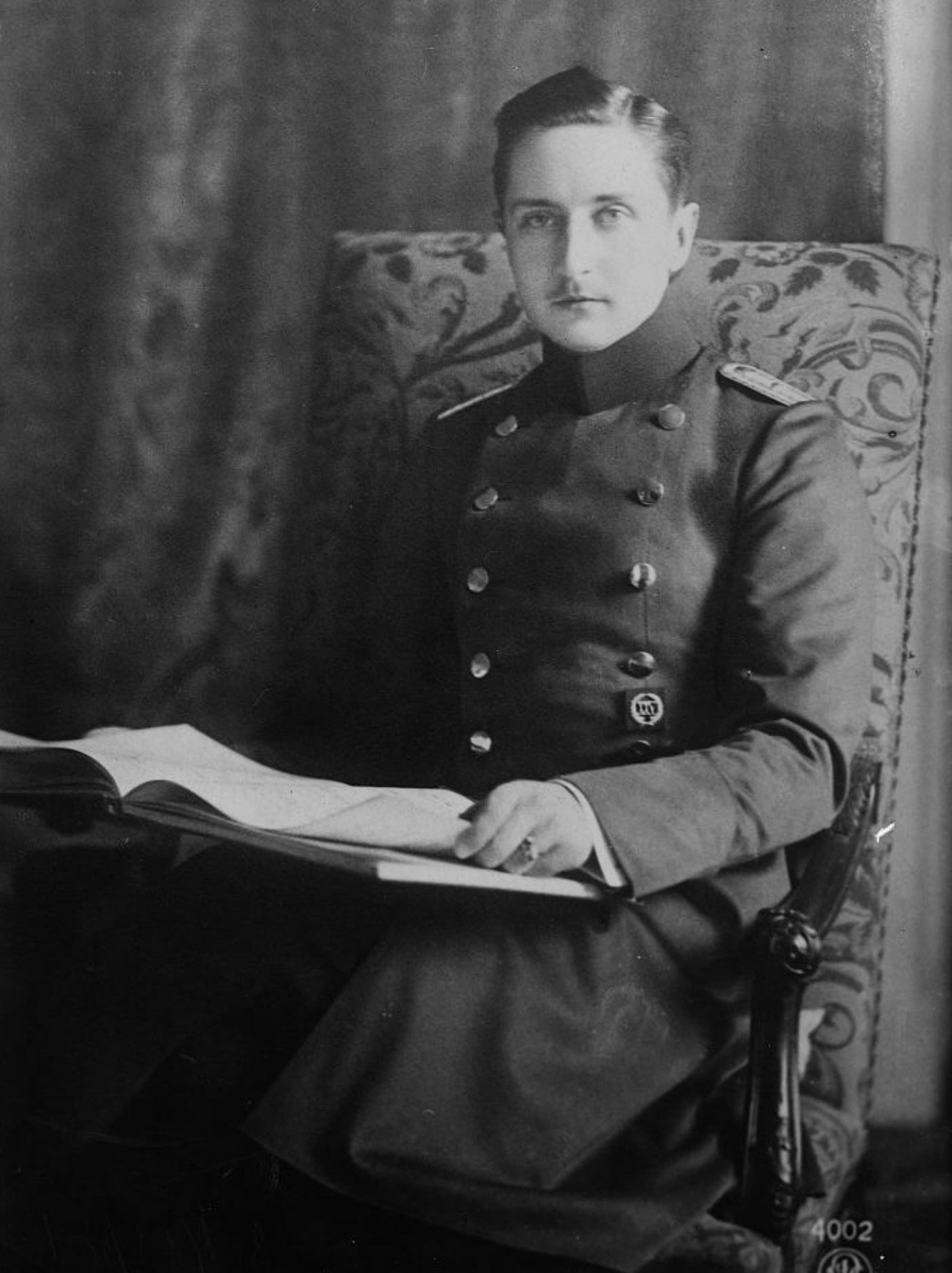
Berlin:  Prince August Wilhelm of Hohenzollern, son of the former Kaiser, announces he has abandoned his membership in the Stahlhelm nationalist paramilitary organization in favor of the nazis.  His reasons reportedly include the Stahlhelm’s lack of sufficient support for his fiery nationalist speeches, and his belief that Adolf Hitler and the nazis can provide the necessary zeal for the German nationalist movement.  He appeals to his own supporters to do the make the switch too.
Prince August Wilhelm of Hohenzollern

Helsinki:  The government suspends five communist newspapers and removes the governor of the Vaza district in an attempt to curb communist agitation.  President Lauri Kristian Relander cuts short his vacation to return home and deal with the crisis.

Friday, January 10, 2014

Friday, 10 January 1930

Great Britain:  

The worldwide economic downturn spreads: a steel mill in the town of Penistone closes, throwing nearly the entire male population of the town – over 1,000 men – out of work. 

Helsinki:  

Finland is angered, and the Finnish cabinet holds a special session, over a report that Russia is forcing some 100,000 Karelian peasants into forced labor in the forests of northern Russia.  The Karelians are an ethnic group related to the Finns who have historically lived in regions that are now part of both Finland and Russia.  The soviet action to subject them to forced labor would violate the peace treaties following the World War, in which the Karelian people were promised some freedoms from sovietization.

Geneva:  

The League of Nations, headquartered here, is 10 years old today.  Founded in 1919 in the aftermath of the World War, the League is the world’s first international organization having the primary purpose of preserving world peace.  It has 54 member nations, including the entire developed world. 

Friday, December 20, 2013

Friday, 20 December 1929

Vienna:  

Emile Vandervelde, Chairman of Labor and Socialist International, an international organization of socialist parties, warns Austria that it supports its socialist comrades in Austria, and advises the Austrian government to take seriously British Foreign Minister Arthur Henderson’s warnings against a nationalist coup. 


Helsinki:  

Parliament approves the proposal by Prime Minister Kyosti Kallio, made last week, to amend the country’s “association law” to curtail the ability of communist groups to spread propaganda.  The vote was 98-78.  The national government is expected to use the new law to disperse communist activities, and possibly even dissolve the communist party in parliament.

London:  

Great Britain officially resumes diplomatic relations with the Soviet Union.  But the formalities have not gone smoothly.  Earlier in the month, Britain’s new envoy to Russia was received “cooly,” prompting a torrent of rhetoric that relations could never be normal with a country so bent on propaganda.  Today, King George refuses to receive the Soviet ambassador, owing to the Soviet government’s assassination of Czar Nicholas, King George’s cousin. 

Berlin:  

Finance Minister Rudolph Hilferding resigns anyway.  He has been under fire for weeks – and at odds with Reichsbank President Hjalmar Schacht – over a series of financial reforms approved by the Reichstag.

Paris:  

The Saar negotiations between Germany and France, which started three weeks ago, adjourn for the Christmas holiday with no progress.  It’s not clear the negotiations will even resume.

Monday, December 16, 2013

Monday, 16 December 1929

Helsinki:  

The cabinet of Prime Minister Kyosti Kallio asks Parliament for extended powers to curtail the flow of communist propaganda threatening to destabilize the country. 


United States:  

Bad economic news: unemployment jumped 3% just from October to November.  Trade in the auto industry, a major contributor to the country’s industrial output, fell 17% from October to November, and is down 23% from prior year.

Berlin:  

President Paul von Hindenburg confers with Reichsbank President Hjalmar Schacht this evening, supposedly to learn Schacht’s attitude toward the US$10 million loan the finance ministry is negotiating in the United States.  The German advisory board on foreign loans refused earlier in the day to approve a $15 million loan for the city of Berlin from U.S. banks.  But whatever is discussed between Schacht and Hindenburg is not shared publicly.