Showing posts with label Austria. Show all posts

Sunday, January 15, 2017

Sunday, June 15, 1930

Berlin:  Having been banned from wearing their uniforms (see June 12), nazis hold a march shirtless. 

Meanwhile, S. Parker Gilbert, Agent General for Reparations under the now-expiring Dawes Plan (predecessor of the Young Plan), makes his final report on Germany’s financial condition.  He sounds repeated warnings that Germany needs “immediate and radical” budgetary reform if the nation is to meet its obligations and gets its financial house in order.  Tax revenues have improved “to an extent far exceeding expectations of experts,” Gilbert says.  The main problem: the government spends too much.  “There is evidence of unwillingness on the part of both government and parliament squarely and promptly to face the situation by taking the necessary steps either to control expenditures or to provide adequate resources to cover them.”

Gilbert’s report further complains that the German government’s budget presentations are “ideally calculated to obscure the real position.”  Yet Gilbert says social expenditures have risen 458% over the past five years, from 259 million marks to 1.345 billion, as the nation has become more deeply involved in subsidizing social insurance funds.  Germany’s public debt increased 11% in the last year alone, to 10.353 billion marks.  Germany’s gross deficit for the 1929-30 budget of about 1.075 billion marks is the worst in years.


“When the experts of the Dawes Committee were called together at the beginning of 1924, Germany was on the point of collapse after an unprecedented period of inflation,” Gilbert’s report says.  “Germany’s credit has been re-established both at home and abroad, her industries have been reorganized and her productive capacity has been restored, and the general standard of living has greatly improved.  The Dawes Plan, as was its object, also cleared the way for complete and final settlement of the reparations problem, which is embodied in the Young Plan and the Hague agreements of Jan. 20, 1930.  The new plan is an act of confidence in the good faith and financial integrity of Germany, and Germany now has a definite task to perform on her own responsibility, without foreign supervision and without the transfer protection provided by the Dawes Plan.”
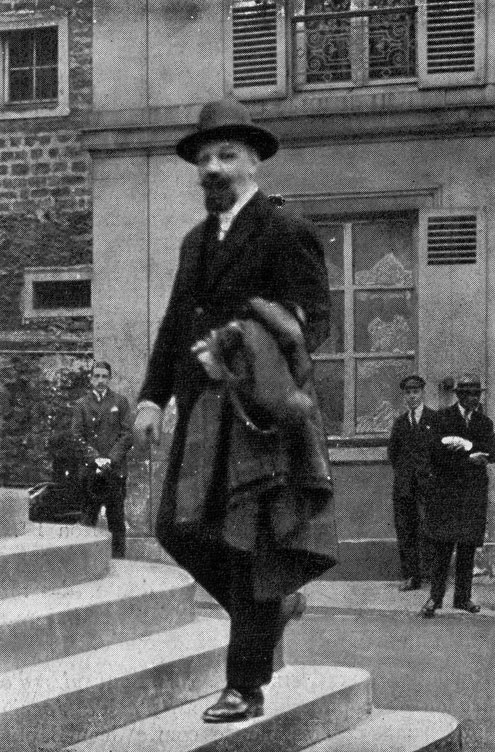
S. Parker Gilbert

Leipzig:  Armed nazis and communists clash in Eythra, a suburb, killing 1 and injuring 12. 

Vienna:  Waldemar Pabst, the German leader of Austria’s fascist Heimwehr paramilitary who faces deportation for revolutionary activities, loses his appeal to stay in the country and leaves on a plane for Venice. 

Meanwhile, in economic news, reports have unemployment in Austria 20% higher than a year ago.  Export trade has declined significantly. 

Washington:  President Herbert Hoover announces, as expected, that he will sign the tariff bill known as the Smoot-Hawley Act that has been making its way through Congress.  Representatives of Spain, France and Great Britain have all warned that if Hoover signs the bill into law, it will unleash retaliatory tariffs from their countries. 

China:  Manchurian warlord Zhang Xueliang has reportedly told northern rebel forces he will join the fighting against them unless they accept his offer to mediate between them and nationalist government head Chiang Kai-shek (see March 21).

Saturday, January 14, 2017

Saturday, June 14, 1930: Pabst Arrested; Prince Wilhelm Joins the Nazis

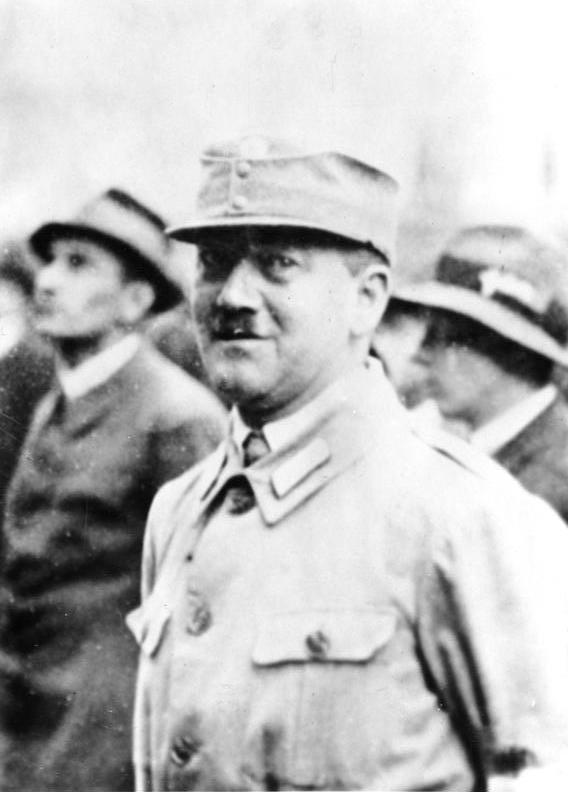
Vienna:  Fresh off his parliamentary victory to disarm Austria’s paramilitaries, Chancellor Johann Schober orders the arrest of Waldemar Pabst, a German national who has been in Austria for several years helping lead the fascist Heimwehr paramilitary.  Pabst is charged with involvement in revolutionary activities; the government will begin expulsion proceedings against him immediately.  In an ironic twist, should Pabst be ordered expelled from Austria (which is likely), his only recourse of appeal would be to Karl Seitz, Mayor of Vienna – a socialist.
Waldemar Pabst

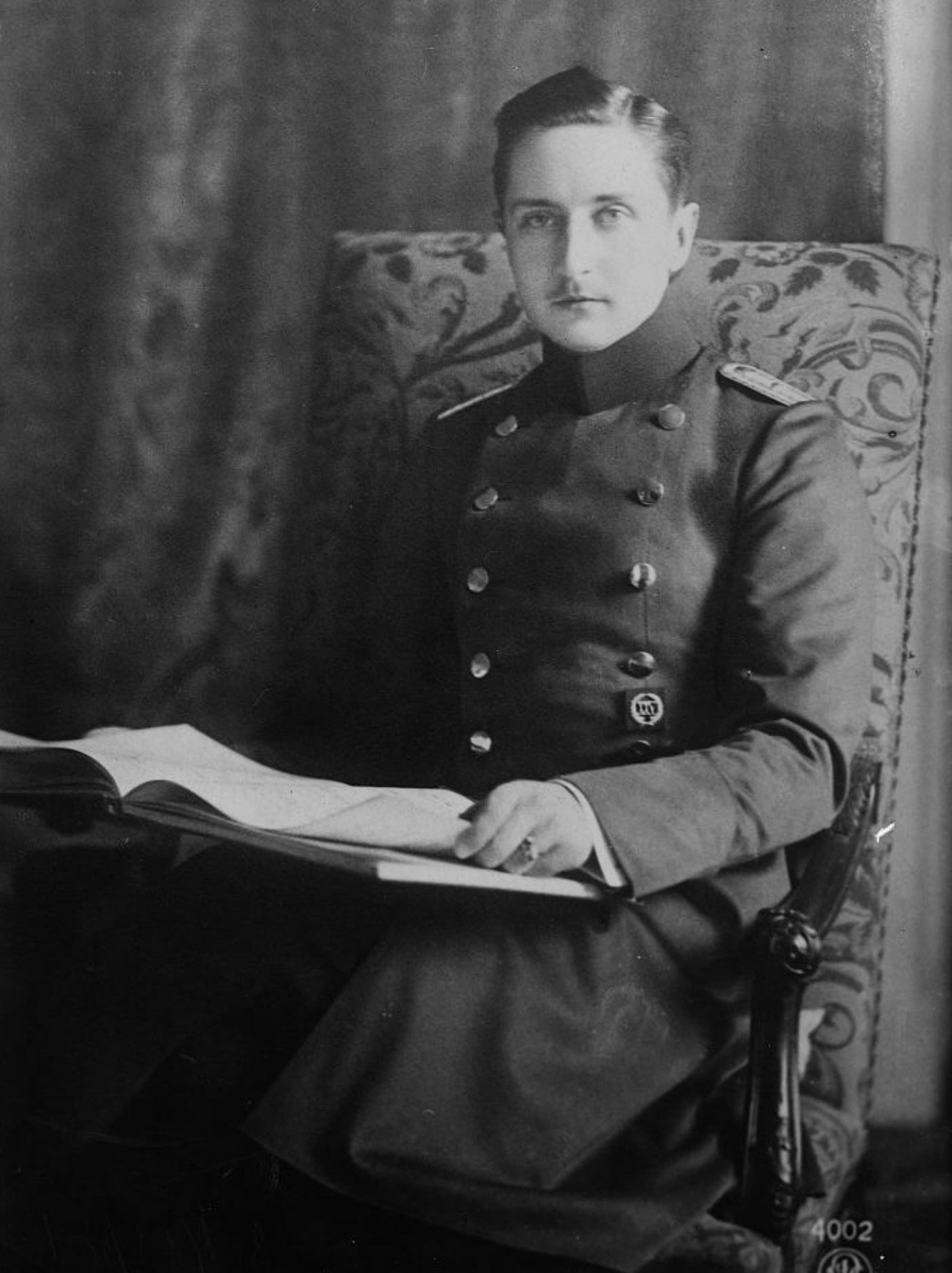
Berlin:  Prince August Wilhelm of Hohenzollern, son of the former Kaiser, announces he has abandoned his membership in the Stahlhelm nationalist paramilitary organization in favor of the nazis.  His reasons reportedly include the Stahlhelm’s lack of sufficient support for his fiery nationalist speeches, and his belief that Adolf Hitler and the nazis can provide the necessary zeal for the German nationalist movement.  He appeals to his own supporters to do the make the switch too.
Prince August Wilhelm of Hohenzollern

Helsinki:  The government suspends five communist newspapers and removes the governor of the Vaza district in an attempt to curb communist agitation.  President Lauri Kristian Relander cuts short his vacation to return home and deal with the crisis.

Friday, January 13, 2017

Friday, June 13, 1930

Vienna:  Chancellor Johann Schober’s bill to disarm Austria’s paramilitaries (including the fascist Heimwehr, see May 22), passes parliament.  Whether the government will in fact succeed in disarming the groups remains to be seen.

Sunday, January 1, 2017

Sunday, June 1, 1930

Halle, Germany:  In a speech here, nationalist politician Alfred Hugenberg proposes a “reparations duty” – a tariff on all goods and raw products imported into Germany – to extract from the rest of the world funds for Germany to pay its war debts under the Young Plan.  “Whoever utilizes central Europe, its market, traffic system and culture, must help us bear the burden which the rest of the world imposed.”  Hugenberg further suggests that this duty would be the first step in an economic fusion of central Europe centered around Germany, as opposed to France’s plan for a “United States of Europe.”

Dunkelstein, Austria:  Socialists and Heimwehr fascists clash in a street battle, throwing stones and firing shots.  Injuries are described as “numerous,” including gunshot wounds.

Manchuria:  Japanese consular police and Chinese troops mobilize in the Kurin province in anticipation of further outbreaks of violence by Korean communists.

Philadelphia:  More bad economic news -- new data indicate unemployment here is 40 percent higher than same time last year.  

Thursday, December 8, 2016

Thursday, May 22, 1930

Vienna:  New information on Chancellor Johan Schober: he is not resigning, but rather is reportedly planning to move forward with submitting to parliament a bill to disarm Austria’s paramilitaries, ignoring the Heimwehr’s conditions for doing so.  It is a bold, risky political game, but one Schober appears to be winning: leading politicians who were aligned with the Heimwehr are reported defecting, emboldening the chancellor.
 

Berlin:  The German public is incensed as it comes to light that France has demanded the destruction of three large airship hangars at Griesbach, considering them a threat to French security.  

Wednesday, December 7, 2016

Wednesday, May 21, 1930

Vienna:  Newspapers are reporting that Chancellor Johan Schober, still embroiled in a struggle to get both nationalist and socialist paramilitary groups to disarm peaceably, has threatened to resign rather than meet the conditions the nationalist Heimwehr paramilitary has demanded for disarmament, which include appointing a Heimwehr member as his Minister of the Interior and appointing a new police chief for Vienna.

Sunday, December 4, 2016

Sunday, May 18, 1930: Bellicose speeches from Mussolini; Austria's fascists release Korneuburg Oath

Florence:  Another bellicose speech from Dictator Benito Mussolini as he reviews a massive assemblage of Italian armed forces that includes 45 planes and 14,000 troops.  Seated on a magnificent horse, Mussolini watches a parade of soldiers, sailors and blackshirt militiamen that’s being called the largest gathering of Italian armed forces since the end of the World War.

“Italy’s friendship is precious, but her enmity is hard.  There is great ignorance about us.  People abroad think we are a minor people, but we are a nation numbering 40 million.  They think we are governed by tyranny, but it is the Italian people who govern.  I am certain that in order not to remain prisoners of the sea, the Italian people are capable of great sacrifices.  More important than my speech today are the big guns and machine guns which I shall see in tomorrow’s parade.  The new naval program will be carried out exactly as it was laid down in 1929, and new ships will be afloat because the fascist will is a will of iron.  There are people who think they can isolate Italy, and who would not be adverse from starting a war against the Italian people, even through the territory of a third power.  We will await them at the crossing.”

“Fascist Italy henceforth will be a unit so organized as to be unassailable and without mortal danger.  Though words are beautiful things, rifles, machine guns, ships, airplanes, and big guns are still more beautiful.  Right is a vain word unless it is accompanied by might.”

“If by chance something should happen on the frontier, then we people, black shirts, army and former service men, would be at our posts ready to break the proud and vain attack.”  The crowd responds with cries of, “Down with France!”

In France, the full text of Mussolini’s similarly combative speech from yesterday is reprinted in many newspapers.
 

Korneuburg, Austria:  The fascist Heimwehr paramilitary releases the “Korneuburg Oath,” a declaration condemning both “Marxist class struggle” and “liberal-capitalist economic system,” as well as rejecting the Western democratic parliamentary and multi-party systems, and calling for an authoritarian system in Austria.  A translation of the text of the oath:

“We want to renew Austria completely.  We want the Republic of the Heimwehr.
From every comrade we demand an unshrinking belief in the mother country, utter fervor of coopration and a passionate love of homeland.  We want to reach for power in the state and reorganize state and economy for the benefit of the entire people.

We must forget our own interests, must subordinate all the ties and demands of the parties to our objective, because we wish to serve the community of the entire German people.

We reject Western democratic parliamentarianism and the party state.  We want to replace it with the autonomy of the corporations and strong governance that will not be formed from party representatives, but from leading figures from the major corporations and the most capable and proven men of our popular movement.

We shall fight against the corruption of our people by the Marxist class struggle and the liberal-capitalist economic system.  We want to realize the autonomy of the economy on the basis of occupational groups.  We shall overcome the class struggle and establish social dignity and justice.

We want to increase the prosperity of our people through a native economy of public utility.  The state is the embodiment of the nation as a whole; its power and leadership ensure that the corporations remain integrated in the imperatives of the national community.

May every comrade feel and avow himself to be an upholder of the new German state thinking; may he be prepared to sacrifice property and blood; may he know the three powers: belief in God, his own firm will, and the word of his leaders.”


Harbin, China:  A raid by soviet authorities on the Japanese consulate at Blagovestchensk, Russia, is provoking an outraged response by Japan.  Russia says it suspected the consulate of being involved in smuggling food from Manchuria into Siberia, and raided the facility to investigate.  Japan countercharges that the allegations are false, no evidence of such smuggling was found, and that the real issue is that Russian farmers and fishermen are starving due to Russian food shortages.  Japan says 300 starving miners ransacked a railway station searching for food, and trains on the Trans-Siberian Railroad have been held up for food as well.  “The threatening atmosphere is deepening daily in the villages in the vicinity of Khabarovsk due to a shortage of food throughout Siberia and as a result the Red Army stationed at Vladivostok has been mobilized in order to cope with the situation.”  Japan dispatches its consul from Harbin to investigate the situation.  


Monday, November 28, 2016

Monday, May 12, 1930

Vienna:  Prince Oscar von Hohenzollern, son of the former Kaiser of Germany, visits Austria’s nationalist Heimwehr paramilitary with 30 members of Germany’s Stahlhelm (also a nationalist paramilitary), of which Prince Oscar is a member.  The timing couldn’t be worse for Austrian Chancellor Johan Schober, trying to disarm such groups as he promised the League of Nations.  In the face of Schober’s intentions, the Heimwehr has announced it intends to hold parades every Sunday through the summer.


Tokyo:  Japan confirms it is sending 25 (not 30) military officers as trainers for China’s nationalist government military.  Chinese communists accuse Japan of meddling in China’s internal affairs.  Meanwhile, a group of reserve naval officers calls on Naval Minister Takarabe Takeshi to resign for the “unpardonable” act of agreeing to the London Naval Treaty.

Thursday, November 17, 2016

Sunday, May 4, 1930

Madrid:  Students shouting “Viva el rey!” enter a theater where Republicans have gathered and start hitting the meeting’s leaders over the head with sticks, sparking a riot.  From there, the fighting spreads outside, and eventually to the street in front of a hotel where the meeting’s speaker is staying.  Several are injured and arrested.

Rome:  Benito Mussolini reviews 25,000 fascist youth who have been participating in a camp.  Mussolini praises their morale and discipline.

Austria:  Chancellor Johann Schober, who had just promised the League of Nations he would disarm the country’s militarized political factions as a condition for receiving financing to improve Austria’s infrastructure, returns home to find a 10,000-man march being held by the nationalist Heimwehr paramilitary in Vienna, and 16,000 uniformed socialists gathering in St. Polten.  Police with machine guns keep the peace.

Washington:  More than 1,000 economists sign a letter to President Herbert Hoover, asking him to veto the Smoot-Hawley tariff bill pending in Congress.  The bill would raise tariffs on more than 20,000 import products to record levels, in hopes of protecting domestic producers during the economic depression.  The economists say it will have the opposite effect, provoking reprisal tariffs from other countries and worsening the depression.


Manchuria:  Warlord Zhang Xueliang, de facto ruler of Manchuria, is reportedly acquiring a small “air force” of bombers and scout planes after suffering under Russia’s air superiority during the Soviet incursion into Manchuria (see Nov. 17, 1929).  

Monday, April 28, 2014

Monday, 28 April 1930

Vienna:  The Austrian government announces that 15,000 Austrian laborers who were to be employed by France to help build defensive fortifications there, cannot be used to work on fortifications directed toward Germany. 

Wednesday, March 19, 2014

Wednesday, 19 March 1930: Religious War of Words Continues

It's a day of religious "warfare of words."


Vatican City:  Pope Pius XI leads a special prayer service and mass at St. Peter’s for persecuted Christians in soviet Russia.  50,000 attend.  A Russian choir sings, and Orthodox Greeks join in Slavic chants during the service. 
 
Vienna:  Communists attack and break up a meeting of the Czechoslovakian Catholic People’s Party, which was protesting religious persecution in Russia. 

Moscow:  Meanwhile, the press here is full of anti-Pope messages.  The Atheist magazine publishes an article entitled, “Down With the Pope,” which calls the Pope the world’s biggest landowner and the capitalist scion of a Milan textile family.  The article goes on to boast that 33 churches, 2 cathedrals and 10 chapels were closed in one soviet in the past week, and 9 villages threw “God’s rubbish” from their homes, namely icons, church fences and bells, ecclesiastical robes and altar draperies.  The gold, silver, iron and other items filled 50 carts.  The magazine goes on to insist that the 240 remaining churches in the Moscow soviet be closed.  “We must turn the red capital into a godless city this year.” 

Pravda, official publication of the communist central committee, criticizes the Pope for his “personal enmity” for the soviets.

Berlin:  

Communist mobs attack churches holding prayer services for persecuted Christians in Russia.  The communists parade around the city all day in protest of the Pope’s prayer service in Italy.  But as night descends, they grow bolder and more violent.  In one working district, a group of communists bursts through the doors of a church shouting, “Long live the red front!” and ridiculing God.  The congregation rushes at the intruders and drives them out of the church, and a melee ensues.  Police arrive to break it up.

In another working district, communists attempt to raid a Catholic church, but are fought off by a guard established by the church members.

Yet not everything happening today is of a religious tone.  Minister of the Interior Karl Severing orders all funds for the police in the state of Thuringia suspended pending an investigation into charges that Wilhelm Frick, the nazi Minister of the Interior of that state, is plotting treason against the government.  This is in response to a manifesto issued by Frick (elected earlier this year), which denounced the federal government and called the public to support nazi ideas for nationalist rule.  The Prosecutor General will begin an investigation. 

Sunday, March 16, 2014

Sunday, 16 March 1930

Tokyo:  

Press reports state that the “two-thirds” ratio of capital ships proposed for Japan at the London Naval Conference is causing a rift between military and civilian government leaders in Japan.  Naval officers are displeased with the “second-class citizen” status the ratio would give Japan.

Vienna:  

The government announces that the Austrian national anthem has been changed (for the fourth time since the World War).  The new anthem will be Deutschland, Deutschland-Uber Alles (Germany, Germany Above All) which is also Germany’s national anthem.  This was also Austria’s national anthem before the war (though with different words).  The socialist mayor of Vienna, Karl Seitz, dislikes the anthem so much he refuses to stand or remove his hat when it is played.

England:  

In response to a call from Cosmo Gordon Lang, Archbishop of Canterbury, Anglicans throughout the country hold special prayer services on behalf of persecuted Christians in Russia.  Indeed, Christians as well as Jews around the world are supposed to be holding similar prayer services .  Rev. A.F.W. Ingram, Bishop of London, says, “to think that all those bishops have been butchered [in Russia], all those priests murdered!”

New York:  

Police are busy guarding special prayer meetings in area churches, called on behalf of persecuted Christians in Russia, as well as guarding 12,000 people attending a communist anti-religion rally at Bronx Coliseum.  At the communist rally, the crowd boos religion, calls for an end to class war, and pillories everyone from New York Police Chief Grover Whalen to Italian Dictator Benito Mussolini to the Pope.  The meeting is guarded by 450 police with riot gear, machine guns and paddy wagons, but it is peaceful.


Paris:  

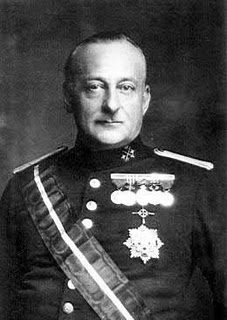
Miguel Primo de Rivera, who until six weeks ago was dictator of Spain, dies unexpectedly in his hotel room here.  Cause of death is said to be an embolism, a complication of his diabetes.

Friday, February 7, 2014

Friday, 7 February 1930

Rome:  

Austria and Italy sign a Treaty of Friendship and Conciliation.  The countries fought on opposite sides in the World War, and the issue of former Austrian subjects in southern parts of the Tyrol region, who now live in Italy based on the redrawn post-war borders, has been a sore point between the two countries.

The pact calls for the creation of a conciliation committee to which differences between the two countries can be referred.  Austrian Chancellor Johan Schober gave Italian dictator Benito Mussolini the grand cordon with the gold star of merit to thank him for Italy’s friendship, including support for Austria at the recent Hague war debt reparation conference.

Observers, including the Austrian press, debate the significance of the treaty.  Some see it as part of a strategy by Mussolini to encircle Yugoslavia.  Others see it as a way for both Schober and Mussolini to resist “pan-Germans” in Austria, who see closer alliance with Germany as Austria’s future.
 

London:  

At the naval conference, the British delegation makes headlines the day after the U.S. delegation.  Prime Minister Gordon MacDonald joins in the U.S. call for the abolition of submarines; calls for a suspension of building battleships until 1936, with the ultimate hope that battleships may be abolished too; calls for tonnage limitations on cruisers; and more.  The conference, MacDonald says, “Ought not only reduce existing fleets and building programs, but put an end finally to competition in naval armaments and thus constitute an important step for ultimate elimination of the causes of war and the establishment of peace on an unassailable foundation.”  As with the U.S. announcement the day before, the Japanese delegation is not commenting on the British announcement.

Germany:   

Berlin:  President Paul von Hindenburg, the Reichstag, and the cabinet of Chancellor Hermann Mueller give their government entertainment appropriations to charity in hopes both of setting an example and leading the way in confronting Germany’s worsening economic situation.

Munich:  A newspaper publishes an article by an anonymous writer which states that the former Kaiser Wilhelm II expects to be recalled to rule.  The author, said to be a former nobleman and officer in the imperial German army, says he dined with Wilhelm in Doorn, Holland, where he lives.  “You are trained to obey and to serve, and what have you done with your new freedom?  What will you do when the president you have chosen for yourselves dies?  I will tell you.  The nation will call its Kaiser.”  

Sunday, February 2, 2014

Sunday, 2 February 1930

Austria:  Socialists and the nationalist heimwehr paramilitary clash in street battles in Eggenberg.  The heimwehr also holds a protest parade in Vienna against high taxes by the socialist-leaning municipal government.

Moscow:  The Council of People’s Commissars issues a decree authorizing local soviet authorities to use “drastic measures” to force Kulaks (wealthy peasants) off their lands, including exile and encouraging poor peasants to “hunt” the Kulaks.  

Paris:  In the case of the disappearance of Alexander Koutiepoff, the young German wife of a Russian employed in a factory near Paris is arrested, consistent with the suspicions rampant in Paris that Koutiepoff’s disappearance (and reported abduction) was the work of Soviet agents in France.

Thursday, January 30, 2014

Thursday, 30 January 1930

Paris:  

Alexander Koutiepoff, a former general of the White Russian forces that fought against the communists’ rise to power in Russia, goes missing, and a witness claims to have seen him kidnapped by “three husky men, including one who seemed to be a policeman.”  This has aroused suspicion that he was a victim of operatives of communist Russia working in France. 


Elsewhere:  

Hamburg: In preparation for a “hunger march” to be held Saturday, communists hold a demonstration in front of the unemployment bureau, which devolves into a riot, resulting in 11 injured police, who end up using motorized riot squads to suppress the demonstrators.  Twenty are arrested.  Demonstrators began stoning the police, who fight back with pistol whips. 

Vienna: Communists and the unemployed march through the streets here and in leading cities throughout Austria, demanding jobs and increased public unemployment assistance.  Estimates are that 30% of Austria’s industrial labor is unemployed. 

United States:  More bad economic news: the American Federation of Labor reports that unemployment increased 3% just in the last month.

Thursday, January 9, 2014

Thursday, 9 January 1930

Rome:  

France rejects Italy’s earlier proposal for naval parity between the two countries, bringing to a standstill the negotiations by the two nations to reach a preliminary understanding prior to the London Naval Conference.  The Italian Foreign Ministry says it views negotiations as at an impasse. 

Elsewhere: 

Austria:  The worldwide economic downturn grows: unemployment here reaches 300,000. 

Great Britain:  More bad economic news: unemployment here exceeds 1.5 million.  

Friday, December 20, 2013

Friday, 20 December 1929

Vienna:  

Emile Vandervelde, Chairman of Labor and Socialist International, an international organization of socialist parties, warns Austria that it supports its socialist comrades in Austria, and advises the Austrian government to take seriously British Foreign Minister Arthur Henderson’s warnings against a nationalist coup. 


Helsinki:  

Parliament approves the proposal by Prime Minister Kyosti Kallio, made last week, to amend the country’s “association law” to curtail the ability of communist groups to spread propaganda.  The vote was 98-78.  The national government is expected to use the new law to disperse communist activities, and possibly even dissolve the communist party in parliament.

London:  

Great Britain officially resumes diplomatic relations with the Soviet Union.  But the formalities have not gone smoothly.  Earlier in the month, Britain’s new envoy to Russia was received “cooly,” prompting a torrent of rhetoric that relations could never be normal with a country so bent on propaganda.  Today, King George refuses to receive the Soviet ambassador, owing to the Soviet government’s assassination of Czar Nicholas, King George’s cousin. 

Berlin:  

Finance Minister Rudolph Hilferding resigns anyway.  He has been under fire for weeks – and at odds with Reichsbank President Hjalmar Schacht – over a series of financial reforms approved by the Reichstag.

Paris:  

The Saar negotiations between Germany and France, which started three weeks ago, adjourn for the Christmas holiday with no progress.  It’s not clear the negotiations will even resume.

Friday, December 13, 2013

Friday, 13 December 1929

Berlin:  

The capital is astir with late-night political deal-making, as President Paul von Hindenburg gets involved in the crisis involving Chancellor Hermann Mueller’s financial reforms.  Bringing together the heads of the Reichstag’s political parties for an annual state dinner, Hindenburg reportedly urges them to agree on the financial proposals.  The Mueller cabinet then holds a midnight closed-door session, details of which are not disclosed.  But afterward, leadership of the socialist and peoples parties have reportedly come around to agree to vote for Mueller’s proposals. 

Madrid:  

Gen. Miguel Primo de Rivera, dictator of Spain for the past six years, announces that some form of constitutional government will be reinstated in Spain next year.  Whether this will involve his resignation, or just some reduction in his powers, is unclear, but a change has been rumored for months, as his economic programs have become increasingly unpopular, especially with the military, which has supported his rule.  Rivera’s resignation is expected to unleash a wave of competition over what kind of government will follow – mainly between monarchists and republicans.


Elsewhere: 

Prague:  27 communist delegates are thrown out of parliament and banned from several future sessions after they repeatedly disrupt proceedings with sirens, shouting and whistles, and refuse calls for order.  Fist fights break out before police haul off the disorderly delegates. 

Austria:  Bad economic news: unemployment jumps 33% in one month.

Ostend, Belgium:  In one respect, at least, it promises to be a Merry Christmas for Great Britain.  The last of her troops to leave the Rhineland, after 11 years of occupation, embark here for Dover, England, and home. 

China:  The tide turns in the civil war.  Rebel forces scatter on multiple fronts as nationalist government head Chiang Kai-shek suppresses the rebellion and restores his hold on the government.  In Canton alone, 3,000 rebel soldiers are dead and 2,000 captured.  The river there is said to be choked with corpses.

Saturday, December 7, 2013

Saturday, 7 December 1929: Nazis Gain in Thuringia Elections

Germany:

Berlin:  Reaction to Reichsbank President Hjalmar Schacht’s broadside relative to the Young Plan (see Dec. 5) is fierce, both from inside and outside of Germany.  The federal government says that for Schacht even to make such statements risks violating Germany’s agreements following the World War.  And sources within the government are letting it be known that Schacht may not be asked to attend the second round of meetings on the Young Plan, scheduled to start in a couple of weeks in The Hague.

Outside of Germany, the French press see Schacht’s comments as political maneuvering for leadership of the nationalist movement within Germany (especially with Alfred Hugenberg in decline after his Liberty Law fiasco), as well as posturing in advance of the upcoming Hague conference at which the debt payments will be discussed. 

Schacht’s memo, though, is already producing a divide within Germany.  Bankers and big industry are tending to line up behind Schacht’s analysis, hailing the statement as just the kind of strong tonic Germany needs to solve its economic problems.  The government of Chancellor Hermann Mueller has called for a vote of confidence in the Reichstag next Wednesday.

Weimar:  Meanwhile, elections for the legislature (or “Landtag”) of the central German state of Thuringia are being held today.  By nightfall, when results are coming out, it is clear that the national socialist party (nazis) have scored another victory, though their numbers are still small.  The nazis have garnered 11% of the popular vote, which will give them 6 seats in the Landtag, making them the 3rd-largest party.  That’s far below the 34% earned by the leading Social Democrats.  But enough that it will make forming a coalition government difficult without including the nazis. 

Vienna:  

The Federal Assembly (parliament) approves the constitutional revisions that Chancellor Johann Schober has been working on for five weeks.  The changes: reduce the autonomy of socialist-leaning Vienna within the country, but retain its status as a state; reduce Vienna’s tax contribution to the federal government but steer part of it to an adjoining state; introduce direct election of Austria’s President; broaden some of the President’s powers, for example emergency powers and to dissolve Parliament, but also restrict others in an attempt to avoid dictatorship; and call for absorption of the Social Democratic militia into the state police.  Of immediate practical importance, the changes are thought to defuse the potential for a coup by the nationalist Heimwehr paramilitary, as both nationalists and socialists got some of what they wanted.

China: 

The nationalist government capital of Nanking is cut off from communication, as rebel troops have it under siege.  Many of Chiang Kai-shek’s best generals have defected.  Communist rebel forces are also still reported to be advancing on Canton.  Both Nanking and Canton, as well as Shanghai and Hankow, are under martial law.  British gunboats are preparing to remove British nationals.  Chiang is reportedly mustering 70,000 troops for a last stand in his capital. 


Friday, December 6, 2013

Friday, 6 December 1929

Berlin:  

The cabinet of Chancellor Hermann Mueller holds a meeting to discuss the memo that Reichsbank President Hjalmar Schacht issued last night, which blasted them and foreign powers for failure to meet the necessary terms of the Young Plan. 

Libya:  

Italian forces conducting a suppression campaign against Libyan resistance fighters take the town of Brach by surprise attack, without a shot fired. 

Vienna:  

University and high school officials, at a special meeting, decide they are closing their institutions for an indefinite period of time, in an effort to get control over the violence plaguing the schools.  Socialist and nationalist students often battle each other, disrupting lectures and resulting in frequent calls to the police.  And the nationalist students also battle against Jewish students and professors.  Property damage from the fighting has been extensive. 

Warsaw:  

Communists hold demonstrations in several parts of Poland, including a group of mostly teenage boys who parade past the U.S. Embassy here, throwing rocks, breaking windows and shouting against what they call the “American intervention in the Chinese-soviet conflict.”  Police arrest 5.  

China:  

Nanking, capital of the nationalist government, is under martial law as the troop defections that started three days ago have turned into full-scale rebellion.  Canton, on the southern coast, is also under martial law, with communist rebel forces approaching, refugees pouring in, and executions and police raids rampant.  U.S. gunboats in Canton harbor are on guard.