Showing posts with label Czechoslovakia. Show all posts

Tuesday, November 15, 2016

Friday, May 2, 1930

Prague:  Communists and socialists in parliament come to blows for the second day in a row during debate of routine business.

Berlin:  The cabinet of Chancellor Heinrich Bruening announces its budget for the fiscal year, which amounts to US$84 million more than last year, which already carried a US$75 million deficit.  The cabinet’s opponents are increasing their complaints that the government must get its financial house in order.

Tokyo: Rumors swirl that Kanja Kato, Navy Chief of Staff, will resign in protest of Japan’s acceptance of the London Naval Treaty. 

Harbin, Manchuria:  A mob of Chinese and Korean “radicals” attacks the Japanese consulate here.  Police arrest 32. 


Monday, January 20, 2014

Monday, 20 January 1930: Second Reparations Conference Ends

The Hague:  

The Second Reparations Conference ends, with all 18 officially represented debtor and creditor nations signing the agreement enacting the Young Plan as the new World War debt reparation payment framework.  A flurry of late-night, last-minute wrangling produced agreements satisfactory enough to Italy and Hungary that they, too, agreed to sign.  The agreement calls for Hungary to pay its creditors 13.5 million gold crowns per year from 1942 to 1966, and Austria to pay 1 million gold crowns per year over the same period. 

Only Czechoslovakia, despite signing, refuses to renounce its rights under the Treaty of Versailles.  No sooner than Belgian Prime Minister Henri Jaspar, who is presiding over the meeting, has read the preamble to the agreement, than the head of the Czech delegation asks for the floor.

“My country much regrets to introduce reservations into these agreements, but inasmuch as the Eastern European accord which has been reached is of such a nature that in the arbitration of our disputes with Germany, if the verdict is pronounced in favor of the Czechoslovakians, they would receive nothing, while if the verdict favors Germany we would have to pay, you can easily understand that in signing these accords, Czechoslovakia cannot consent to renouncing her rights under the Treaty of Versailles.”

This brings a sharp rebuke from Philip Snowden, Great Britain’s Chancellor of the Exchequer, one of such vehemence that observers say it surpasses anything from the contentious August 1929 meetings of the same conference.  Nevertheless, by the end, Snowden is saying “the nations gathered around the conference table by their act of signature are no longer enemies and allies, but from now on must be friends.”

Of course, there’s a reason why some of the powers represented are so eager to finish up business: they and much of the world – despite the seriousness of purpose of The Hague conference – are more interested in the other conference that’s about to start in London.


Murzuk, Libya:  

Italian forces under Duke Delle Puglie, backed by a handful of warplanes, battle Libyan resistance fighters here, finally taking the town after fighting that kills 50 and wounds 24.  Twelve more are taken prisoner.  Italy has 18 native soldiers (fighting for Italy) wounded. 

Moscow:  

The Bezbosnik (Godless) newspaper publishes a report which says that Russia will soon issue a decree authorizing soviet officials to expel all foreign missionaries and clergy from the country.  The decree will supplement an earlier one which already prohibited any new missionaries from entering Russia, and also prohibits foreign religious organizations from sending money, literature or other forms of aid to people of faith in the country.  The decree will apply to Christians, Jews and Muslims.  

Friday, December 13, 2013

Friday, 13 December 1929

Berlin:  

The capital is astir with late-night political deal-making, as President Paul von Hindenburg gets involved in the crisis involving Chancellor Hermann Mueller’s financial reforms.  Bringing together the heads of the Reichstag’s political parties for an annual state dinner, Hindenburg reportedly urges them to agree on the financial proposals.  The Mueller cabinet then holds a midnight closed-door session, details of which are not disclosed.  But afterward, leadership of the socialist and peoples parties have reportedly come around to agree to vote for Mueller’s proposals. 

Madrid:  

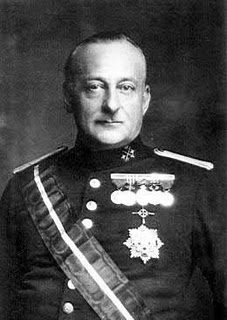
Gen. Miguel Primo de Rivera, dictator of Spain for the past six years, announces that some form of constitutional government will be reinstated in Spain next year.  Whether this will involve his resignation, or just some reduction in his powers, is unclear, but a change has been rumored for months, as his economic programs have become increasingly unpopular, especially with the military, which has supported his rule.  Rivera’s resignation is expected to unleash a wave of competition over what kind of government will follow – mainly between monarchists and republicans.


Elsewhere: 

Prague:  27 communist delegates are thrown out of parliament and banned from several future sessions after they repeatedly disrupt proceedings with sirens, shouting and whistles, and refuse calls for order.  Fist fights break out before police haul off the disorderly delegates. 

Austria:  Bad economic news: unemployment jumps 33% in one month.

Ostend, Belgium:  In one respect, at least, it promises to be a Merry Christmas for Great Britain.  The last of her troops to leave the Rhineland, after 11 years of occupation, embark here for Dover, England, and home. 

China:  The tide turns in the civil war.  Rebel forces scatter on multiple fronts as nationalist government head Chiang Kai-shek suppresses the rebellion and restores his hold on the government.  In Canton alone, 3,000 rebel soldiers are dead and 2,000 captured.  The river there is said to be choked with corpses.

Monday, November 18, 2013

Monday, 18 November 1929: Soviet Forces Take Manzhouli

Manchuria:  

The Russian conquest of the town of Manzhouli is complete.  Some 2,000 Manchurian/Chinese soldiers are reported dead.  Mopup fighting continues, as well as pursuit of Manchurian forces that broke out of the Russian encirclement.  Meanwhile, soviet warplanes reportedly bomb Mutanchiang, destroying a Chinese depot where aircraft were stored.

Elsewhere:

Sofia:  A national demonstration is held against Bulgaria’s war debt requirements, which, like Germany’s, are terms from the World War.  A two-hour work stoppage is staged, and raucous crowds gather outside the French and British legations.

Cologne:  At a meeting of the Cologne Chamber of Commerce and Industry, industrialists warn that Germany is courting disaster in this economic downturn, borrowing too much and consuming reserves.  They urge a complete economic overhaul and relief from direct taxation.

Prague:  Another anti-Semitic mob scene at a central Europe university – a gang of Czech fascists beats Jewish students at a tech school, then clashes with police.

Russia:  The government puts more of its citizens on death row – 10 Kulaks (rich peasants) are condemned to death for anti-soviet agitation, profiteering and opposing the government’s grain collection campaign.  Others received sentences of 3 to 10 years for the same activities.

Cherbourg, France:  The French navy launches the largest submarine ever built – the Surcouf.  The submarine is said to be the fastest and most powerful vessel of its kind in the world. 

China:  The nationalist government says its troops have taken Tengfeng from the rebels.  

Thursday, November 14, 2013

Thursday, 14 November 1929

Prague:  

Foreign Minister Edvard Benes rejects a demand from Hungary that a strip of Czechoslovakia containing 650,000 ethnic Hungarians be given to Hungary.  Such enclaves -- ethnically linked to one country but politically trapped inside another -- are not uncommon after the Allies drew new borders on the map of Europe to carve up the old Austria-Hungary Empire after the World War. 

In response to Hungary’s demand, Benes says that, instead, closer economic ties will make the border between Czechoslovakia and Hungary seem “practically invisible.”


 China:  Severe fighting in the civil war is reported at Tengfeng.