Showing posts with label Libya. Show all posts

Thursday, March 6, 2014

Thursday, 6 March 1930: International Unemployment Day Rattles European, U.S. Cities

International Unemployment Day


New York – Detroit – Chicago – Boston – Milwaukee – Pittsburgh – Philadelphia – Cleveland – Washington – Seattle -- Berlin – Hamburg – Munich – Vienna – Manchester:  

In dozens of cities in Europe and the United States, International Unemployment Day is observed with demonstrations and marches, many of which erupt into riots, all organized by the Communist International, or COMINTERN. 

In New York, a crowd estimated at widely divergent numbers – from 35,000 to 110,000 – marches down Broadway toward city hall, and is broken up by an estimated 1,000 police.  As many as 100 are injured and another 100 arrested.  Police Commissioner Grover Whalen calls it the worst riot in the city since the World War. 

In Detroit, a crowd estimated from 30,000 to 100,000 turns out for a demonstration that devolves into a two-hour battle with police, who charge the crowd with horses, injuring anywhere from 5 to 26.  31 are arrested. 

In Chicago, a crowd estimated from 10,000 to 50,000 marches peacefully for four hours.  Crowds in other U.S cities range from 50,000 in Boston to 10-25,000 in Cleveland, where the crowd battles police.  Seattle sees 10,000 demonstrators battle police.  International Unemployment Day is reportedly observed in a total of 30 U.S. cities.

In Washington, several hundred communist demonstrators march in front of the White House.  Some attempt to climb the White House fence and are pulled down by spectators.  Then the whole crowd is dispersed by police with tear gas.  9 are injured, 13 arrested. 

In Berlin, where demonstrations were banned, smaller groups of demonstrators nevertheless clash with police in various outbreaks.  One is killed and 14 injured, half police.  270 are arrested.  Two people are killed in Halle, Germany, where marchers attack police by throwing rocks.  56 are arrested in Munich.
 
In Bilbao, Spain, 400 communists and socialists battle each other, some with gunfire.  Police arrest 40. 

In Vienna, a crowd of 1,500 attempts to rush police guarding the university district, where students are shouting derision at the marchers. 

Moscow:  Meanwhile, the Soviet newspapers Pravda and Izvestia publish front-page editorials urging workers and the unemployed worldwide to rise up in revolt against capitalism. 


Elsewhere:

London:  Meanwhile, back at the stalled naval conference, the French delegation returns, now that France finally has a government again.  Work on caps and parity of naval fleets is expected to resume.  

Moscow:  The government evicts 5,326 traders, former noblemen, landlords, officers and other members of the non-laboring class, from their homes, freeing up 33,367 square meters of living space, which the government then distributes to industrial workers and demobilized Red Army soldiers. 

Tripoli:  Native forces serving Italy clash with a fleeing band of Libyan resistance fighters south of the city, headed by Sulelman Sefennasser.  He and one of his sons are killed in the fighting, and his wife and five other sons are taken prisoner, along with the entire caravan.  

Friday, February 14, 2014

Friday, 14 February 1930

Libya:  The Italian air strafing and bombing of fleeing Libyan resistance fighters, and their civilian family members, continues along the Libya-Algeria border. 

Spain:  2,000 strikers march to a large factory in Madrid, seeking to incite the women workers there to join them.  They clash with police.  Unemployment has soared in Spain after the resignation of dictator Miguel Primo de Rivera and the discontinuation of his large public works programs.  Food riots and other unrest are leaving many injured and arrested throughout the country.  A mob in Barcelona attacks the headquarters of the Patriotic Union, which supported de Rivera. 

Philadelphia:  250 alleged communists storm city hall to protest rising unemployment.  Police break up the attack and arrest 17.  Unemployment in the city is said to be at 200,000.

Thursday, February 13, 2014

Thursday, 13 February 1930: Soviet Press Fires Back at Churches

Libya:  

Italian air strafing and bombing of fleeing Libyan resistance fighters, and their civilian family members, continues along the Libya-Algeria border. 

Moscow:  

The Soviet press fires back at Russia’s religious critics around the world.  Pravda, the official communist newspaper, says of the Pope’s recent criticisms of Russia’s persecution of religion: “His appeal is really a call to the nations to sever relations with the Soviet Union, for the soviet never will allow foreigners to interfere in their religious policy.  So far, all evil yelping against the soviets lacked only the Holy Father’s sweet voice.  This representative of God on earth hitherto preferred to hold his peace; he thought the weakening Orthodox Church would clear the way for Rome.  Only now, when he has become convinced that the working class in Russia intends to wipe out all superstitions without distinction of creed, has his Holiness decided to take up the defense of persecuted religion.  This head of the Catholic Church certainly is less interested in the problems of the Orthodox Church, Judaism, or even Catholicism than the worldly goods it may involve.  This means indifference to the progress of our industrialization, to collectivization of our agriculture, which spoil the beauty sleep of the western birds of prey.  Like every other financier and exploiter of labor, the Pope is an enemy of the working class.  That is why he appeals to all countries to make religious freedom a condition of recognizing the soviets.” 

The Komsomolskal Pravda, newspaper of the Young Communists’ League, publishes a cartoon of a bloated Pope holding a swastika with a small cross nailed upon it. 

London:  

Religious persecution in soviet Russia dominates discussion in the House of Commons.  Foreign Secretary Arthur Henderson, answering questions from legislators, says “Reports as regards the religious situation in Russia are receiving serious consideration of his majesty’s government.  The house may rest assured that his majesty’s government will use its influence in support of the cause of religious liberty and freedom of religious practices.”  British Ambassador to Moscow, Sir Esmond Ovey, is ordered to investigate reports of religious persecution in Russia, and the House of Lords passes a resolution denouncing Russia for its anti-religious activity.  Joseph Hertz, Chief Rabbi of the United Kingdom, joins his voice with those of the Catholic and Anglican churches in protest of Soviet religious persecution. 

Meanwhile, at the naval conference, reliable reports surface that Japan has agreed to a 66-2/3 ratio of cruisers compared to the United States and Great Britain.  This would represent an increase from Japan’s current 60% ratio, but less than the 70% Japan came into the conference seeking.  “Japan attaches special importance to eight-inch gun cruisers, and desires to maintain here a minimum strength sufficient for national defense, taking into consideration the strengths held by the other powers,” says Raijiro Wakatsuki, of Japan’s delegation, in an official statement before the conference.  But he makes no mention of the 70% ratio, which observers thought he would.  Thus the belief that Japan has agreed to yield on its stated demands.  “This certainly leaves the door wide open for future discussion and is not in any sense the ultimatum which might be apprehended in some quarters,” says an unofficial spokesman for the U.S. delegation. 

Yet Japan is unwilling to make such an explicit statement officially, in part because Japanese elections are coming up next Tuesday, and the delegation is concerned that the present government would be perceived as having backed down in London.

Elsewhere:  

Paris:  Russia claims French police have arrested the Second Secretary of the Soviet Embassy in the case of the disappearance of Alexander Koutiepoff.  Paris police deny the charge. 

Offenbach, Germany:  Communists and nazis clash in a street battle.

Berlin:  More impact from the global economic depression: The government decides to appropriate no funds for completion of a second Deutschland-class heavy cruiser, sometimes called a “pocket battleship,” which would be one of six Germany is allowed under the Treaty of Versailles.  An estimated $14 million is needed to complete it.
 
Spain: The depression also adds to the new government’s difficulties in getting established after the resignation of dictator Miguel Primo de Rivera.  Parades and demonstrations by the unemployed have left Madrid and Barcelona under heavy police presence.

Italy:  Still more impact from the global economic depression: unemployment is reported over 462,000.

Wednesday, February 12, 2014

Wednesday, 12 February 1930: Anglicans, Catholics Protest Soviet Religious Persecution; "Two-Thirds Ratio" for Japan Emerges from London Conference

Libya:  

Italian occupying forces battling Libyan resistance fighters step up their tactics.  Rodolfo Graziani, colonial governor and head of Italian forces in Libya -- who is reportedly furious at his inability to obtain a decisive battle with the rebels -- orders his air force to fly missions along the Libyan-Algerian border, harassing the rebels as they try to evade the Italians by slipping across.  According to one source, the warplanes bomb and strafe “the herd of humanity, consisting of soldiers, but also a multitude of women and children.”  Rebel leader Abd en-Nebi Belcher, with those following him, manages to cross the border and surrenders to the French at Fort Charlet in the Algerian desert oasis of Djanet. 

Great Britain:  

The Church of England joins the Catholic Church’s condemnation of religious persecution in Russia.  In speeches given simultaneously to separate bodies, the Archbishop of Canterbury, head of the Anglican Church, and the Archbishop of York, head of the Catholic Church in England, jointly denounce anti-religious activity by the Soviet Russian government.
 
“I feel bound to refer to a matter lying heavy on our conscience.  It stirs the strongest feelings.  It is the cruel and persistent persecution of all forms of religion which the soviet government continues to wage,” the Archbishop of Canterbury says.  “It is a record almost unparalleled in history of religious persecutions.  It is not any one form of religion which has been assailed, but it is every belief in God.  The persecution has been accompanied by popular blasphemies and obscenities and ridicule, encouraged, and even ordered, by the government.  I hoped there would be some mitigation of this cruel and barbarous policy, but it seems to be continuing even more relentlessly than before.  As Christian men, we cannot keep silent.  The time has come when the church should express its corporate sympathy by a united act of intercession.”

The Archbishop of York says, “No words can be too strong to express the indignation and abhorrence with which we hear day by day the news of persecutions in Russia.  Anything possible to mitigate the horrors of that persecution and bring it to an end ought certainly to be done.  There is real danger, however, lest we relieve our own feelings at cost to the very people whom we wish to succor.  Nothing could be more disastrous than to give the persecuting government the smallest ground to appeal to patriotism in support of its own policy.” 

London:  Meanwhile, at the naval conference, the Japanese delegation finally responds officially to the U.S. proposal that was presented to them Feb. 6.  The U.S. proposal reportedly called for Japan to accept a 60% ratio of cruisers to the U.S. and Great Britain, consistent with the ratio Japan is permitted in other categories of warships.  Japan had come to the conference, however, seeking a 70% ratio.  Japan’s reply, however, is not made public.  

Germany:

Ruesselheim:  Six-hundred communist agitators take over the Opel automobile manufacturing plant briefly, forcing workers out.  Police quickly subdue the agitators and restore order, arresting two German legislators who were involved.

Berlin:  Debate on the Young Plan continues in the Reichstag, with Joseph Wirth, Minister of the Occupied Areas, recommending approval.  “We finally agreed to the Young Plan in the confident hope that in America too there would sometime be a race of men who would not merely want to squeeze out of Germany and Europe everything possible, but who would let ethically moral principles count.” 


Saturday, January 25, 2014

Saturday, 25 January 1930

Libya:  

Italian troops raise their flag over the city of Murzuq, captured four days ago, in a ceremony attended by Libya’s colonial governor and head of Italian military forces in Libya, Marshal Rodolfo Graziani.  Capture of the city is considered important in Italy’s campaign to suppress resistance fighters in the Fezzan area of southwestern Libya.  Italian forces also have captured the nearby town of Ubari. 

New York:  

Two-hundred communist agitators battle police in City Hall Park.  They are protesting the recent death of a worker who was shot by police while picketing a fruit and vegetable stand.  A police force nearly matching the size of the communist gathering is on guard.  At a pre-arranged signal, demonstrators try to race through the police lines to mount the city hall steps.  That’s when police start swinging.

Monday, January 20, 2014

Monday, 20 January 1930: Second Reparations Conference Ends

The Hague:  

The Second Reparations Conference ends, with all 18 officially represented debtor and creditor nations signing the agreement enacting the Young Plan as the new World War debt reparation payment framework.  A flurry of late-night, last-minute wrangling produced agreements satisfactory enough to Italy and Hungary that they, too, agreed to sign.  The agreement calls for Hungary to pay its creditors 13.5 million gold crowns per year from 1942 to 1966, and Austria to pay 1 million gold crowns per year over the same period. 

Only Czechoslovakia, despite signing, refuses to renounce its rights under the Treaty of Versailles.  No sooner than Belgian Prime Minister Henri Jaspar, who is presiding over the meeting, has read the preamble to the agreement, than the head of the Czech delegation asks for the floor.

“My country much regrets to introduce reservations into these agreements, but inasmuch as the Eastern European accord which has been reached is of such a nature that in the arbitration of our disputes with Germany, if the verdict is pronounced in favor of the Czechoslovakians, they would receive nothing, while if the verdict favors Germany we would have to pay, you can easily understand that in signing these accords, Czechoslovakia cannot consent to renouncing her rights under the Treaty of Versailles.”

This brings a sharp rebuke from Philip Snowden, Great Britain’s Chancellor of the Exchequer, one of such vehemence that observers say it surpasses anything from the contentious August 1929 meetings of the same conference.  Nevertheless, by the end, Snowden is saying “the nations gathered around the conference table by their act of signature are no longer enemies and allies, but from now on must be friends.”

Of course, there’s a reason why some of the powers represented are so eager to finish up business: they and much of the world – despite the seriousness of purpose of The Hague conference – are more interested in the other conference that’s about to start in London.


Murzuk, Libya:  

Italian forces under Duke Delle Puglie, backed by a handful of warplanes, battle Libyan resistance fighters here, finally taking the town after fighting that kills 50 and wounds 24.  Twelve more are taken prisoner.  Italy has 18 native soldiers (fighting for Italy) wounded. 

Moscow:  

The Bezbosnik (Godless) newspaper publishes a report which says that Russia will soon issue a decree authorizing soviet officials to expel all foreign missionaries and clergy from the country.  The decree will supplement an earlier one which already prohibited any new missionaries from entering Russia, and also prohibits foreign religious organizations from sending money, literature or other forms of aid to people of faith in the country.  The decree will apply to Christians, Jews and Muslims.  

Saturday, December 14, 2013

Saturday, 14 December 1929

Berlin:  

Chancellor Hermann Mueller gets his vote of confidence in the Reichstag that supports his government’s financial proposals, including an emergency loan worth US$100 million and agreement on financial reforms.  The margin is 222 to 156, with 22 members of the people’s party abstaining.  It comes to light today that the political parties who had been opposing Mueller’s financial measures agreed “in principle” to support them until the government’s current financial crisis passes. 

Meanwhile, more bad economic news surfaces: a new report says unemployment has jumped 100,000 in one week, and is 500,000 higher than same week last year. 

Libya:  

Italian forces take the city of Sebha from Libyan resistance fighters.  

Friday, December 6, 2013

Friday, 6 December 1929

Berlin:  

The cabinet of Chancellor Hermann Mueller holds a meeting to discuss the memo that Reichsbank President Hjalmar Schacht issued last night, which blasted them and foreign powers for failure to meet the necessary terms of the Young Plan. 

Libya:  

Italian forces conducting a suppression campaign against Libyan resistance fighters take the town of Brach by surprise attack, without a shot fired. 

Vienna:  

University and high school officials, at a special meeting, decide they are closing their institutions for an indefinite period of time, in an effort to get control over the violence plaguing the schools.  Socialist and nationalist students often battle each other, disrupting lectures and resulting in frequent calls to the police.  And the nationalist students also battle against Jewish students and professors.  Property damage from the fighting has been extensive. 

Warsaw:  

Communists hold demonstrations in several parts of Poland, including a group of mostly teenage boys who parade past the U.S. Embassy here, throwing rocks, breaking windows and shouting against what they call the “American intervention in the Chinese-soviet conflict.”  Police arrest 5.  

China:  

Nanking, capital of the nationalist government, is under martial law as the troop defections that started three days ago have turned into full-scale rebellion.  Canton, on the southern coast, is also under martial law, with communist rebel forces approaching, refugees pouring in, and executions and police raids rampant.  U.S. gunboats in Canton harbor are on guard.


Wednesday, October 30, 2013

Wednesday, 30 October 1929

New York: 

The stock market recovers one day’s loss, recovering roughly half of the ground lost over the past two days.  Volume is still huge: 10.7 million shares.  But the turnaround is accomplished by major financial interests, including J.P. Morgan, once again entering the market and shoring it up.  The New York Stock Exchange's governors, evidently believing -- or maybe hoping -- that the crash's free fall is over, announce that the exchange will be closed Friday and Saturday, and its opening delayed until noon on Thursday.

But the damage may be done.  Ordinary "Main Street" Americans of every stripe were investing in stocks.  If they’ve lost their faith, the capital may not come back, regardless of what the nation's major financiers do.  Markets in Europe show continued weakness.


China:  

Rumors of impending larger-scale warfare with Russia over Manchuria swirl again as the nationalist government releases another statement, this one more comprehensive, accusing the Soviet Union of making plans for such a conflict.  The statement sets out to document the nature of Sino-Soviet relations over Manchuria at some length, detailing evidence China says it uncovered in a raid on the soviet consulate in Harbin last May, which they say indicates that the Soviet Union has been planning a military confrontation in Manchuria for a long time.  It further states that China will hold Russia responsible for any losses suffered in a war.  "And if a state of war should eventuate over the soviet government's incessant provocation, the responsibility for violating the peace of the Far East must be borne by the soviet government."

Manchuria:

Meanwhile, soviet warplanes bomb Fuchin, and soviet gunboats are reported in the area.

Russia: 

And the soviet government condemns more of its citizens to die.  The Tass news agency releases a dispatch saying 12 people have been sentenced to death in various parts of the country for everything from criminal activity to anti-soviet agitation.  Two of the condemned are priests, four kulaks, and one, a mullah (an Islamic clergyman).  

Libya:  

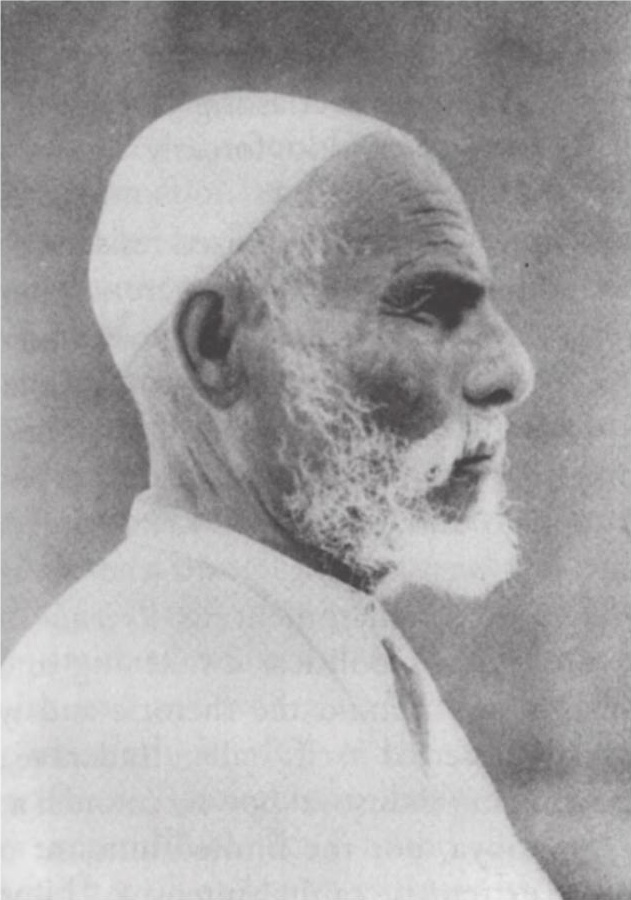
The key leader of the Libyan resistance to Italy’s occupation of Libya, OmarMukhtar, has denounced a compromise agreement he reportedly reached with the Italians in January.  Mukhtar is said to be re-mobilizing the Libyan forces in preparation for renewing the resistance.