Showing posts with label nazi. Show all posts

Sunday, January 22, 2017

Sunday, June 22, 1930: Saxony Elections Yield Big Gains for the Nazis

Dresden:  Election results for the landtag (parliament) of the state of Saxony show big gains for the National Socialist German Workers’ Party – nazis.  They pulled a nearly three-fold increase, from 5% in the 1929 elections to 14.4% today.  This will increase their seats in the landtag from 5 to 14, making them the second-largest party in the body.  The Social Democratic Party is still the largest, holding roughly steady at 33% of the popular vote and 32 seats.  The communists gained slightly, from 12.8% of the vote in 1929 to 13.6% today, picking up one seat to 13. 


Moscow:  The government announces it will recall Rabbi Lavarev, Chief Rabbi of Leningrad, from Siberian exile, but restrict his movements upon his return home.

Sunday, January 15, 2017

Sunday, June 15, 1930

Berlin:  Having been banned from wearing their uniforms (see June 12), nazis hold a march shirtless. 

Meanwhile, S. Parker Gilbert, Agent General for Reparations under the now-expiring Dawes Plan (predecessor of the Young Plan), makes his final report on Germany’s financial condition.  He sounds repeated warnings that Germany needs “immediate and radical” budgetary reform if the nation is to meet its obligations and gets its financial house in order.  Tax revenues have improved “to an extent far exceeding expectations of experts,” Gilbert says.  The main problem: the government spends too much.  “There is evidence of unwillingness on the part of both government and parliament squarely and promptly to face the situation by taking the necessary steps either to control expenditures or to provide adequate resources to cover them.”

Gilbert’s report further complains that the German government’s budget presentations are “ideally calculated to obscure the real position.”  Yet Gilbert says social expenditures have risen 458% over the past five years, from 259 million marks to 1.345 billion, as the nation has become more deeply involved in subsidizing social insurance funds.  Germany’s public debt increased 11% in the last year alone, to 10.353 billion marks.  Germany’s gross deficit for the 1929-30 budget of about 1.075 billion marks is the worst in years.


“When the experts of the Dawes Committee were called together at the beginning of 1924, Germany was on the point of collapse after an unprecedented period of inflation,” Gilbert’s report says.  “Germany’s credit has been re-established both at home and abroad, her industries have been reorganized and her productive capacity has been restored, and the general standard of living has greatly improved.  The Dawes Plan, as was its object, also cleared the way for complete and final settlement of the reparations problem, which is embodied in the Young Plan and the Hague agreements of Jan. 20, 1930.  The new plan is an act of confidence in the good faith and financial integrity of Germany, and Germany now has a definite task to perform on her own responsibility, without foreign supervision and without the transfer protection provided by the Dawes Plan.”
S. Parker Gilbert

Leipzig:  Armed nazis and communists clash in Eythra, a suburb, killing 1 and injuring 12. 

Vienna:  Waldemar Pabst, the German leader of Austria’s fascist Heimwehr paramilitary who faces deportation for revolutionary activities, loses his appeal to stay in the country and leaves on a plane for Venice. 

Meanwhile, in economic news, reports have unemployment in Austria 20% higher than a year ago.  Export trade has declined significantly. 

Washington:  President Herbert Hoover announces, as expected, that he will sign the tariff bill known as the Smoot-Hawley Act that has been making its way through Congress.  Representatives of Spain, France and Great Britain have all warned that if Hoover signs the bill into law, it will unleash retaliatory tariffs from their countries. 

China:  Manchurian warlord Zhang Xueliang has reportedly told northern rebel forces he will join the fighting against them unless they accept his offer to mediate between them and nationalist government head Chiang Kai-shek (see March 21).

Saturday, January 14, 2017

Saturday, June 14, 1930: Pabst Arrested; Prince Wilhelm Joins the Nazis

Vienna:  Fresh off his parliamentary victory to disarm Austria’s paramilitaries, Chancellor Johann Schober orders the arrest of Waldemar Pabst, a German national who has been in Austria for several years helping lead the fascist Heimwehr paramilitary.  Pabst is charged with involvement in revolutionary activities; the government will begin expulsion proceedings against him immediately.  In an ironic twist, should Pabst be ordered expelled from Austria (which is likely), his only recourse of appeal would be to Karl Seitz, Mayor of Vienna – a socialist.
Waldemar Pabst

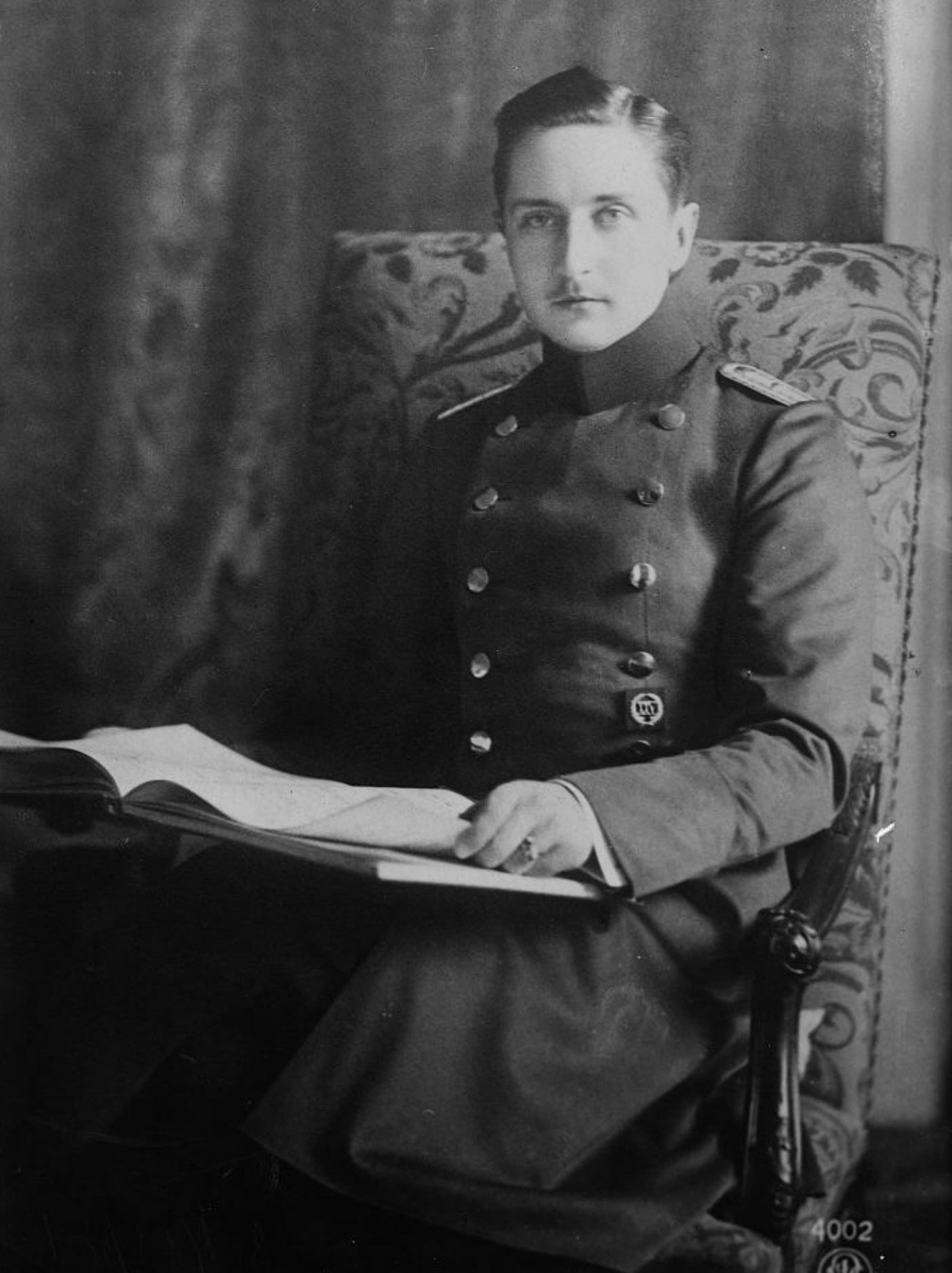
Berlin:  Prince August Wilhelm of Hohenzollern, son of the former Kaiser, announces he has abandoned his membership in the Stahlhelm nationalist paramilitary organization in favor of the nazis.  His reasons reportedly include the Stahlhelm’s lack of sufficient support for his fiery nationalist speeches, and his belief that Adolf Hitler and the nazis can provide the necessary zeal for the German nationalist movement.  He appeals to his own supporters to do the make the switch too.
Prince August Wilhelm of Hohenzollern

Helsinki:  The government suspends five communist newspapers and removes the governor of the Vaza district in an attempt to curb communist agitation.  President Lauri Kristian Relander cuts short his vacation to return home and deal with the crisis.

Thursday, January 12, 2017

Thursday, June 12, 1930

Berlin:  The Minister of the Interior of the state of Prussia, Heinrich Waentig, bans nazis from wearing their uniforms and insignia, as their agitation and propaganda efforts grow.  Waentig is well aware of the nazis’ agitation tactics: in May, he drafted a memorandum on the topic.

Monday, December 19, 2016

Saturday, May 31, 1930

Lung Ching-Tsun (Jilin City), Manchuria:  Bands of Korean communists launch coordinated attacks on Japanese facilities here, in Yenki, and at other towns in this district on the border with Korea.  The communists burn and bomb Japanese consulates, utilities and schools, but the only casualty is an injured police officer.  Japanese consular police and Chinese troops band together to drive the attackers away.
 
Berlin:  Joseph Goebbels, nazi member of the Reichstag, is fined the equivalent of US$200 instead of getting the nine-month prison term requested by state prosecuting attorneys, for insulting President Paul von Hindenburg in an article he published in December in a nazi newspaper.  The article, titled “Is President von Hindenburg Still Alive?” excoriated Hindenburg for his “friendship with Jewish and Marxist advisors.” 

Meanwhile, more bad economic news: Paul Moldenhauer, Minister of Finance, reports to the Reichstag that government revenues are still falling, but spending is not, resulting in a projected annual deficit of US$180 million.  

Monday, December 12, 2016

Monday, May 26, 1930: German Skirmish at the Polish Border, and Lawsuit to Stop Frick's 'Prayers of Hate'

Neuhoefen, Germany / Opalenie, Poland:  German and Polish border guards exchange gunfire in a brief skirmish that reportedly leaves one Polish soldier dead and a German officer wounded.  Each side claims the other started it: Germany says Polish shell casings were found on its side of the border; Poland says German blood was found on its side of the border.  Both sides promise an investigation.

Berlin:  The German government files a lawsuit against Wilhelm Frick, the nazi Minister of Education in the state of Thuringia, to stop the “prayers of hate” he has introduced into schools there.  From a legal standpoint, the question is whether the federal government can interfere in the state’s authority over its schools.  The hate prayers are one of several anti-semitic activities nazi leaders in Thuringia have introduced.

Tokyo:  Kato Hiroharu, Chief of Naval Staff, threatens to resign in protest over Japan’s approval of the London Naval Treaty. 

London:  More bad economic news: the opposition party predicts unemployment will reach 2 million by winter.

Sunday, December 11, 2016

Saturday, May 24, 1930

Milan:  Dictator Benito Mussolini wraps up a tour of Tuscany with another fiery speech, although toned down from his last two.  “We are well enough informed of the spirit dominating some of our neighbors,” he says, another thinly veiled reference to France.  His audience again responds with cries of “Down with France!”  He also takes the opportunity to deny what he claims are rumors that Italy had sent troops to Albania to aid King Zog. 

Kiel, Germany:  Communists and nazis clash again, injuring 12.  

Saturday, December 3, 2016

Saturday, May 17, 1930

Florence:  Dictator Benito Mussolini, after months of relative quiet, gives a bellicose speech before 200,000 screaming fascists, emphasizing the military might of Italy and her readiness to battle her enemies.  “There are people who think they can isolate Italy, and who would not be adverse from starting war against the Italian people, even through the territory of a third power.”  It is widely understood that Mussolini refers to France, whose relations with eastern European countries, Italy believes, are intended to isolate Italy.  “Fascist Italy henceforth will be a unit so organized as to be unassailable and without mortal danger.  Though words are beautiful things, rifles, machine guns, ships, airplanes and big guns are still more beautiful.” 

The French Ambassador to Italy visits Italian Foreign Minister Dino Grandi to express his displeasure. 

Paris:  Foreign Minister Aristide Briand has presented a proposal to the 26 European countries that are members of the League of Nations, calling for a federation of European states.  Some in the U.S. press are calling the idea a “United States of Europe.”  Briand first floated the concept in a speech last year, but now has presented it, fully formed, in a “Memorandum on the Organization of a Regime of European Federal Union.”  It is a bold proposal, though not without some precedent in European history.  Some fear Italy and Germany will view it as an attempt to isolate them and expand French influence over the continent.

Berlin:  Three people are killed when communists and nazis, on their way home from various political gatherings, clash in street brawls.


New York:  Police battle a crowd of 2,000 communists when they attempt to free picketers who had been detained after ignoring a court injunction not to demonstrate.  Four are arrested.

Thursday, May 15, 1930

Heidenau, Germany:  Communists and nazis battle in the streets, injuring 25 and overwhelming the response capability of the village police force.

Friday, April 25, 2014

Friday, 25 April 1930: Opposition to London Naval Treaty Rises in Japan

Tokyo: 

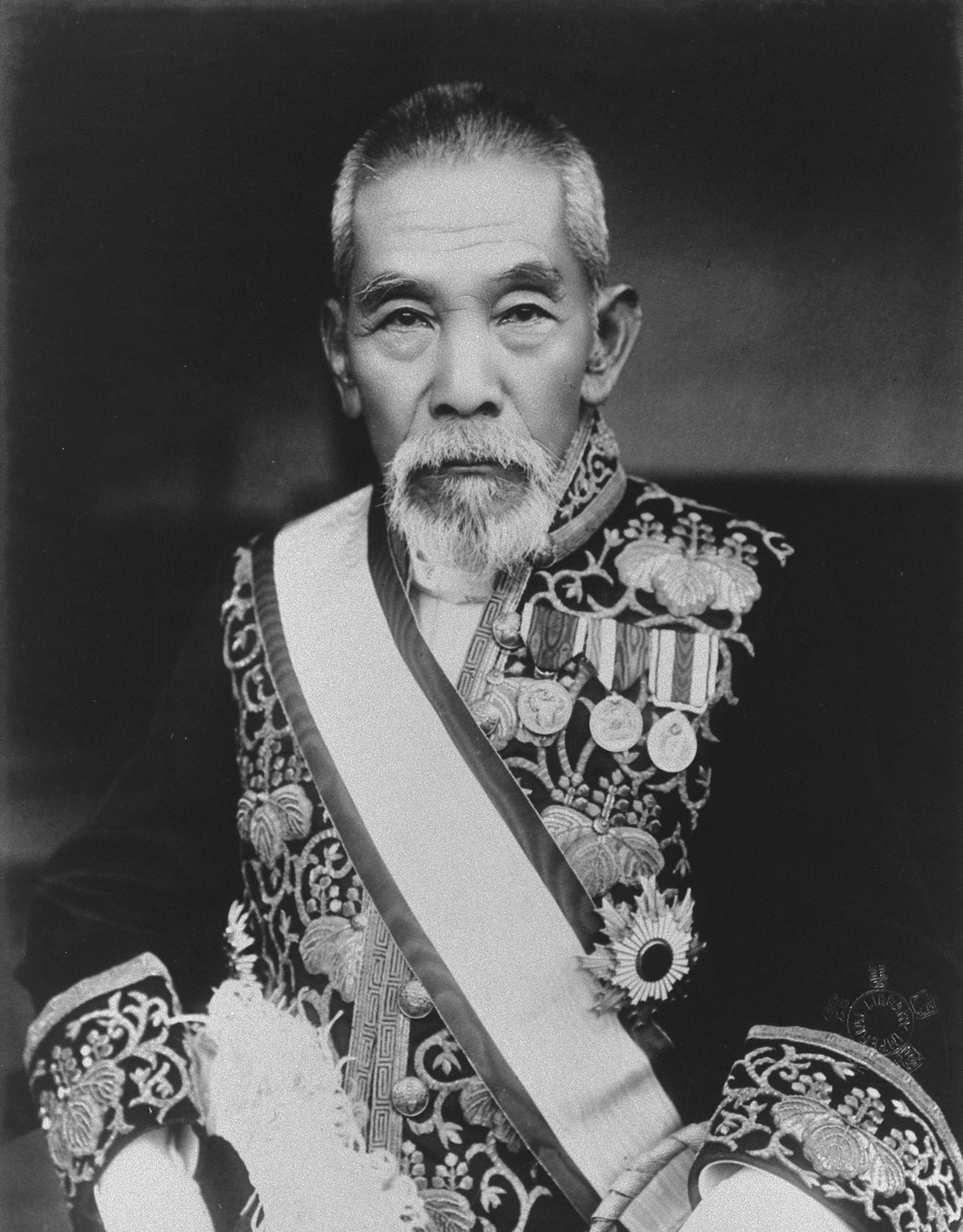
Opposition to Japan’s approval of the London Naval Treaty arises quickly.  Inukai Tsuyoshi, President of the Seiyukai opposition political party, attacks the treaty in the diet, claiming that because it was signed by a civilian government representative, it violates the Japanese constitution, which stipulates that the military be free from civilian control.  Foreign Minister Kijuro Shidehara, reviewing the treaty in the Diet, repeatedly has to refute the accusation that the Japanese delegation was forced to sign. 


Inukai Tsuyoshi


Paris:  Prime Minister Andre Tardieu proposes severe measures to prevent communist demonstrations on May Day, May 1. 

Halle, Germany:  A clash between nazis and communists after a nazi meeting results in injuries to 19 nazis. 

Monday, April 14, 2014

Monday, 14 April 1930

Germany: 

Wilhelm Frick, nazi Minister of the Interior and Education in the state of Thuringia, issues an order that will revoke the licenses of entertainment establishments that present black performers or their music.  Frick says he is acting to save Germany from “negro culture,” which he says is corrupting morals in the country.


Berlin:  New Chancellor Heinrich Bruening’s package of financial reform bills (mostly taxes) and agrarian relief passes the Reichstag by slim margins – in the case of the budget bill, by just four votes.  Bruening’s authority to dissolve the Reichstag, granted him by President Paul von Hindenburg, again looms large over the proceedings, with political parties sending cars and in some cases even planes out to bring legislators in for the vote, rather than face elections for a new parliament.  The measures implement new taxes on tobacco, sugar, beer and mineral water. 

Elsewhere:

Paris:  Two fascists are shot to death in the street by communists in revenge for recent arrests of communists in France.

New York: The Rand School of Social Science, a socialist institution, releases its American Labor Year Book for 1930, which states that the growing worldwide unemployment problem caused by the Great Depression is worst in Russia.

Sunday, April 13, 2014

Sunday, 13 April 1930

Germany:

Berlin:  Nazis paint “Death to Young” and swastikas on three portals of the Reichstag building in protest of the Young Plan. 

Magdeburg:  Several are injured in a street battle between communists and nazis.

Saturday, April 12, 2014

Saturday, 12 April 1930

Germany:

Berlin:  Fritz Hampel, an editor at the communist newspaper Rote Fahne (Red Flag), is sentenced to two years in prison on charges of high treason for articles and cartoons considered inflammatory.

Breslau:  Nazis and laborers clash in a streetfight that broke out as the nazis were holding a meeting.  Thirty are injured.

Sunday, March 30, 2014

Sunday, 30 March 1930

Germany:

Berlin:  Alfred Hugenburg, nationalist political leader, is protesting loudly about the new government of Heinrich Breuning.  He claims Breuning’s cabinet is illegitimate, and that the Reichstag must be dissolved and new elections held.  So far, President Paul von Hindenburg is ignoring him. 

Leipzig:  The government enters a charge of high treason against Wilhelm Frick, nazi Minister of the Interior of Thuringia, on charges that he is seeking to reorganize the police in that state (over which his post has authority) along nazi lines of thought.  The public prosecutor will begin an investigation into the charge. 

Wednesday, March 19, 2014

Wednesday, 19 March 1930: Religious War of Words Continues

It's a day of religious "warfare of words."


Vatican City:  Pope Pius XI leads a special prayer service and mass at St. Peter’s for persecuted Christians in soviet Russia.  50,000 attend.  A Russian choir sings, and Orthodox Greeks join in Slavic chants during the service. 
 
Vienna:  Communists attack and break up a meeting of the Czechoslovakian Catholic People’s Party, which was protesting religious persecution in Russia. 

Moscow:  Meanwhile, the press here is full of anti-Pope messages.  The Atheist magazine publishes an article entitled, “Down With the Pope,” which calls the Pope the world’s biggest landowner and the capitalist scion of a Milan textile family.  The article goes on to boast that 33 churches, 2 cathedrals and 10 chapels were closed in one soviet in the past week, and 9 villages threw “God’s rubbish” from their homes, namely icons, church fences and bells, ecclesiastical robes and altar draperies.  The gold, silver, iron and other items filled 50 carts.  The magazine goes on to insist that the 240 remaining churches in the Moscow soviet be closed.  “We must turn the red capital into a godless city this year.” 

Pravda, official publication of the communist central committee, criticizes the Pope for his “personal enmity” for the soviets.

Berlin:  

Communist mobs attack churches holding prayer services for persecuted Christians in Russia.  The communists parade around the city all day in protest of the Pope’s prayer service in Italy.  But as night descends, they grow bolder and more violent.  In one working district, a group of communists bursts through the doors of a church shouting, “Long live the red front!” and ridiculing God.  The congregation rushes at the intruders and drives them out of the church, and a melee ensues.  Police arrive to break it up.

In another working district, communists attempt to raid a Catholic church, but are fought off by a guard established by the church members.

Yet not everything happening today is of a religious tone.  Minister of the Interior Karl Severing orders all funds for the police in the state of Thuringia suspended pending an investigation into charges that Wilhelm Frick, the nazi Minister of the Interior of that state, is plotting treason against the government.  This is in response to a manifesto issued by Frick (elected earlier this year), which denounced the federal government and called the public to support nazi ideas for nationalist rule.  The Prosecutor General will begin an investigation. 

Friday, March 14, 2014

Friday, 14 March 1930

Germany: 

Berlin:  The worldwide economic depression worsens: new reports signal that manufacturing production is decreasing, and bankruptcies are up 30% from a year ago. 

Munich:  The Muenchner Neuste Nachrichten newsapaper reports that two nazi Reichswehr officers in Bavaria have been arrested as a result of a decree by the Minister of Defense to eliminate political propaganda in the military.  More arrests are expected. 

Leipzig:  The Federal Supreme Court sentences Richard Schultz, Editor of the communist newspaper Rote Fahne, to 15 months in prison for attempting to incite treason.  One of the articles on which Schultz was found guilty was titled, “Away with the Bourgeois republic, fight for soviet power.”  

Elsewhere:

Moscow:  The League of Militant Atheists announces plans for a “counter-papal prayer” day to kick off an anti-religious campaign scheduled to last two months.

Friday, February 21, 2014

Friday, 21 February 1930

Bucharest:  

Prime Minister Iuliu Maniu consults with his military generals over the rumored Red Army buildup on the soviet side of the Bessarabian border.  British, French and Polish diplomats have reportedly assured Romania of their support in the event of a soviet attack on Romania. 

Chicago:  

Crying “Wages and work!”, 1,200 unemployed hold a demonstration at city hall that erupts into a riot.  Police charge the crowd, beating many, and arresting 12.  Trouble starts at a communist meeting where speakers circulate handbills calling on workers to “rally to the defense of their fatherland, the Soviet Union,” and inflame the crowd to hold a parade.  When the mob starts to file out, the police move in.  Still, some of the marchers make their way to city hall, where 150 police, some mounted, form a cordon around the building.  It is the third communist-led demonstration at city hall in 10 days.

Some of the handbills at the meeting speak of an “international demonstration against unemployment” day, scheduled for March 6.  Others read:  “Unemployment is increasing.  The crisis is sharpening.  Everywhere misery and suffering increases daily.  Heavy wage cuts go hand in hand with the increase in unemployment.”

Elsewhere:  

Weimar, Germany:  The nazi Minister of the Interior and Education of the state of Thuringia, Wilhelm Frick, announces he is preparing to order all schools in the state to pray daily for Germany’s liberation from the Treaty of Versailles. 

Minsk, Belorus (Belorussian S.S.R):  The Jewish leaders held by soviet authorities for alleged anti-government activities are allowed to receive visitors, who report that their execution now seems less likely.  Meanwhile in Moscow, the soviet government issues an official denial to a rumor that the rabbis had already been executed.  The government newspaper Izvestia says they have only been charged with counter-revolutionary activity, which reportedly stem from their appeal to Jews outside the Soviet Union for financial aid. 

Tuesday, February 18, 2014

Tuesday, 18 February 1930

Moscow:  

The communist newspaper Izvestia publishes more defiance against world criticism of religious persecution in Russia.  The newspaper boasts of the truth of Russia’s “godless state,” and predicts that the Pope will one day be exhibited alongside the medicine man as an example of primitive human thinking.  Church closures, meanwhile, continue, and clerics are reported being turned out of their homes.  Izvestia likewise takes aim at British Foreign Minister Arthur Henderson, who recently said before Parliament that religious persecution in Russia was of great concern to the British government.  Henderson’s statements are a “bold violation of the recently concluded Anglo-Soviet agreement which obliges both sides to refrain from interfering in the affairs of the other.”

Germany:

Berlin:  Communists battle police in multiple skirmishes around the city after 250 police raid the headquarters of Rote Fahne, a communist newspaper.  Rote Fahne is suspected of distributing inflammatory pamphlets, and police report finding materials on starting communist cells within the police force.  Disturbances start as police leave the building – communists have filled the street outside, and when the police come out of the newspaper building, the melee ensues.

Meanwhile, the effects of the worldwide economic depression deepen: Paul Moldenhauer, Minister of Finance, proposes a new “national emergency sacrifice” tax on those with jobs, to benefit the unemployed.  The measure would require the approval of the Reichstag.
 
Dresden:  Also meanwhile, the government of the state of Saxony has to resign when the nazi, communist and nationalist members of its legislature join forces to vote a motion of no-confidence in the cabinet.  This was in retaliation for the cabinet’s earlier voicing approval for Germany approving the Young Plan.

Elsewhere:

Athens: Police arrest two communists and confiscate thousands of fliers urging workers in Macedonia to revolt on Feb. 26 or March 6.

Thursday, February 13, 2014

Thursday, 13 February 1930: Soviet Press Fires Back at Churches

Libya:  

Italian air strafing and bombing of fleeing Libyan resistance fighters, and their civilian family members, continues along the Libya-Algeria border. 

Moscow:  

The Soviet press fires back at Russia’s religious critics around the world.  Pravda, the official communist newspaper, says of the Pope’s recent criticisms of Russia’s persecution of religion: “His appeal is really a call to the nations to sever relations with the Soviet Union, for the soviet never will allow foreigners to interfere in their religious policy.  So far, all evil yelping against the soviets lacked only the Holy Father’s sweet voice.  This representative of God on earth hitherto preferred to hold his peace; he thought the weakening Orthodox Church would clear the way for Rome.  Only now, when he has become convinced that the working class in Russia intends to wipe out all superstitions without distinction of creed, has his Holiness decided to take up the defense of persecuted religion.  This head of the Catholic Church certainly is less interested in the problems of the Orthodox Church, Judaism, or even Catholicism than the worldly goods it may involve.  This means indifference to the progress of our industrialization, to collectivization of our agriculture, which spoil the beauty sleep of the western birds of prey.  Like every other financier and exploiter of labor, the Pope is an enemy of the working class.  That is why he appeals to all countries to make religious freedom a condition of recognizing the soviets.” 

The Komsomolskal Pravda, newspaper of the Young Communists’ League, publishes a cartoon of a bloated Pope holding a swastika with a small cross nailed upon it. 

London:  

Religious persecution in soviet Russia dominates discussion in the House of Commons.  Foreign Secretary Arthur Henderson, answering questions from legislators, says “Reports as regards the religious situation in Russia are receiving serious consideration of his majesty’s government.  The house may rest assured that his majesty’s government will use its influence in support of the cause of religious liberty and freedom of religious practices.”  British Ambassador to Moscow, Sir Esmond Ovey, is ordered to investigate reports of religious persecution in Russia, and the House of Lords passes a resolution denouncing Russia for its anti-religious activity.  Joseph Hertz, Chief Rabbi of the United Kingdom, joins his voice with those of the Catholic and Anglican churches in protest of Soviet religious persecution. 

Meanwhile, at the naval conference, reliable reports surface that Japan has agreed to a 66-2/3 ratio of cruisers compared to the United States and Great Britain.  This would represent an increase from Japan’s current 60% ratio, but less than the 70% Japan came into the conference seeking.  “Japan attaches special importance to eight-inch gun cruisers, and desires to maintain here a minimum strength sufficient for national defense, taking into consideration the strengths held by the other powers,” says Raijiro Wakatsuki, of Japan’s delegation, in an official statement before the conference.  But he makes no mention of the 70% ratio, which observers thought he would.  Thus the belief that Japan has agreed to yield on its stated demands.  “This certainly leaves the door wide open for future discussion and is not in any sense the ultimatum which might be apprehended in some quarters,” says an unofficial spokesman for the U.S. delegation. 

Yet Japan is unwilling to make such an explicit statement officially, in part because Japanese elections are coming up next Tuesday, and the delegation is concerned that the present government would be perceived as having backed down in London.

Elsewhere:  

Paris:  Russia claims French police have arrested the Second Secretary of the Soviet Embassy in the case of the disappearance of Alexander Koutiepoff.  Paris police deny the charge. 

Offenbach, Germany:  Communists and nazis clash in a street battle.

Berlin:  More impact from the global economic depression: The government decides to appropriate no funds for completion of a second Deutschland-class heavy cruiser, sometimes called a “pocket battleship,” which would be one of six Germany is allowed under the Treaty of Versailles.  An estimated $14 million is needed to complete it.
 
Spain: The depression also adds to the new government’s difficulties in getting established after the resignation of dictator Miguel Primo de Rivera.  Parades and demonstrations by the unemployed have left Madrid and Barcelona under heavy police presence.

Italy:  Still more impact from the global economic depression: unemployment is reported over 462,000.

Saturday, January 18, 2014

Saturday, 18 January 1930: Frick Appointed Interior Minister of Thuringia

Weimar, Germany:  

Nazi party member Wilhelm Frick is appointed to the post of Minister of the Interior and Education in the coalition government of the German state of Thuringia.  He is the first nazi to hold a ministerial-level post at any level of government in Germany.  In the recent Thuringian parliamentary elections, nazis gained 11% of the vote, their highest showing ever in any election in Germany.  This gave them enough clout to garner a post in the coalition government.  Among the departments that fall under the Minister of the Interior and Education: the police and schools.

The Hague:  

At the Second Reparations Conference, the payments of eastern European countries like Hungary and Czechoslovakia becomes a growing problem.  Italy says it won’t sign the Young Plan agreement until the eastern issues are resolved.