Friday, January 31, 2014

Friday, 31 January 1930

Hamburg:  

Rioting again breaks out, despite a heavy and armed police presence, when the unemployed and many communists ignore police orders not to demonstrate.  Police, sometimes failing to distinguish demonstrators from other citizens, wade into numerous gatherings, often roughing up peaceful bystanders.  Eventually they open fire on some of the rioters.  The worst fighting takes place in front of a new building where the demonstrators try to force the workers there to lay down their tools in a sympathy strike.  Twenty more people are arrested (in addition to yesterday’s total), and the entire police force is ordered to a state of emergency.  By nightfall, police issue a statement saying they have the situation under control.

Berlin:  

Meanwhile the entire police force here is also ordered to emergency duty in anticipation of communist agitation.  Communists have announced plans, in defiance of an order from the Prussian Ministry of the Interior against such gatherings, for several groups to gather in various parts of the city, then converge on a central meeting place.  Police warn that they will fire on demonstrators if necessary.

And all of this is intensified by the news that 76 people, including several Reichstag members, have been arrested at a secret communist meeting said to be plotting a coup attempt in Germany for Feb. 1.  The riots were supposedly a prelude to the larger plot. 

Paris:  

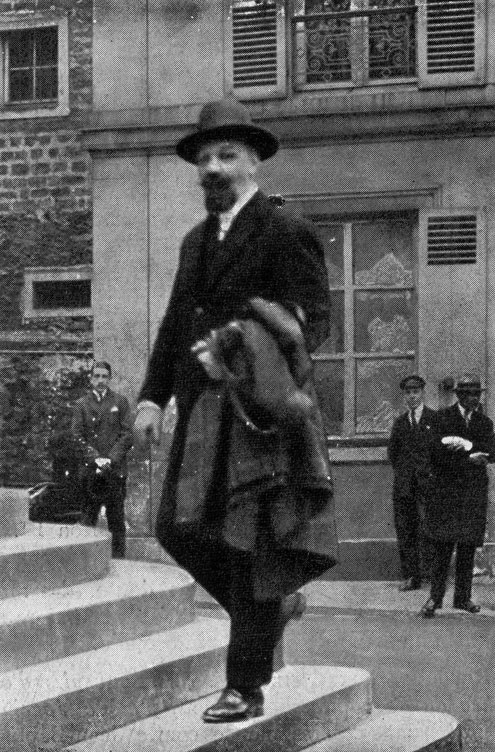
The uproar is growing over what is thought to be a brazen daylight kidnapping of Alexander Koutiepoff, former general of the White Russian forces.  A second witness emerges claiming to have seen Koutiepoff abducted, and conservative French newspapers are calling for France to break diplomatic relations with the Soviet Union over the episode.  Koutiepoff’s wife is quoted as saying, “It is the Bolsheviks!  I know it!  I know those people!”

Thursday, January 30, 2014

Thursday, 30 January 1930

Paris:  

Alexander Koutiepoff, a former general of the White Russian forces that fought against the communists’ rise to power in Russia, goes missing, and a witness claims to have seen him kidnapped by “three husky men, including one who seemed to be a policeman.”  This has aroused suspicion that he was a victim of operatives of communist Russia working in France. 


Elsewhere:  

Hamburg: In preparation for a “hunger march” to be held Saturday, communists hold a demonstration in front of the unemployment bureau, which devolves into a riot, resulting in 11 injured police, who end up using motorized riot squads to suppress the demonstrators.  Twenty are arrested.  Demonstrators began stoning the police, who fight back with pistol whips. 

Vienna: Communists and the unemployed march through the streets here and in leading cities throughout Austria, demanding jobs and increased public unemployment assistance.  Estimates are that 30% of Austria’s industrial labor is unemployed. 

United States:  More bad economic news: the American Federation of Labor reports that unemployment increased 3% just in the last month.

Wednesday, January 29, 2014

Wednesday, 29 January 1930

Berlin:  Two days after France uncovered a communist propaganda plot in its army, Germany’s Ministry of Defense issues a statement acknowledging that a communist propaganda campaign has been found in the German army as well.  

Tuesday, January 28, 2014

Tuesday, 28 January 1930

Madrid:  

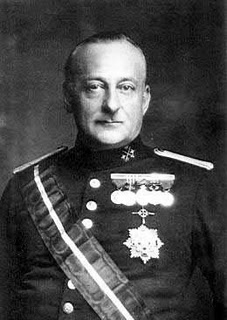
Gen. Miguel Primo de Rivera, dictator of Spain for the past six years, announces late tonight that he will step down.  He had asked the military essentially for a vote of confidence two days ago, and evidently not satisfied with the response (or lack thereof), he resigns.  Rivera holds a cabinet meeting in the evening, after which he drives to the royal palace and submits his resignation to King Alfonso, who in turn asks Gen. Damaso Berenguer to form a new government. 

“The king accepted my resignation and those of all the other ministers.  He praised each one and expressed his best wishes to all . . . .  The king entrusted formation of the new government to Damaso Berenguer.  I was very . . . pleased with this designation, for he is a man of great serenity of judgment, possessed of much discretion and dearly beloved throughout our country.  I suppose he will call on me tonight to exchange views.  I repeat, I am highly pleased with the selection for there is no man better fitted for the place.” 

The development gives rise to rampant speculation – and some violence – that some form of constitutional or republican government may return to Spain (as de Rivera himself had hinted– see Dec. 13, 1929).  Students in the capital riot against both military dictatorship and monarchy, but despite this, the nation is reported to be generally calm.


Monday, January 27, 2014

Monday, 27 January 1930

Paris: Authorities seize five communists in the French army whom they say are part of a propaganda campaign targeting 40 army regiments in an attempt to foment unrest. 

Germany: Konrad Krafft von Dellmensingen, a retired General and hero of the World War, says President Paul von Hindenburg should veto the Hague agreement on the Young Plan.  If Hindenburg won’t veto the treaty, he should resign, Dellmensingen says.  Since retiring from the military, Dellmensingen has been active in political circles of the monarchists, a group supporting a return of Germany’s monarchy from the pre-war days.


Sunday, January 26, 2014

Sunday, 26 January 1930

Madrid:  

Dictator Primo de Rivera, whose government has been under increased criticism for economic troubles that have plagued Spain recently, issues a formal note at 4 a.m. to the army, navy and civil guards, who concurred in his rise to power, asking them to declare whether they still want him to his rule. 

“As I have often said, I want to leave office when the time is propitious and a proper man of good faith is available to succeed me.  Unfortunately for me, I have not yet found that man, but I will never be willing to be forced out, and in an improper manner, by anyone against my will.”  Rivera had not announced plans to release such a note.  A group of army officials meets tonight to discuss the matter, but no decision is announced.

Germany:  

More bad economic news: a report says unemployment now tops 2 million, equaling two years ago when a severe winter drastically impeded industrial activity.

                               Unemployed queing at an employment office in Hanover in 1930.

Saturday, January 25, 2014

Saturday, 25 January 1930

Libya:  

Italian troops raise their flag over the city of Murzuq, captured four days ago, in a ceremony attended by Libya’s colonial governor and head of Italian military forces in Libya, Marshal Rodolfo Graziani.  Capture of the city is considered important in Italy’s campaign to suppress resistance fighters in the Fezzan area of southwestern Libya.  Italian forces also have captured the nearby town of Ubari. 

New York:  

Two-hundred communist agitators battle police in City Hall Park.  They are protesting the recent death of a worker who was shot by police while picketing a fruit and vegetable stand.  A police force nearly matching the size of the communist gathering is on guard.  At a pre-arranged signal, demonstrators try to race through the police lines to mount the city hall steps.  That’s when police start swinging.

Friday, January 24, 2014

Friday, 24 January 1930

Berlin:  New Finance Minister Paul Moldenhauer, speaking before the Reichstag, warns that even with the new terms of the Young Plan for Germany’s war debt payments, the country will face a huge deficit by July and still require further loans. 

China:  In the civil war, communist rebels are reported to be marching on Hupeh, in central China.

Thursday, January 23, 2014

Thursday, 23 January 1930

London:  

The five countries participating in the London Naval Conference lay out their basic positions:  the United States wants naval parity with Great Britain; Great Britain seems to resist this notion, pointing out that as an island nation with a massive empire, “our navy is us;” France wants no deal that doesn’t include some arrangement for European continental security; Italy wants naval parity with any other continental European power (mainly France); Japan says it just wants peace, economy and good will, and a reduction in navies by all parties.  Every observer, including the delegates, admits that a long road lies ahead for the conference. 

Mexico City:  

Mexico breaks off diplomatic relations with the Soviet Union, saying that its embassies in Argentina, Brazil and the United States have been the targets of repeated propaganda and attacks by communists in those countries, making it impossible for Mexico to continue normal relations.  Foreign Minister Genaro Estrada says, “The Mexican government knows perfectly well this propaganda against our institutions and the national revolution has been prepared and directed from Russia.  It is also known that the communist groups (directing the propaganda) did not work independently because every political organization of that country is subject to the soviet government.”  Mexico’s was the first diplomatic legation in the western hemisphere for Soviet Russia.  Estrada announces that Mexico’s ambassador in Moscow has already left the country.


Wednesday, January 22, 2014

Wednesday, 22 January 1930

Berlin:  Chancellor Hermann Meuller, after receiving a complete report from the German delegation to The Hague Second Reparations Conference, confirms that his government will ratify the agreement.  He promises that bills necessary for ratification will be submitted to the Reichstag next week.

Poland:  Two people are killed during communist demonstrations quelled by police.