China: The country still hangs on the brink. Communist rebel forces launch an attack on
Nanking, capital of the nationalist government, where Chiang Kai-shek is making
a last stand. They’re only 40 miles
out.
Tuesday, December 10, 2013

Monday, December 9, 2013
Monday, 9 December 1929
Berlin:
The cabinet of Chancellor Hermann Mueller
meets all day to discuss the crisis precipitated in part by Reichsbank
President Hjalmar Schacht’s broadside on Germany’s financial affairs. They’re trying to come up with proposals that
will be acceptable to the various political parties that make up Mueller’s
coalition government, and keep it from breaking apart, but also address some of the cry for financial reform from Schacht. If Mueller’s government were to fall, fears
are that the Liberty Law referendum might gain momentum in the power vacuum,
and the Hague reparations conference scheduled to start next month might be
threatened.

China:
The country, and the foreigners in it, are in
a state of panic. The nationalist
government is thought to be on the brink of collapse. Canton is also reported near collapse. Forces loyal to nationalist government leader
Chiang Kai-shek outnumber the rebels 3-to-1 there, and are supported by
gunboats in the harbor, but looting and mutinies among government forces
continues, weakening their resolve. Great
Britain and the U.S. both have warships at hand to protect their nationals.
Sunday, December 8, 2013
Sunday, 8 December 1929
China: With the rebellion raging in five different
parts of the country, nationalist government head Chiang Kai-shek denies rumors
he will resign. Foreign observers
predict Chiang will be defeated. Several
cities are reported surrounded or threatened by rebel forces.
Saturday, December 7, 2013
Saturday, 7 December 1929: Nazis Gain in Thuringia Elections
Germany:
Berlin: Reaction to Reichsbank President Hjalmar Schacht’s broadside relative to
the Young Plan (see Dec. 5) is fierce, both from inside and outside
of Germany. The federal government says
that for Schacht even to make such statements risks violating Germany’s
agreements following the World War. And
sources within the government are letting it be known that Schacht may not be
asked to attend the second round of meetings on the Young Plan, scheduled to
start in a couple of weeks in The Hague.
Outside of Germany, the
French press see Schacht’s comments as political maneuvering for leadership of
the nationalist movement within Germany (especially with Alfred Hugenberg in decline
after his Liberty Law fiasco), as well as posturing in advance of the upcoming
Hague conference at which the debt payments will be discussed.
Schacht’s memo,
though, is already producing a divide within Germany. Bankers and big industry are tending to line
up behind Schacht’s analysis, hailing the statement as just the kind of strong
tonic Germany needs to solve its economic problems. The government of Chancellor Hermann Mueller has called
for a vote of confidence in the Reichstag next Wednesday.
Weimar: Meanwhile, elections for the legislature (or
“Landtag”) of the central German state of Thuringia are being held today. By nightfall, when results are coming out, it
is clear that the national socialist party (nazis) have scored another victory,
though their numbers are still small.
The nazis have garnered 11% of the popular vote, which will give them 6
seats in the Landtag, making them the 3rd-largest party. That’s far below the 34% earned by the leading
Social Democrats. But enough that it
will make forming a coalition government difficult without including the
nazis.
Vienna:
The Federal Assembly (parliament) approves the
constitutional revisions that Chancellor Johann Schober has been working on for
five weeks. The changes: reduce the
autonomy of socialist-leaning Vienna within the country, but retain its status
as a state; reduce Vienna’s tax contribution to the federal government but
steer part of it to an adjoining state; introduce direct election of Austria’s
President; broaden some of the President’s powers, for example emergency powers
and to dissolve Parliament, but also restrict others in an attempt to avoid
dictatorship; and call for absorption of the Social Democratic militia into the
state police. Of immediate practical
importance, the changes are thought to defuse the potential for a coup by the
nationalist Heimwehr paramilitary, as both nationalists and socialists got some
of what they wanted.
China:
The nationalist
government capital of Nanking is cut off from communication, as rebel troops have
it under siege. Many of Chiang
Kai-shek’s best generals have defected. Communist
rebel forces are also still reported to be advancing on Canton. Both Nanking and Canton, as well as Shanghai
and Hankow, are under martial law.
British gunboats are preparing to remove British nationals. Chiang is reportedly mustering 70,000 troops
for a last stand in his capital.
Friday, December 6, 2013
Friday, 6 December 1929
Berlin:
The
cabinet of Chancellor Hermann Mueller holds a meeting to discuss the memo that
Reichsbank President Hjalmar Schacht issued last night, which blasted them and
foreign powers for failure to meet the necessary terms of the Young Plan.
Libya:
Italian forces conducting a suppression
campaign against Libyan resistance fighters take the town of Brach by surprise
attack, without a shot fired.
Vienna:
University and high school officials, at a special meeting, decide they are closing their institutions for an indefinite period of time, in an effort to get control over the violence plaguing the schools. Socialist and nationalist students often battle each other, disrupting lectures and resulting in frequent calls to the police. And the nationalist students also battle against Jewish students and professors. Property damage from the fighting has been extensive.
Warsaw:
Communists hold demonstrations in several parts of Poland, including a group of mostly teenage boys who parade past the U.S. Embassy here, throwing rocks, breaking windows and shouting against what they call the “American intervention in the Chinese-soviet conflict.” Police arrest 5.
China:
Nanking, capital of the nationalist
government, is under martial law as the troop defections that started three
days ago have turned into full-scale rebellion.
Canton, on the southern coast, is also under martial law, with communist
rebel forces approaching, refugees pouring in, and executions and police raids
rampant. U.S. gunboats in Canton harbor
are on guard.
Thursday, December 5, 2013
Thursday, 5 December 1929: Reichsbank President Schacht Blasts Germany's Leadership
Berlin:
A broadside hits the German political
landscape relative to support for the Young Plan, and it comes from an
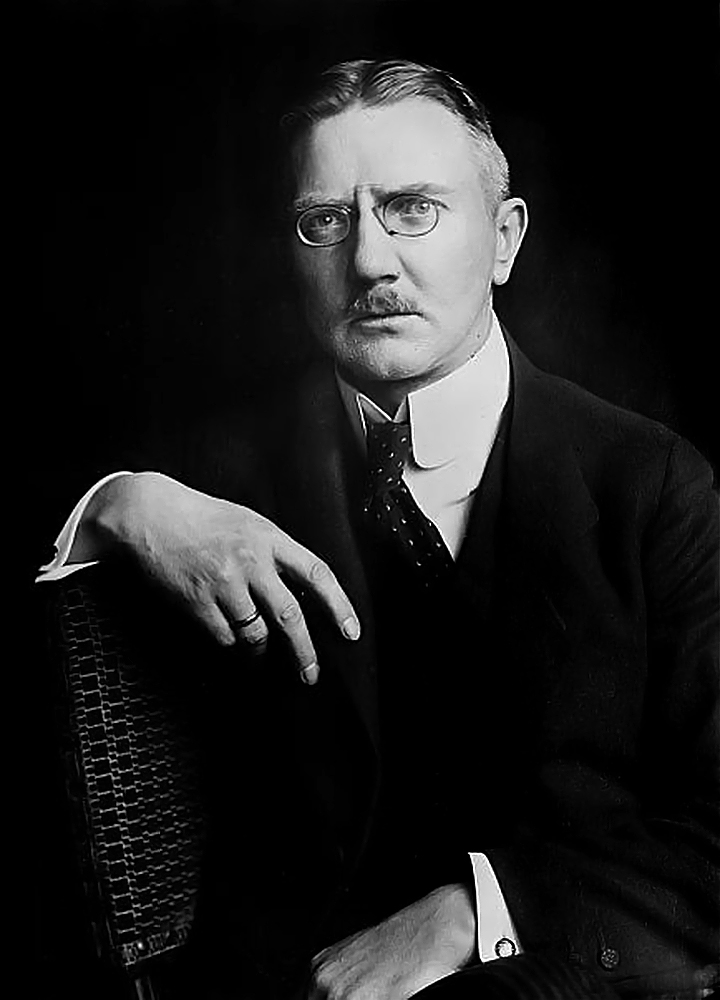
unexpected source. Reichsbank President Hjalmar Schacht surprises nearly everyone when he releases tonight a memo to Chancellor Hermann
Mueller and to the public – at the same time.
The memo blasts both Germany’s political leadership, and other nations’
political leadership, for failing to do what is necessary to make the Young
Plan successful.
First, the surprise: Schacht
was supposedly the chief German delegate to the Hague meetings that negotiated
the Young Plan. Yet press reports coming
out in the wake of this development are pointing out that Schacht hardly
participated in those meetings, showing up for only a few days, and never
seeking private audiences with other government officials to whom he might have
made these views known.
Second, the content of
Schacht’s broadside: Schacht’s memo says
both the German government and foreign governments have failed to follow the
procedures necessary to make the Young Plan successful. Foreign governments, he says, have not stuck
with the Young Plan as it was originally presented – they’ve changed the terms
as the negotiations have gone along, thereby placing additional burdens on
Germany that will make it harder for her to pay the debts. This while the German economy has lost the
prospective revenue of hundreds of millions of marks in private claims against
Poland arising from the World War, which Germany agreed to abandon.
The German government,
for its part, has not taken steps to get its own financial house in order,
which will be necessary if Germany is to meet the terms of the plan. Schacht says Germany’s posture relative to
the Young Plan was predicated on stimulating economic production, thereby
increasing the country’s ability to pay, and settling once and for all the way
revenues are shared between the federal government and the municipalities (which are accused of spending too freely). But
Schacht says nothing has been done, either to stimulate economic output or to settle
the revenue-sharing arrangements. As a
result, the revisions of the Young Plan, far from reducing Germany’s debt burden,
won’t even address the deficit already envisioned. As a result, Schacht says, he cannot be held
further responsible for prospects of the Young Plan within Germany. He says Germany’s creditors won’t approve the
loans to Germany that they’re contemplating, and yet they bear part of the
blame for it.
Schacht evidently
discussed his views with members of the Mueller cabinet earlier in the week, but
reportedly received a cool reception. The
Berlin stock market drops sharply after his memo is published. Adding to the confusion
of Schacht’s memo is the way he chose to disseminate it – releasing it
simultaneously to Mueller and the public.
Press observers are saying it is without precedent in German political
history.
China:
The troop mutinies that started at Pukow are
spreading, with more troops in more regions reportedly revolting to join the
rebels. Five provinces, including large
parts of the Yangtse River Valley, are reporting unrest. The rebels fire on British gunboats in the
Yangstse River at Ichang.
Wednesday, December 4, 2013
Wednesday, 4 December 1929
Washington:
Secretary of State Henry Stimson denounces
Russia’s statement from yesterday that the United States’ urging Russia to
settle the Manchuria dispute was “unfriendly.”
Stimson says rather the U.S. action was prompted by the seriousness with
which the United States views the Kellogg-Briand Pact. Stimson reiterates a belief that public
opinion can be used as a tool for enforcing peace, and for encouraging
compliance with the Kellogg-Briand Pact by the nations who signed it.
Moscow:
Yet Russia keeps up the war of words. Maxim Litninoff, Acting Commissar of Foreign
Affairs, advises “protectors of the Kellogg pact” to keep their attentions
focused on their own parts of the world.
“The Soviet Union, unlike other countries, rejected extraterritorial
rights and privileges in China, and it would seem strange why, under this circumstance,
the Nanking and Mukden governments took the path of violence with provocations
toward soviet Russia. This is explained
by the simple fact that the start and further encouragement of actions of the
Nanking government originated from the imperialistic camp.”
Elsewhere:
Shanghai: Meanwhile the national government of China also issues a reply to the communiqué it, like Russia, received from the United States and other world powers, urging it to settle the Manchuria conflict peacefully. The reply promises that, “apart from measures of self-protection and defense of territorial sovereignty against external invasions, China would observe her obligations under the pact.”
China: The troop rebellions in the civil war grow more serious. Reports say the number of mutinous troops in Pukow is 15,000, and they’ve headed north after looting the city. Meanwhile, communist rebels have reportedly killed 100 people and looted the city of Kanchow (Ganzhou), in southern China.
China: The troop rebellions in the civil war grow more serious. Reports say the number of mutinous troops in Pukow is 15,000, and they’ve headed north after looting the city. Meanwhile, communist rebels have reportedly killed 100 people and looted the city of Kanchow (Ganzhou), in southern China.
Berlin: The fallout from Alfred Hugenberg’s Liberty
Law initiative continues: 8 more German Nationalist People’s Party delegates in
the Reichstag resign, including the party chairman, joining the six who
resigned yesterday in protest of Hugenberg’s leadership. Ten more are expected to follow soon.
Tuesday, December 3, 2013
Tuesday, 3 December 1929
Berlin:
The political fallout begins for nationalist
political leader Alfred Hugenberg over his failed Liberty Law* initiative. Six Reichstag delegates from his German
National People’s Party resign from the party in protest over Hugenberg’s
leadership, which has been driving the party increasingly nationalist. This follows the split already evident last
week, when some of his own party’s members voted against his proposed Liberty
Law. But Hugenberg is also being
excoriated from the even more radically nationalist Adolf Hitler, leader of the
national socialists.
Russia:
Nikolsk-Ussurlisky: Russian and Manchurian officials sign an
agreement formally ending fighting in the Russian invasion of Manchuria. According to dispatches, joint control of the
Chinese Eastern Railway will be reinstated. It’s still not clear what
role the national government of China has in this agreement, if any, nor what
recognition it will give the agreement, if any . . . nor that it even matters,
given the central government’s tenuous-at-best rule in Manchuria.
Moscow: Meanwhile, the soviet government informs the
French government (which is acting as the mediator between the United States
and Soviet Union, since the two countries have no diplomatic relations) that it
considers “unfriendly” the recent U.S. advice that Russia keep in mind the
Kellogg-Briand Pact which it signed, and settle the Manchuria dispute
peacefully.
“The Union of Soviet
Socialist Republics, from the first day of its existence, has pursued a policy
of peace, and unlike other powers has never resorted to military action except
as a necessary step for defense, due to direct attack on the union or armed
intervention in its internal affairs.
The Soviet Union has consistently pursued this policy and intends to pursue
it independently of the Paris pact for abolition of war.” The response goes on to outline Russia’s case
that it was China’s policy over the Chinese Eastern Railway that started the
conflict.
“The climax of this policy
was the seizure of the Chinese Eastern Railway without any warning or
preliminary presentation of any claims, in violation of existing agreements
regarding the joint administration of the railway. The soviet government believes that if action
such as that of the Nanking government were taken toward the United States,
Great Britain or France, it would be considered by their governments sufficient
cause for putting into force reservations they made when signing the pact. [. . .]
The Nanking government not only resorted to illegal seizure of the
Chinese Eastern Railway, but mobilized along the soviet Manchurian railway an
army, various sections of which, together with counter revolutionary Russian
bands included therein, made systematic attacks on the U.S.S.R., crossing the
frontier and firing on units of the Red Army and frontier villages, robbing and
violating a peaceful population, causing thereby losses of lives and
property. Despite frequent warnings
through the German government, these attacks did not cease but rather increased
and compelled the soviet far-eastern army, in the interests of defense,
protection of the frontier and the peaceful population, to take counter
measures. Thus the actions of the Red
Army had due considerations of self-defense and were in no wise violations of
any obligations of the Paris pact.
“That cannot be said of armed
forces in Chinese territory and Chinese ports of those powers who have applied
Tuesday to the Soviet Union with identical declarations. The soviet government states that the
government of the United States has addressed its declaration at a moment when
the soviet and Mukden governments already had agreed to several conditions and
were proceeding with direct negotiations which would make possible prompt
settlement of the conflict between the Soviet Union and China. In view of this fact, the above declaration
cannot but be considered unjustifiable pressure on the negotiations, and cannot
therefore be taken as a friendly act. In
conclusion, the soviet government cannot forbear expressing amazement that the
government of the United States, which by its own will has no official
relations with the soviet, deems it possible to apply to it with advice and
counsel.”
China:
New fighting erupts in the civil war. Communist rebels are reportedly advancing on
Canton, on the southern coast, and two divisions of nationalist government
troops mutiny at Pukow, across the river from the capital of Nanking, after
refusing orders to deploy to Canton.
Monday, December 2, 2013
Monday, 2 December 1929
Washington:
The United States issues an appeal to 53
nations that signed the Kellogg-Briand pact, which prohibited war as means of
national policy, to join in pressuring Russia and China to solve their Manchuria
dispute through peaceful means. Separately,
the U.S. notifies Russia and China that the respect with which they are held by
the rest of the world will depend on peaceful resolution. Since the U.S. has no diplomatic relations
with Soviet Russia, that message is delivered via the French government. Great Britain issues a memorandum the same day
saying it is prepared to join in the effort to bring about a peaceful
settlement to the Manchurian dispute.
Japan issues a statement saying it does not intend to support the U.S.
initiative.
Germany:
Berlin: The Federation of German Industries, a large and
influential trade group, releases a statement calling for sweeping economic,
financial and socio-political reforms if Germany is to avoid economic
collapse. The group says high taxes,
excessive government handouts and federal government aid to German states, are
financially unsound and will lead to ruin if not stopped.
Darmstadt: 250 members of the nationalist Stahlhelm paramilitary
group are arrested after clashing with civilians.
Sunday, December 1, 2013
Sunday, 1 December 1929
Rome:
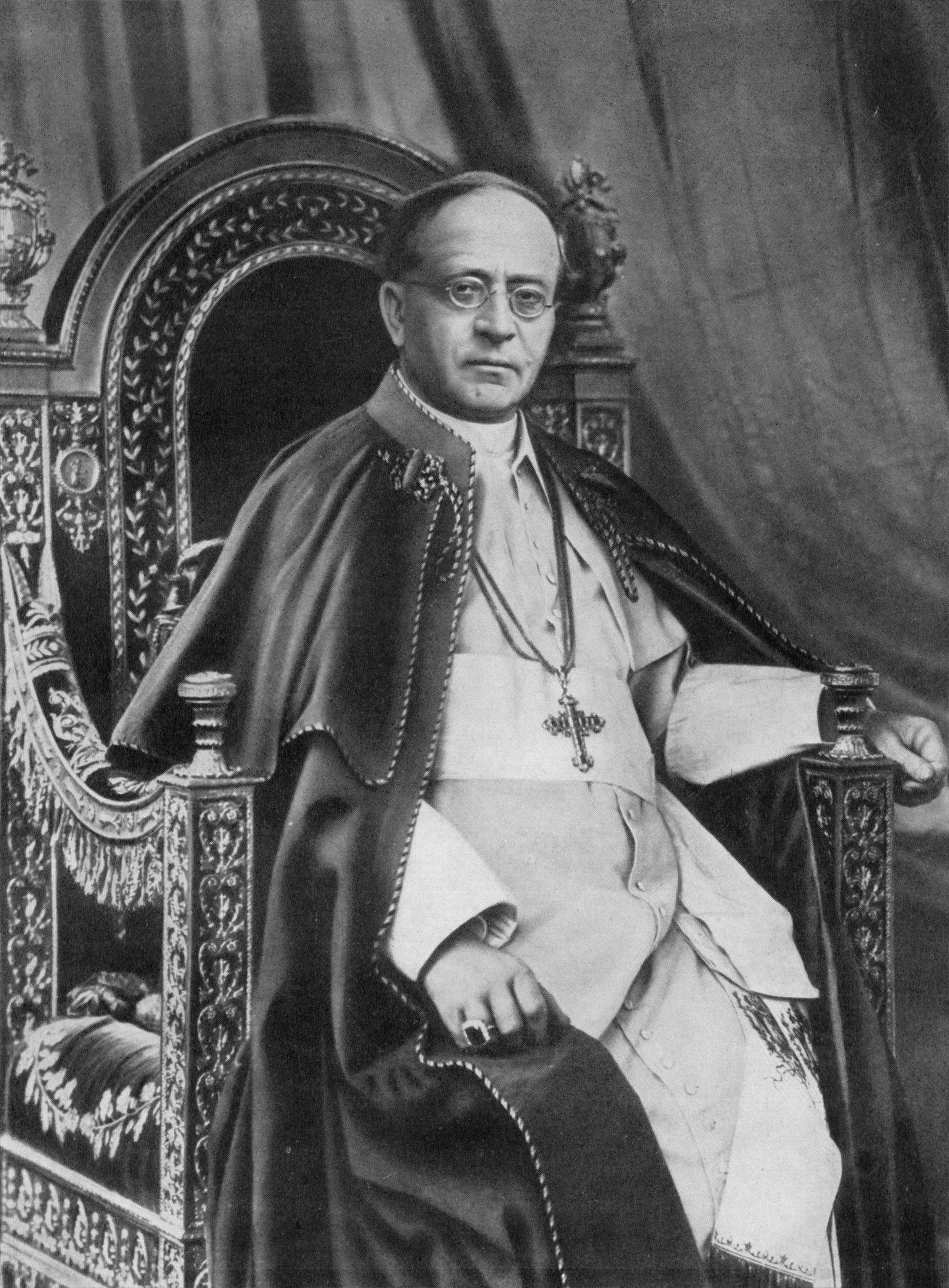
Pope Pius XI, in a speech to a gathering of Rome’s
parish priests, criticizes Italy’s fascist government and press, saying
Catholic newspapers in Italy are finding it more difficult to discuss church
issues freely. Conversely, he says
Italy’s fascist press is discussing matters related to the church with
“indiscretion.”
Moscow:
The communist government jails Princess Sophie
Lieven, sister-in-law of Sir Kynaston Studd, former Lord Mayor of London, for
teaching Bible lessons to the children of workers’ families. Ms. Lieven is also daughter of the former
Grand Master of Ceremonies of the Russian Imperial Court. She is being held in the Lublanka jail in
Moscow.
Subscribe to:
Posts (Atom)