Wednesday, April 30, 2014
Wednesday, 30 April 1930
Paris: France expels 22
communist leaders as a precaution against May Day agitation tomorrow.

Tuesday, April 29, 2014
Tuesday, 29 April 1930
Shanghai: The
nationalist government raids suspected communist bases in the foreign
settlements, arresting 27 and seizing tens of thousands of pieces of communist
propaganda, in advance of May Day. Elsewhere,
the government says its forces killed 900 bandits responsible for lawlessness
in Hupeh.
Monday, April 28, 2014
Monday, 28 April 1930
Vienna: The Austrian
government announces that 15,000 Austrian laborers who were to be employed by
France to help build defensive fortifications there, cannot be used to work on
fortifications directed toward Germany.
Sunday, April 27, 2014
Sunday, 27 April 1930
Rome: Italy launches
four new cruisers and a submarine in a festive event celebrating the country’s
naval power. Additionally, 90,000 members
of fascist youth organizations are received into the Black Shirts, Mussolini’s
fascist paramilitary, in ceremonies around the country. They receive rifles to commemorate the
occasion.
Madrid: Melquiades
Alvarez, former monarchist, criticizes King Alfonso in a speech, saying the
king “forever” ignored his duties under the constitution of 1876 by allowing
the dictatorship of Manuel Primo de Rivera.
Alvarez says a republic is now what Spain needs.
Berlin: More bad economic
news: the government announces that tax revenues were 70 million marks below
budget for the fiscal year ended March 31.
London: Still more bad
economic news: unemployment in Great Britain is higher than at any time in the
last four years.
China: The nationalist government announces that martial law
will be in effect for Shanghai May 1, in anticipation of communist unrest on
May Day. The government arrests 150
suspected communist agitators, detains 100 more, and displays weapons it says
were planned for use in May Day uprisings.
Friday, April 25, 2014
Friday, 25 April 1930: Opposition to London Naval Treaty Rises in Japan
Tokyo:
Opposition to Japan’s approval of the London Naval Treaty arises quickly. Inukai Tsuyoshi, President of the Seiyukai opposition political party, attacks the treaty in the diet, claiming that because it was signed by a civilian government representative, it violates the Japanese constitution, which stipulates that the military be free from civilian control. Foreign Minister Kijuro Shidehara, reviewing the treaty in the Diet, repeatedly has to refute the accusation that the Japanese delegation was forced to sign.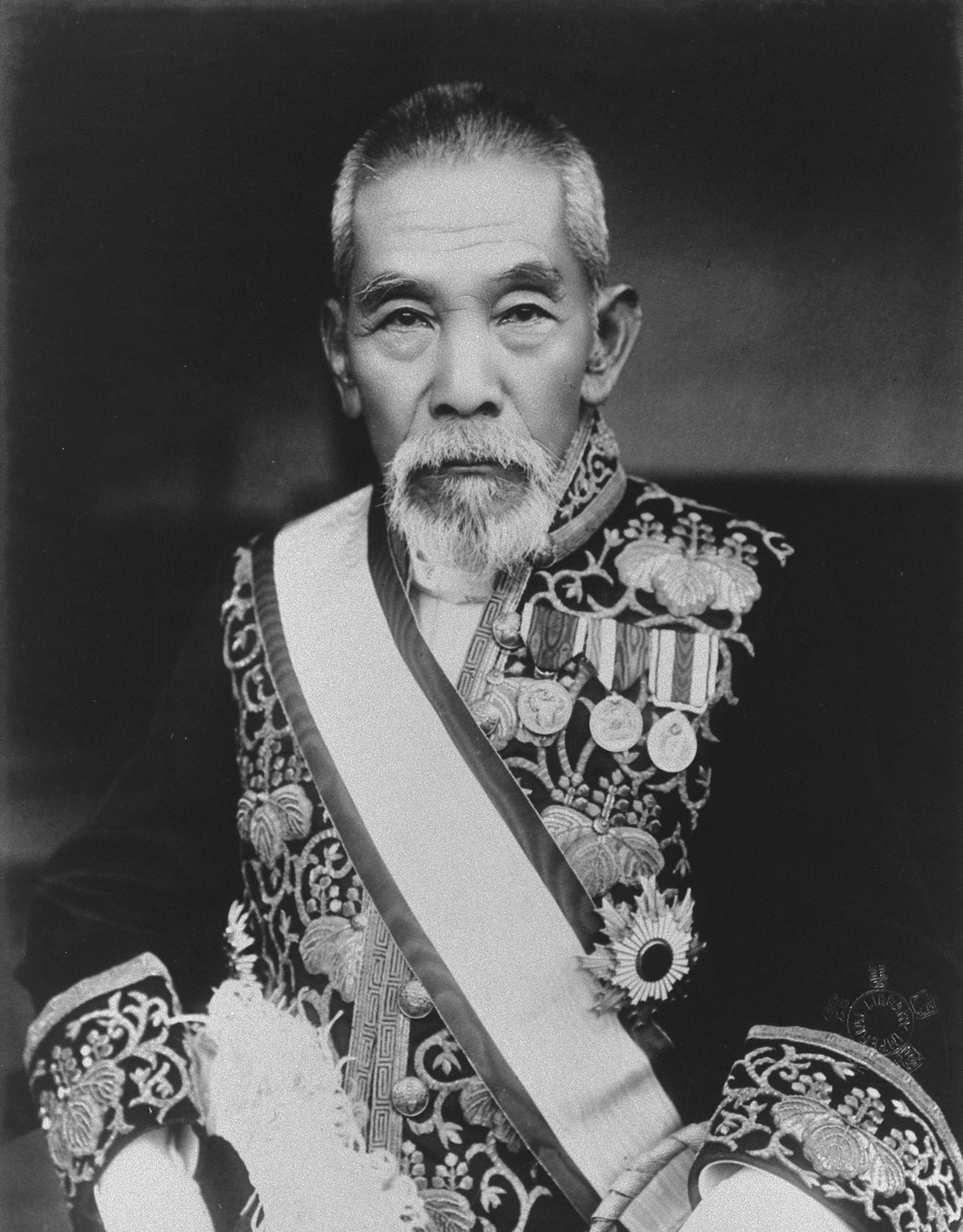
Inukai Tsuyoshi
Paris: Prime Minister Andre
Tardieu proposes severe measures to prevent communist demonstrations on May
Day, May 1.
Halle, Germany: A
clash between nazis and communists after a nazi meeting results in injuries to
19 nazis.
Tuesday, April 22, 2014
Tuesday, 22 April 1930: London Naval Conference Ends with Incomplete Results
London:
The London Naval Treaty – focal point of the London Naval Conference which has been going on for the past two months -- is signed by the five participating nations: Japan, the United States, Great Britain, France and Italy. The treaty marks a partial victory for diplomacy: all five nations agree to suspend expansion of their battleship fleets until 1936. However, only three of the countries – Japan, the U.S., and U.K. – agree to limitations on their fleet sizes. France and Italy could never resolve their differences with each other nor the rest of the participants, and so did not agree to fleet size limitations. Perhaps indicative of the anticlimactic ending after 13 weeks of meetings, the U.S. delegation is already at the docks ready to board their ship home the same day of the signing.
British Prime Minister Ramsay MacDonald says, “We have now
gone as far as we can at present.
Compared with Washington and Geneva [earlier conferences], we have
progressed far. Compared with our
desires, we have fallen short. We part
today in a spirit of active good will, prepared to take every means which
offers itself to secure a five-power agreement on all points. Our work has been but partly done, but all
good work must be done in stages.”

London Naval Conference delegates
Cettinje, Yugoslavia:
A communist agitator guns down four people, including the chief of the
gendarmes, and wounds three others, before being killed by police.
Monday, April 21, 2014
Sunday, 20 April 1930
Leipzig, Germany:
A gathering of 30,000 young communists observing “Red Youth Day” turns violent when fighting breaks out as police attempt to cordon off side streets leading away from the plaza where the gathering is being held. Three are killed, two of them police.Madrid:
More than
25,000 supporters of the monarchy jam the new bull ring here to show their
support for King Alfonso XIII. Streets
around the arena are draped with banners reading, “Long Live the King,” and
“Long Live Spain.” Speakers say the king
has been unfairly attacked by supporters of a constitutional republic, and that
the majority of Spaniards want the monarchy to continue. The king was not present, spending Holy Week
in Seville.
Soviet Union:
Kharkov, Ukraine: 29
people are sentenced to prison terms totaling 173 years for allegedly trying to
restore a “capitalistic” system in Ukraine.
Among those being sent to prison are the former President of the Ukrainian
Academy of Sciences, the former Ukrainian Prime Minister and Foreign Minister.
Moscow: The 200 or so
remaining Orthodox churches here are jammed on Easter Sunday, despite efforts
by the Atheist League to detract from it.
In an attempt to draw people away from church, all theaters in the city
are opened at midnight and shows are run continuously through the day, and
military bands play at public squares and other gathering places. However, as part of its “slowdown” on the
atheization of the country, the government does forbid citizens from molesting
worshipers in churches, or on their way to and from them.
China:
In the civil war, skirmishes are reported between
nationalist government forces and northern rebels along railroads around the
city of Kweiteh.
Friday, April 18, 2014
Friday, 18 April 1930
Zurich: Political
exiles from fascist Italy report that political prisoners of dictator Benito
Mussolini’s government, being held in prisons on the Lipari Islands in the Mediterranean,
are being killed by their guards – two, at least, are reported dead.
Berlin: More bad economic news: reports measuring economic activity such as railway car loadings of coal and other heavy goods are all down from the same time last year.
Berlin: More bad economic news: reports measuring economic activity such as railway car loadings of coal and other heavy goods are all down from the same time last year.
Bydgoszcz, Poland:
Nine members of the Deutschtumbund, a German organization in the areas
of Poland that were taken from Germany after the World War, are sentenced to
prison for sabotaging Polish administrative decisions and spying.
Monday, April 14, 2014
Monday, 14 April 1930
Germany:
Wilhelm Frick, nazi Minister of the Interior and Education in the state of Thuringia, issues an order that will revoke the licenses of entertainment establishments that present black performers or their music. Frick says he is acting to save Germany from “negro culture,” which he says is corrupting morals in the country.Berlin: New Chancellor Heinrich Bruening’s package of financial reform bills (mostly taxes) and agrarian relief passes the Reichstag by slim margins – in the case of the budget bill, by just four votes. Bruening’s authority to dissolve the Reichstag, granted him by President Paul von Hindenburg, again looms large over the proceedings, with political parties sending cars and in some cases even planes out to bring legislators in for the vote, rather than face elections for a new parliament. The measures implement new taxes on tobacco, sugar, beer and mineral water.
Elsewhere:
Paris: Two fascists
are shot to death in the street by communists in revenge for recent arrests of
communists in France.
New York: The Rand School of Social Science, a socialist
institution, releases its American Labor Year Book for 1930, which states that
the growing worldwide unemployment problem caused by the Great Depression is
worst in Russia.
Sunday, April 13, 2014
Sunday, 13 April 1930
Germany:
Berlin: Nazis paint “Death to Young” and swastikas on three portals of the Reichstag building in protest of the Young Plan.
Magdeburg:
Several are injured in a street battle between communists and nazis.
Subscribe to:
Posts (Atom)