Thursday, October 31, 2013

Thursday, 31 October 1929

Germany: 

One casualty already from the New York stock market crash – the Bank of Civil Employees here collapses, costing 5,000 policemen, postmen and other government employees their deposits.

New York: 

The stock market is up again, 3%.  European markets are mixed: London and Paris rally on news that the U.S. Federal Reserve is lowering the bank rate, but Germany’s market is swinging wildly.

Elsewhere: 

Vienna: A factory is virtually under siege by 200 nationalist Heimwehr paramilitary members after socialist workers refuse to work with new Heimwehr-sympathetic colleagues.  Police disperse the mob.

China:  More heavy fighting is reportedly under way in the Honan province, in central China, between rebels and nationalist government troops.  Reports say the fighting is not going well for the government forces, and the rebels are spreading southward toward the Yangtse River.

Wednesday, October 30, 2013

Wednesday, 30 October 1929

New York: 

The stock market recovers one day’s loss, recovering roughly half of the ground lost over the past two days.  Volume is still huge: 10.7 million shares.  But the turnaround is accomplished by major financial interests, including J.P. Morgan, once again entering the market and shoring it up.  The New York Stock Exchange's governors, evidently believing -- or maybe hoping -- that the crash's free fall is over, announce that the exchange will be closed Friday and Saturday, and its opening delayed until noon on Thursday.

But the damage may be done.  Ordinary "Main Street" Americans of every stripe were investing in stocks.  If they’ve lost their faith, the capital may not come back, regardless of what the nation's major financiers do.  Markets in Europe show continued weakness.


China:  

Rumors of impending larger-scale warfare with Russia over Manchuria swirl again as the nationalist government releases another statement, this one more comprehensive, accusing the Soviet Union of making plans for such a conflict.  The statement sets out to document the nature of Sino-Soviet relations over Manchuria at some length, detailing evidence China says it uncovered in a raid on the soviet consulate in Harbin last May, which they say indicates that the Soviet Union has been planning a military confrontation in Manchuria for a long time.  It further states that China will hold Russia responsible for any losses suffered in a war.  "And if a state of war should eventuate over the soviet government's incessant provocation, the responsibility for violating the peace of the Far East must be borne by the soviet government."

Manchuria:

Meanwhile, soviet warplanes bomb Fuchin, and soviet gunboats are reported in the area.

Russia: 

And the soviet government condemns more of its citizens to die.  The Tass news agency releases a dispatch saying 12 people have been sentenced to death in various parts of the country for everything from criminal activity to anti-soviet agitation.  Two of the condemned are priests, four kulaks, and one, a mullah (an Islamic clergyman).  

Libya:  

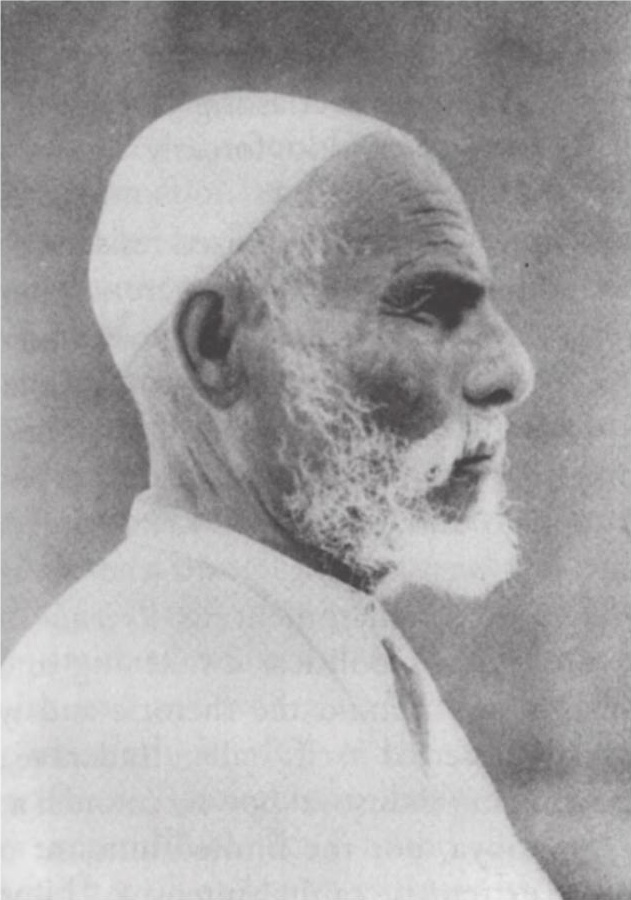
The key leader of the Libyan resistance to Italy’s occupation of Libya, OmarMukhtar, has denounced a compromise agreement he reportedly reached with the Italians in January.  Mukhtar is said to be re-mobilizing the Libyan forces in preparation for renewing the resistance.


Tuesday, October 29, 2013

Tuesday, 29 October 1929: New York Stock Market's Crash is Complete

THE NEW YORK STOCK MARKET CRASHES AGAIN


New York: 

the Stock market crashes still further.  Another selloff ravages Wall Street – Stocks drop another 12% -- 16.4 million shares trade.  IT'S THE Worst day in market history – Billions in value IS wiped out. 

The trade volume shatters the previous record of 12.9 million shares, which was set only last Thursday.  Experts estimate that fully half the stocks on the New York Stock Exchange have lost 50% of their value over the last month or so.  Total value lost over that time is estimated at $25 billion.    
As with Thursday's crash, crowds gather outside the exchange to see the historic tumble.  Yet unlike Thursday, this crash is not marked by frenzied panic.  Large financial interests place buy orders at successively lower levels throughout the day, making the selloff look more like the orderly retreat of a well-drilled army than the bedlam that ensued Thursday.  The ticker, though behind by 2-1/2 hours, still fares better than Thursday, when it didn't print the final quote until 4 hours after the market closed.  
Markets in Europe tumble too.


Elsewhere: 

Russia:  the government kills 12 more of its people -- “enemies of the state” -- bringing the total for the week to 100. 

Germany: Newspapers claim that the Liberty Law campaign has failed, saying the nationalist-driven proposal drew only 7% of voters.

Vienna: Nationalists attack Jewish students to stop them from attending school. 

China:  The civil war expands – three nationalist government divisions revolt in Ichang, and communist rebel forces reportedly invade Linyung.  

Monday, October 28, 2013

Monday, 28 October 1929: New York Stock Market Crashes Again

THE NEW YORK STOCK EXCHANGE CRASHES AGAIN


New York: 

THE STOCK MARKET CRASHES AGAIN -- DROPPING nearly 12%.  Over 9 million shares trade, the second-highest trading day on record, exceeded only by last Thursday's crash.  Today's plummet is especially demoralizing given the upbeat assessments from Wall Street bankers and President Herbert Hoover since Thursday.  

The market starts down immediately upon opening.  A small rally happens around 1 p.m., then the selloff continues, even accelerating late in the day when it becomes clear that the bankers who stymied last Thursday's avalanche would be making no further moves today.  Today's crash lacks the panicked frenzy of Thursday, but the net result at the closing bell is actually worse.  

Manchuria:  

In the ongoing border clash, Manchurian/Chinese forces* reportedly attack two Russian posts along the Argun River on the border.  In one town, the attack is preceded by heaving artillery shelling.  In another, in the Turyrock region, marauding Manchurian forces kill Russian soldiers and plunder the town before withdrawing. 

Russia: 

The communist government KILLS two more OF ITS CITIZENS, Jewish diamond merchants who allegedly smuggled diamonds out of Russia.  The government says they "defrauded" the country.  Their deaths bring the total number of Soviet citizens killed by their government in the last four days to 63.  
 

Japan: 

An assassination attempt is made on Prime Minister Osachi Hamaguchi.  Since becoming Prime Minister in July, Hamaguchi’s cabinet has been challenging nationalist military radicals whose influence over Japan is growing.  A man with a dagger, whom authorities say is deranged, jumps on the running board of Hamaguchi’s car, but he is thrown off and Hamaguchi is unhurt.


Kyoto, Japan: 

The 3rd conference of the Institute of Pacific Relations opens.  This unofficial gathering of nations with an interest in the Pacific Rim has been growing.  This year, government representatives from Japan, China, the U.S., Great Britain and 9 others are on hand.

Immediately, the dialogue is charged.  After the formal openings, China's delegation uses the first evening session to accuse Japan of interfering in China’s civil war, mistreating civilians, and assassinating a warlord in Manchuria.  The nationalist army advance on Peiking in 1927, one delegate says, was stopped "not by communists, but by Japanese troops.  Chinese civilians were maltreated and many were killed by Japanese soldiers during the Japanese occupation."

Meanwhile, Japan's delegation claims that a U.S. immigration policy from 1924, that excludes Japanese from America, is an "open wound."  "The controversy arising from American immigration legislation in 1924 is not closed," one delegate says.  "The wound so needlessly inflicted on our national honor is still open and will remain open until the matter has been rightly settled.  I think it necessary to make this plain statement because there seems to be an impression in America that the incident is as good as forgotten in Japan.  This erroneous impression is doubtless due to our courtesy and reticence on this subject in conversing with American visitors."

Germany: 

The Liberty Law* plebiscite ends tonight, and newspapers still report that it looks like it will fall well short of the 4 million votes needed to force it to the Reichstag.

* See the definitions page.

Sunday, October 27, 2013

Sunday, 27 October 1929

Russia: 

THE SOVIETS KILL 26 more OF THEIR CITIZENS.  Today it's mostly “kulaks” (rich peasants), who oppose having their lands confiscated as part of soviet collectivization.  In the village of Gari, one of those shot is a priest, allegedly for spreading a rumor that the government would destroy the local church cemetery and close the church.  In Maly Penky, two kulaks are shot for burning their grain and terrorizing local communists in opposition to collectivization.  Five more are shot in Taskoava for killing a government grain inspector.  

In Kimri, another priest is sentenced to death -- in his case, when soviet authorities showed up to close his church, he ran to the church tower and rang the bells, bringing out a mob who attacked the government officials.  

Rome:  

Dictator Benito Mussolini gives an inflammatory speech before a raucous crowd on the 7th anniversary of the “March on Rome” that put him in power, saying his fascist Italy is strong, ready for war, and courageous.  "Italy today is really as I wished it, an army of citizens and soldiers ready for works of peace, laborious, silent and disciplined."  He follows this, however, with a question for the crowd: would they respond it he called on them should any country disturb Italy?  The crowd responds with a resounding yes.  "After seven years, we are younger, stronger and more implacable than before," he went on.  

Standing on the balcony of the Venezia Palace, Mussolini also reviews 40,000 “blackshirts” – his fascist militia -- and army regulars.  Mussolini makes fond references to the “Manganello,” a club which his blackshirts used to beat anti-fascists in earlier years.  “This club,” he says, “has now been laid aside, but could promptly be dusted and made to refunction.  Besides this instrument we also have rifles and machine guns.”  His speech is interrupted at times by shouts of "Death to political exiles," thought to be a reference to the would-be assassin who fired a shot at Prince Umberto last week in Brussels.  


London:

Several hundred communist demonstrators attempt a march from Trafalgar Square to the U.S. Embassy to protest the treatment of textile workers in North Carolina.  Bearing signs and banners reading, "Textile Workers Starved and Murdered in Gastonia," the marchers try to smash windows on vehicles as they march past.  The real trouble starts when they are informed that the U.S. Ambassador won't receive them; the communists then rush police near Victoria Station, and the police counter-charge on horseback.  It takes roughly 30 minutes to restore order.


Vienna:  

The nationalist Heimwehr paramilitary organization holds a 10,000-man parade, complete with cavalry.  But there is no violence.

Saturday, October 26, 2013

Saturday, 26 October 1929

Berlin:  

Germany observes the 1,000th anniversary of the year 929, when East Prussia and Brandenburg officially became German.  But the celebration raises sore points relative to Germany’s post-war borders.  West Prussia is now part of Poland, creating a strip of land called the “Polish Corridor” between two German-controlled territories.  Former Chancellor Hans Luther, in an address, says, “First, the east provinces' fate is Germany's fate.  Second, a nation's duty is to help its weakest members.  Third, the impossible corridor has no support either in history, common sense, or justice.  As Abraham Lincoln once said, 'No piece of work is done until it is done right.'  For us Germans who are working for a true European peace and who must work to hold and strengthen the German east provinces, the rule must now become, 'What thou hast inherited from thy fathers, strive to deserve, that thou mayest actually possess it.'"

Washington: 

Senator Thomas Heflin introduces a resolution in Congress calling for Secretary of State Henry Stimson to turn over all information he has on the Fascist League of North America.  This comes after Harper’s Magazine published an article entitled “Mussolini’s American Empire,” which claimed that the FLNA is part of a Mussolini plot to “raise soldiers for fascism” in the U.S.  The article also says Italian consular officials in the U.S. have been been involved in training Italian-American children in an effort to get them to join the Italian army when they're older.  "These youngsters," the article says, "most of them born here, not only are being taught in Italian schools established by the Fascisti, but actually are being given preliminary training to fit them for the Fascist army.  The article claims Italian-Americans are being taxed by Italian authorities, and that Italian-Americans traveling in Italy are being detained and forced to undergo training in the Italian army reserve.  "This, again, is in accord with Mussolini's idea that all Italians are his subjects and that war material can and should be drawn from America as well as from any other colony."

Nobile Giacomo de Martino, Italian Ambassador to the U.S., issues a formal statement denying these accusations.  "The Italian military law which is attacked in the article is not a product of fascism.  It was promulgated long before the advent of fascism and was enforced by previous governments.  It is not a system unique in the relations between the United States and Italy, such a system existing in numerous other countries."

The U.S. State Department also recently instructed its Ambassador to Rome to protest to the Italian government abouts the allegations.  

Manchuria:

A London Times military correspondent files a report stating that the "real problem" in the Soviet-Sino Manchurian conflict is White Russian troops who fled the Russian revolution and now virtually control Manchuria and even parts of northern China.  According to the report, White Russian generals serve as military advisors to the Chinese nationalist government, and in Manchuria, they actively work to provoke conflict with Russia, in hopes of re-igniting their lost war.

At Mukden, these soldiers keep a munitions factory which produces 500 shells, 300,000 cartridges and 120 rifles per day -- by far the highest and best output of any military factory in China.  They also maintain a rudimentary air force of 250 outdated planes.  They have also formed several mounted infantry units.  "There is no doubt that it is these men who are the driving power behind the Chinese to rid Manchuria of soviet Russians and soviet influence," the dispatch says.

China:  

Continued fighting between nationalist government forces and communist rebels is reported around Chengchow, an important railroad hub in north-central China.

Friday, October 25, 2013

Friday, 25 October 1929

New York

THE Stock market steadies – It's up 1/2% on near-normal volume at the end of the trading day. The bankers’ infusion of money and orders from yesterday are credited with saving the day.  Stock brokers issue letters to clients cautioning against panic, and so far no brokerage houses have failed.  This is taken as confirmation of statements made yesterday to the effect that the fundamental business environment in the U.S. is sound.  President Herbert Hoover likewise speaks to reporters, saying, "The fundamental business of the country, that is, the production and distribution of commodities, is on a sound and prosperous basis."

Berlin: 

In Europe, especially here, markets are actually encouraged somewhat by the Wall Street crash, believing that a retreat from unreasonable, speculation-fueled highs in the U.S. will steer capital to their markets. 

Meanwhile, news outlets learn that negotiations between the United States and Germany for a war debt repayment plan separate from the Young Plan*, have been going on for five weeks.  The plan would allow the U.S. to remain officially neutral toward the Young Plan, and would provide Germany the option of a two-year postponment of payments to the U.S. upon giving six-months' notice.  No word yet on how the other Allies will view this bilateral agreement. 


Manchuria:

The Chinese government reports that Soviet troops are massing at the Manchurian border in preparation for a larger-scale attack.  (This would be consistent with statements made by a former Red Army general October 19).  The Chinese reports say the Fifth Army Corps, crack troops, are moving to the eastern front, replacing the Seventh Army Corps.  Gen. Zhang Xueliang, the de facto warlord ruler of Manchuria, has reportedly been charged by the Chinese government with commanding the defense of Manchuria.  China's Ministry of Foreign Affairs says negotiations with Russia to settle the dispute over the Chinese Eastern Railway* are deadlocked.

Russia: 

The Soviet Union kills more of its citizens.  In Krasnodar, 21 people described as "bandits" and "counter-revolutionists" are executed, allegedly for subversive activities against the government and terrorizing the countryside.  Supposedly they maintained a facility for forging documents and storing arms and ammunition, and were recruiting more to their cause when they were caught.

In Rostov on Don, 17 people are shot, including 14 former high-ranking officers in the army, charged with fomenting an armed, czarist counter-revolutionary movement in the North Caucasus Mountains.  An additional group of people are sentenced to concentration camps.  The government says the movement, under the guise of a religious sect, massed arms and sent representatives to cities along the Black Sea, encouraging unrest against the Red Army and soviet economic and political policy.


*See definitions page.

Thursday, October 24, 2013

Thursday, 24 October 1929: New York Stock Market Crashes

THE NEW YORK STOCK MARKET IS CRASHING

New York

Wall Street crashes again – Panic selling prevails: nearly 13 million shares move.  it's the Heaviest trading day and biggest drop in U.S. stock market history -- Down nearly 11% at one point, the market recovers to end the day only minus 2%.  But thousands of accounts are wiped out nonetheless.  The day's volume, 12.9 million shares, dwarfs the previous volume record by 50%.  

"The remarkable era of avid public speculation in stocks which has swept over the country during the last five years came to a climax Thursday in the most terrifying stampede of selling ever experienced on the New York Stock Exchange and other leading security markets."  (Associated Press)

The collapse begins shortly after the opening bell and continues through much of the day, as the sell-off that shook the market late yesterday continues.  The ticker falls several hours behind, and for a while it appears the exchange might have to close.  At one point, the roar from the trading floor grows so loud it can be heard for several blocks down Wall and Broad streets in every direction, and crowds gather to see what the commotion is about.  Thousands of people mill around outside the exchange, some of them investors who have lost everything.    

Five Wall Street bankers, including Thomas Lamont, head of Morgan Bank, and Richard Whitney, Vice President of the NYSE, are credited with the late rally that turns the rampage.  They hold a hurried meeting at the J.P. Morgan offices, then place large purchase orders above market value to stem the tide.  Lamont tells reporters, "We consider the situation on the floor of the stock exchange this morning a technical one rather than a fundamental one, and that it will result in betterment.  I still see nothing to worry about."

Treasury Secretary Andrew Mellon holds an urgent meeting with the Federal Reserve Bank Board, but basically concludes the same thing as Lamont: the fundamental business environment in the United States is sound, and there is no need for federal intervention.  The Reserve Board declines to change discount rates or take any other action.

The London and Paris markets also drop, but Berlin’s stock market rises.


Brussels: 

Prince Umberto II, heir to the throne of Italy, survives an assassination attempt while he is laying a wreath on Belgium's Tomb of the Unknown Soldier.  It happens on the same day as the announcement of his betrothal to Princess Marie Jose of Belgium.  As Umberto is about to lay the wreath during a morning ceremony, a man runs out of the crowd and fires a single shot that goes wild.  Some witnsses say he is crying out, “Down with Mussolini!”  Before he can get off another shot, police and bystanders subdue him.  Umberto, staying surprisingly calm, continues with the ceremony and finishes it.

Later, in police custody, the would-be assassin claims he missed on purpose, only intending to fire into the air in protest.  He gives his name as Fernando di Rosa, an Italian national and law student at the University of Paris.


Wednesday, October 23, 2013

Wednesday, 23 October 1929: New York Stock Market Drops 6.3%

New York:  

THE STOCK MARKET crashES – THE Nyse DROPS 6.3% in THE second-largest TRADING day on record.  Over 6.3 million shares trade.  The loss is valued at $3-4 billion.  The market opens well after yesterday's uptick, with several bellwether stocks recording gains.  Then mid-afternoon, a wave of selling hits automotive equipment and radio stocks.  As the afternoon grinds on and the selling shows no sign of abating, traders and investors -- already nervous after the general market downturn of late -- lose their nerve and start dumping other stocks -- everything -- for whatever they can get, sometimes even below price.  In the final hour, the market completely collapses, in what one article calls "a new and wholly unexpected avalanche of selling."  About $50 million in value is melting away per minute at the end.  At one point, a clutch of banking executives are reported to be conferring on the front steps of the New York Stock Exchange on ways to support the market.  But it remains to be seen if they can do anything about it

Elsewhere: 

Budapest:  Prime Minister Istvan Bethlen de Bethlen, speaking to Parliament, announces that from now on, anti-semitic disturbances in Hungary's schools and universities will be met with a strong police response. Police will even enter classrooms where disturbances are taking place if necessary.  Bethlen's statement is in response to a spate of anti-Jewish unrest around the country of late.

China:  Nationalist government forces capture the town of Yencheng in Honan province.  The opposing forces are reported to number 300,000.

Tuesday, October 22, 2013

Tuesday, 22 October 1929

Manchuria:

Soviet press dispatches from Khabarovsk, Russia, say a band of White Russian troops attempted to enter Soviet territory from Manchuria in the area of Lake Hanko near Klenovka, and were destroyed.  Two more bands of White Russian troops reportedly attempted to enter Russia near Trekhrechie, on the Amur River, and were likewise destroyed.  

Paris: 

Prime Minister Aristide Briand's government falls on the first day of a Parliament session, defeated 288 to 277 over a demand by radicals, socialists and nationalist groups to discuss foreign affairs, including especially the Young Plan, France's occupation of the Rhineland and France's position relative to the Saar region. Andre Tardieu, Minister of the Interior, is being mentioned as a possible new prime minister.


New York: 

Stocks rally, up 3.4% before giving some back at close.  The market is still down 23% since September 1. Markets in London and Paris improve as well, but Berlin is hit by a wave of selling. 

China:  

Rebel and nationalist government forces clash in northern Honan province, with the rebels reportedly breaking the government line and penetrating 100 miles along a railway toward Hankow.